

•
Faith and Hope
• Faith and Hope
February 25, 2026
Faith and Hope
A story by CHILUFYA NCHITO
The Redeemed Church of Glory was good for many things, but singing wasn’t one of them. The congregation stumbled over the lyrics of “Great is Thy Faithfulness”; the pianist, despite his expertise, was out of tune; the violinist was absent.
It was Faith’s big day. Her white lace veil obscured her vision, as did the lashes that her best friend, Hope, had insisted on. Faith had planned everything to perfection. She liked to be in control, leave nothing to chance, but the day seemed to respect only chance.
Cleptus was standing at the end of the aisle. His eyes were firmly shut, hands were clasped. He was short and stocky, wearing a suit she definitely didn’t choose. Her father always told her to stay away from short men: “A short man can’t take you anywhere; he’s hardly off the ground himself!”
She chuckled. Who told Ba Tata she wanted to get off the ground? She didn’t like to be told what to do, where to go, or what to say, and marrying Cleptus was no different. It was an act of defiance.
Just then, her matron whispered in her ear, something about how she shouldn’t get distracted and forget to keep her eyes firmly on the ground to seem as modest as possible. She wondered at what point in the morning, between getting out of the car and reaching the steps, she hadn’t fully embodied meekness. Had somebody complained? Surely not.
She walked up the church stairs just as they had practised the day before. She made sure to keep her bum wiggle in check and to look down at all times. Because she was tall, she had decided to wear flats, believing this added to her modesty. Her dress showed no cleavage, so she didn’t have to worry about her breasts stealing the show like they usually did. Oh no! It must have been the time she chuckled about Cleptus’s height.
Her father was now fidgeting. If they didn’t start walking soon, he might just up and leave her there. She peeked down the aisle.
Hope and the last flower girl were getting to their seats, and the congregation was done singing. She elbowed her father, winked, and said, “We’re up, let’s go.”
Her father’s grip was clammy in hers; her long white silk gloves were damp from the perspiration as her sweat rolled down her arm. She wondered if she had used enough roll-on. Yes, Dove promised forty-eight-hour protection, but she doubted Dove knew about the perspiration that came from the anxiety of marrying a man your father told you not to, in a church you loathed, married by a pastor who once asked your best friend to get an abortion.
There had been a brief silence after the congregation finished singing the hymn that was quickly filled by CeCe Winan’s ‘Promise’ echoing through the church. It was an old church built by the missionaries with a capacity for only a handful of people. From the first time she heard the song at the age of eight on the radio, she knew she would walk down the aisle to it. Her father struggled to keep to the beat, and she struggled to keep a smile on her face. Her dress was such an obstruction, but her mother had insisted on it. It was an ivory wonder with lace trimmings and Cleptus had gotten a loan so that she could buy it just like he had gotten a loan to pay for the wedding - one hundred thousand from the bank, thirty thousand from his boss, ten thousand from his best friend and twenty thousand from his ex-girlfriend (what kind of ex-girlfriend gave her ex-boyfriend money for his wedding?). She’d asked him what his ex-girlfriend had asked for in return for the money, and he’d sworn that she asked for nothing, only for it to be paid back.
She could build a towering, monstrous castle with Cleptus’s lies. The decision to marry him had been an abrupt one, and she remembered the day like yesterday. How she hadn’t skipped a beat, how his name had been the first one that had come to mind, and how Hope had not been pleased at her decision. On that day, in the midst of her and Hope gossiping, Hope had blurted out jubilantly that she was marrying Mphatso. Bald Mphatso. Inconsistent, unpredictable, unreliable Mphatso. Mphatso, who had left her and Hope stranded in Kafue, coming from a boat party because he didn’t like that they had both worn bikinis. He was a bit of a religious fanatic and believed in upholding Christian principles except for the sex before marriage part. His father was a pastor in a traditional church and was married to multiple women, so tradition was very important to him, and Faith believed that because of this, he did not think highly of women.
It was a pleasant afternoon; the 4 pm sun hit the yellow walls in her room, and they glistened the way a golden-brown village chicken does when cooked just right. Her mum had just fried thick brown vitumbuwas that they downed with cold zigolo. The mixture of the dripping oil and sugar from the vitumbuwas and the cold water and ice from the zigolo was a combination made in heaven. But at the news from Hope, Faith’s world turned, and the vitumbuwa in her mouth tasted more like bitter tamarind and less like sugared dough. They told each other everything from the very first time they met when their mothers introduced them at the nursery school. They met in the receptionist’s office as their mothers signed them up for the first day of school. Hope had the corner of her dress in her mouth and was biting on it while her mother spoke to the receptionist. Faith’s mother gently removed the dress from her mouth and introduced her to Faith. People who saw them said they had an unshakeable, invisible bond. Faith was the protector, always ready to rescue Hope. Like in second grade, when Kalwa bit Hope’s finger while Mrs. Nkandu was out of the class, so Hope punished Kalwa by making her kneel on the floor. Hope, on the other hand, was quiet and reserved. She had a way with people, made friends easily, and helped Faith see reason. But now it was Hope who did not see reason. Hope told Faith that Mphatso had asked her to marry him in the community park behind the see–saw after a hot and steamy session, the traces of which were still visible on Hope’s neck in dark pink splotches. He knew that she didn't like their make-out sessions because she wanted them to wait for marriage, but Mphatso always swore it would be the last time. She had told him the last time that if they continued, they’d have to break up. But this time, after they both scurried from behind the bushes and straightened their clothes, Hope turned around to find him on his knees. He had a fake silver ring with glass cuttings from one of the shops in town placed in a shiny cellophane box. Hope told Faith that when he asked her, she couldn’t hear the words out of his mouth; she could only see his lips moving. In her head, she began to imagine all the preparation that would go into her wedding. Her mum would have to travel to Kalulushi to tell her father’s sister, Ba Justina, since her father was dead, and would also have to tell her older brother, Ba Kasongo. She would have to attend those dreadful marriage lessons that she saw women groan about on Facebook, and she wouldn’t get a white wedding as neither her mother nor Mphatso and his family could afford to throw her one. When she looked down and saw that he was still kneeling, only then did it dawn on her that she hadn’t given a response.
While Hope narrated all of this in her room, all Faith could think about was what would happen to their friendship.
“What do you mean? We’ll still be friends.”
Faith looked out of the window and knew this wasn’t true. Ba Anderson, the gardener, was mowing the lawn, and she could see her mother’s palm trees swaying in the wind.
“Does your mum have any single friends? You’ll see once you start those lessons that’s what they’ll teach you.”
In Faith’s mother’s words, “single and married people were like fire and thatch, priests and prostitutes, Lusaka men and loyalty, the two did not mix.” It was clear to Faith what she had to do.
“But you don’t even love him,” Hope told her. She was almost shouting, and her hands were lifted above her head like she was ready to throw something.
“Do you love Mphatso?”
They both knew the answer. It hurt Faith that just because Hope had known Mphatso for five years and had shared a part of herself with him, she thought she knew something about love. She bit her lip, cracked her knuckles, and swallowed the thick ball of saliva in her throat. Marriage was an escape for them. An escape from expectations, from their parents’ homes, from bondage, but it didn’t have to be an escape from each other. Faith lived with her mother and frail stepfather, whom she hated and was tired of helping care for. Hope had to support her mum financially and wanted a better life.
As soon as Hope left, Faith rummaged through her room to find Cleptus’s number. In high school, she hadn’t saved it on her phone, but she knew she had it written in the back of a book somewhere. He seemed like the kind of guy who would have the same number all through his life. The phone rang seven times before she cut the line, flung it across the room, and yelled, “shit!” Just as it hit the rug on her floor, it rang.
“Hello”, the voice on the other end was just as she remembered it. After that, the rest was butter. They dated for two months, were engaged by August, and two months after that, she was hearing CeCe Winans at the Redeemed Church of Glory, wondering if her Dove 48-hour anti-perspirant was going to let her down.
She chose Cleptus because he was unassuming and she could handle him in small doses. He wasn’t handsome the way she liked her men to be. His belly was a bit too round, and he had a gap in his front teeth. He had first shown interest in her when she was in grade ten. He had written her a small note in their Physics class, asking if she could be his Valentine. She had said no, and that year her Valentine had been Besa. Besa was handsome in that obvious, boring kind of way that teenage boys sometimes are. He was older than her, and his brother was the head boy, so he could get away with not following some of the rules. He was coloured with high cheekbones, perfectly shaped lips, and a thick mane of hair that he told the school he couldn't cut for religious reasons. All the girls wanted him, and all the boys wanted to be him. They had spent break time walking hand in hand for the whole school to see, while Faith followed them behind with Besa’s best friend Kabwe. Cleptus had been so devastated at Faith declining to be his Valentine, he had told Hope that he wouldn't eat until she agreed to go on a date with him. That didn’t happen until they were both in their gap year, waiting for their final results. The date wasn’t bad, they had gone to watch Angels and Demons, and he had even managed to make her laugh a few times. He had picked her up with his mother’s driver in a red Mercedes. Before the movie, he bought her a Hawaiian pizza and had even given her a present, a pretty blue beaded bracelet with a letter F charm. That was the first and last time they had ever gone on a date until the day Hope told her she was getting married to Mphatso.
*
The first year of marriage was a blur. Cleptus was a consultant and was only home twice a month. His job required him to travel often, and so Faith spent most of her days alone. Despite her and Hope's intricate planning to ensure they lived close to each other, Hope and Mphatso moved to Chongwe. Mphatso’s parents needed help building on their farm, and as the oldest, he was chosen to oversee the works. Faith spent her days daydreaming about travelling and dusting her shoe collection. She had never wanted to be a career woman, so it didn't bother her that she was a housewife. It wasn’t until her first pregnancy that she snapped out of her daydreaming. It had been a Tuesday, she had cleaned the house, dusted her shoes, and cooked beans and trotters in anticipation of Cleptus’s return from his latest work trip. When he walked through the door and grabbed her, she quickly said, “I’m on my period, sorry.” His face fell, and he slouched his back, but was understanding and quickly kissed her cheek. It wasn’t until he got into the shower and she sat on the bed scrolling on her phone that she realised that she was lying. Her period hadn’t started; in fact, she hadn’t seen it since three weeks ago. But she couldn’t be pregnant. When she last spoke to Hope, Hope had said they weren't planning to have children for at least the next two years, so there was no way she was getting pregnant. She texted Hope.
“Alert, Alert (pregnancy emoji) !!!!” Faith’s text was frantic.
“Hmmm, who is pregnant? ”
“What do you mean, who iwe, me, I’m pregnant. My period hasn’t come this month (crying face emoji).”
“Mwana you cant be pregnant, remember the nurse who gave us the injection said she had used the contraceptive for five years and hadn’t gotten pregnant, I’m sure you’re just stressed. Go to the clinic tomorrow, I’m sure you'll find her, and she'll tell you you’re just stressed.”
The next day she walked to Chainda Clinic, she took the test, and it wasn’t stress.
The private clinic she went to manage what wasn’t stress was the kind of place that her and Hope used to gossip about in high school when there were rumours of girls being pregnant. Where bad girls went to do bad things, where the words termination and abortion could hardly be uttered, only silently whispered, but her experience was anything but bad. The nurses paid her attention and care. The nurse who took her medical history spoke gently. She was a plump woman with too much pink lipstick, big eyes, and a slight lisp. There had been no overbearing and rude staff, no cold stares or judging eyes. In the Christian land of work and joy, to get rid of what others would call a blessing, especially as a married woman, was unheard of. It was not something people spoke of openly, and the few who did only had stories of horror and pain. However, she had experienced more trauma trying to get her sister to lend her the hey mama skirt she wanted to wear for party day in grade six than she experienced in that hospital room at the end of the corridor. But for her, the most comforting thing had been that no one asked her why she was doing it. Because perhaps saying that, because her best friend wasn’t pregnant, too, might have seemed like a trivial answer to most.
Mphatso got a job as a field reporter at the Mast newspaper, and he and Hope moved into a house three minutes’ walk from her and Cleptus.
It was like they were teenage girls again and had all the time in the world to be together. She and Hope spent their days watching TikToks, gossiping about neighbours, and sipping on Four Cousins as their husbands watched uncomfortably, unsure how to react to them and how to interact with each other.
One Sunday in Hope’s living room, Hope showed Faith a TikTok from a girl they had grown up with, she had had a huge crush on Hope’s older brother.
“Do you remember Kaluba? She always made fun of your hair, or lack of it.”
Hope burst out laughing. Kaluba often joked that Faith had hardly three hairs on her head.
“Yes, of course, I remember her; she made fun of me and my dark complexion. If only she could see me now in my 32-inch double-drawn Brazilian hair.”
Faith ran her fingers through her hair and smiled widely.
“Anyway, I’ve just seen a video of her doing a get-ready-with-me. I think she wants to become an influencer.”
Faith let out a loud sigh. “You know how I feel about influencers, anyway, share the video with me.”
*
Mphatso and Cleptus were strange. They had no life outside work and home. Both of them had best friends, but they hardly spent any time with them. None of them went to church or played sports, and they had no social lives. Mphatso spent most of his days in front of the TV watching wrestling or political documentaries, and Cleptus’s only hobby was spending time with his dogs. Faith often joked that he spent more money on his dogs than on her. Truthfully, they existed at least for her and Hope only as afterthoughts, on the fringes of their lives. On the other hand, her and Hope's lives were full of activities. They sometimes went to church, though this was an activity that Hope enjoyed more than Faith. They went to the gym twice a week, and they loved to cook.
When Hope’s gardener, Boyd, narrated to her that there had been many thefts in the neighbourhood, Hope told Faith that they needed protection, but she didn’t like the idea of a security guard. When she was fifteen, she had been left home alone with their security guard, Ba Siwale. Ba Siwale arrived early for his nightshift with his backpack, battery-powered radio, and a plastic bag of groundnuts. Her father had found him knocking at their gate, looking for piecework, and hired him on the spot. He had grown tired of traditional security companies and so decided to give Ba Siwale a chance. Hope’s mother didn’t like him; she said he talked too much like he had something to hide. The day they were just the two of them, it was a cold July evening. Hope's family had gone to visit her uncle, but she had remained behind to study. Ba Siwale knocked on their kitchen door. He always knocked to announce his presence, ask for any leftovers from the fridge, as well as matches to light the brazier. When Hope opened the door, he asked for her mother. When she said she wasn’t around, he asked after her father.
“You are alone?”
“Yes, Ba Siwale, just wait here, let me check what’s in the fridge.”
She turned her back to him and headed for the fridge to give him the leftovers. She remembered her mother said he could get the dry fish and samp. When she heard the kitchen door close, she grunted and turned. Why would Ba Siwale leave when she was about to give him food? But he didn’t leave, he was standing inside their kitchen in front of the door with an expression she could only describe as jubilation. He walked towards her, muttering how beautiful she was, how her skin was fair, how he liked her legs. How could Ba Siwale from Kabanana, a man her father’s contemporary with a wife and kids, have thought of her this way? When he finally reached her at the fridge, he towered over her small frame, put his fingers on her lips, and kissed her cheek. Just then, the door flung open.
“Hope, why are you crying, ah ah Ba Siwale, what are you doing in the kitchen?” Her young brother was only eight years old and didn't understand what was happening. Her father walked in after, saw her tears, and locked eyes with Ba Siwale.
“Junior, get out.” Ba Siwale was on his knees pleading, her father grabbed him by the neck and threw him out.
So, rather than security guards, Hope and Faith decided to buy guns that they would keep locked in their safes and could be used for emergencies. When they decided they were ready to get pregnant, they weighed the pros and cons. What season would be best, how far apart their pregnancies would be, and which hospital would be best. They decided November was the best time to get pregnant, it was a cool month, and they both loved the rain.
Faith didn’t want to go first. She wanted to be pregnant but was haunted by her mother’s pregnancy with her young sister. It had been fourteen years, but Faith still remembered her mother struggling to keep any food down and being delirious from dehydration.
“What if what happened to my mum when she was pregnant with Chushi happens to me?”
“Not going first won’t prevent that. I think you should go first because Cleptus is already so anxious to be a dad, and you have better health insurance than I do.”
Faith would go first. Her pregnancy was mostly uneventful, which didn’t please her at all. She had hoped to be a nuisance to Cleptus, but there was nothing to be a nuisance about. She didn’t get excessively fat or have large mapping stretchmarks across her belly. She didn’t have morning sickness or intense vomiting. Her feet didn’t swell, and her nose didn’t grow big. In fact, quite the opposite, she was a vision of beauty. Her belly was well-rounded and symmetrical, her skin was smooth with a sprinkling of beauty spots, and her hair grew long and thick.
One night, Hope heard Mphatso whispering on his phone in Chewa. He only spoke Chewa when talking to his parents, so she wondered why he was whispering.
“Who were you talking to?” Hope was already in bed, and Mphatso walked towards her sheepishly, looking at the floor. “Why were you whispering?” He stretched out his hand and caressed her shoulder. His phone rang, but he cut it off.
“I need to tell you something.” He sat on the edge of the bed facing away from her. “I want a second wife”. He said it softly, but as a matter of fact, there was no discussion to be had. He said he needed a submissive woman who could meet all his needs. He had already spoken to his father, who had married them, and he gave him his blessing. Hope had shivers all throughout her body and it took everything in her to not let out a scream. She didn’t have an ounce of sleep, she thought about where she could have gone wrong and what she wasn’t doing right. She didn’t work because he asked her not to, she stopped wearing trousers, studying for her master’s, and fraternising with girls who, according to him, would lead her astray.
When Hope told Faith the next morning, she gasped. Faith often took Hope’s failures and disappointments harder than Hope herself. Like in grade seven, when Hope failed her exams and had to repeat the year. It was Faith who insisted that the school petition the examination council to have her papers re-marked. She often told Hope that she felt like a part of Hope’s nervous system was fried because, in difficult situations, she did not have ‘normal’ responses to events. Faith had been the one who confronted bullies and uncles who hugged a little too close and long. In grade eight at thirteen, when Hope first started her period, it was Faith who showed her how to use a tampon rather than a pad. It was Faith who first taught Hope how to talk to boys and when to say no and now it was her who was going to protect her from Mphatso.
She cursed the day Hope met him, the day she married him, and the day he was born. The day his father laid eyes on his mother and the idea was planted that he would be formed. She cursed his bald head, his cross eyes, and his hoarse laugh.
The day Lyness appeared was a hot and hazy October afternoon. Hope was in her back garden reading “So Long A Letter” when she heard a knock at the gate. Her gardener opened it, and he came to the back garden with a thin girl with big brown eyes. Her head was the perfect oval shape, and her dark complexion seemed to absorb the light around her. She carried an ukwa bag on her shoulder and a small Nokia phone in her hands.
“Who is this ?”
Her gardener, Boyd, looked sheepishly and said, “ati her name is Lyness.”
Hope was puzzled. She hadn’t asked the maid centre for a new maid and didn’t know of any of her husband’s relatives travelling, so who could this Lyness be? She stretched out her hand to greet Lyness. “Sorry, who are you?”
Lyness retrieved a crumpled paper from the sides of her ukwa bag, and read out what was written hesitantly, almost painfully, “the boss’s new madam.”
Those were not the words Hope was expecting.
Hope immediately got on the phone and texted Faith, “Come and see what submission looks like”. Submission was tall and elegant but oblivious to her beauty. She wore her hair in neat, tight vikuti’s like bantu knots and had pink dangly earrings.
When Mphatso got home that evening, Hope was on the couch in the living room, sniffing tobacco, something she hadn’t done since she was sixteen.
“How is my first wife? How was your day?’ he asked as he walked towards her and leaned in for a kiss.
Hope dodged his kiss, looked up at him from the sofa, and rolled her eyes.
“Is Lyness here?”
She knew he knew she was here because she had heard Lyness speak to him on the phone earlier.
“I was wondering if you could let me spend the night with her today, just so that she feels comfortable on her first day. ”
When Hope recounted Lyness’s first night in their home to Faith, she said the only other night she had felt such pain was the night her young sister died. It wasn't that Mphatso betrayed her or betrayed her marriage that hurt as much as that she had betrayed herself. Hope had given herself to a man whom she shouldn’t have, and now he was treating her like a man treats a woman who he knows doesn't love herself.
Cleptus received the news of Lyness like it was any other ordinary day. How could he not understand that a few metres away from where they stood in their home, her best friend’s life was crashing. He shrugged and told her that maybe Hope was really not meeting Mphatso’s needs, and as a man, he had a right to get what he needed.
Lyness brought Cleptus and Mphatso closer together. From cold indifference and awkward silence between him and Mphatso, Lyness became the glue between them. Her mere presence excited them both. They chatted with her, laughed with her, and even offered to do chores with her. The two of them were the biscuit, and Lyness was the cream in this three-person romance. This made Hope despondent and grow distant, while it made Faith angry and vengeful.
Around Lyness, Cleptus and Mphatso were excited and animated. They were all from the Eastern province, and they bonded over coming from the same place. They spoke Chewa and reminisced on village life. Even though, in all honesty, both Cleptus and Mphatso had spent the majority of their lives in Lusaka. They enjoyed her cooking, lumanda, impwa, and fish from the Luangwa River. They wondered how they had ever survived on Faith and Hope’s spaghetti and rice.
*
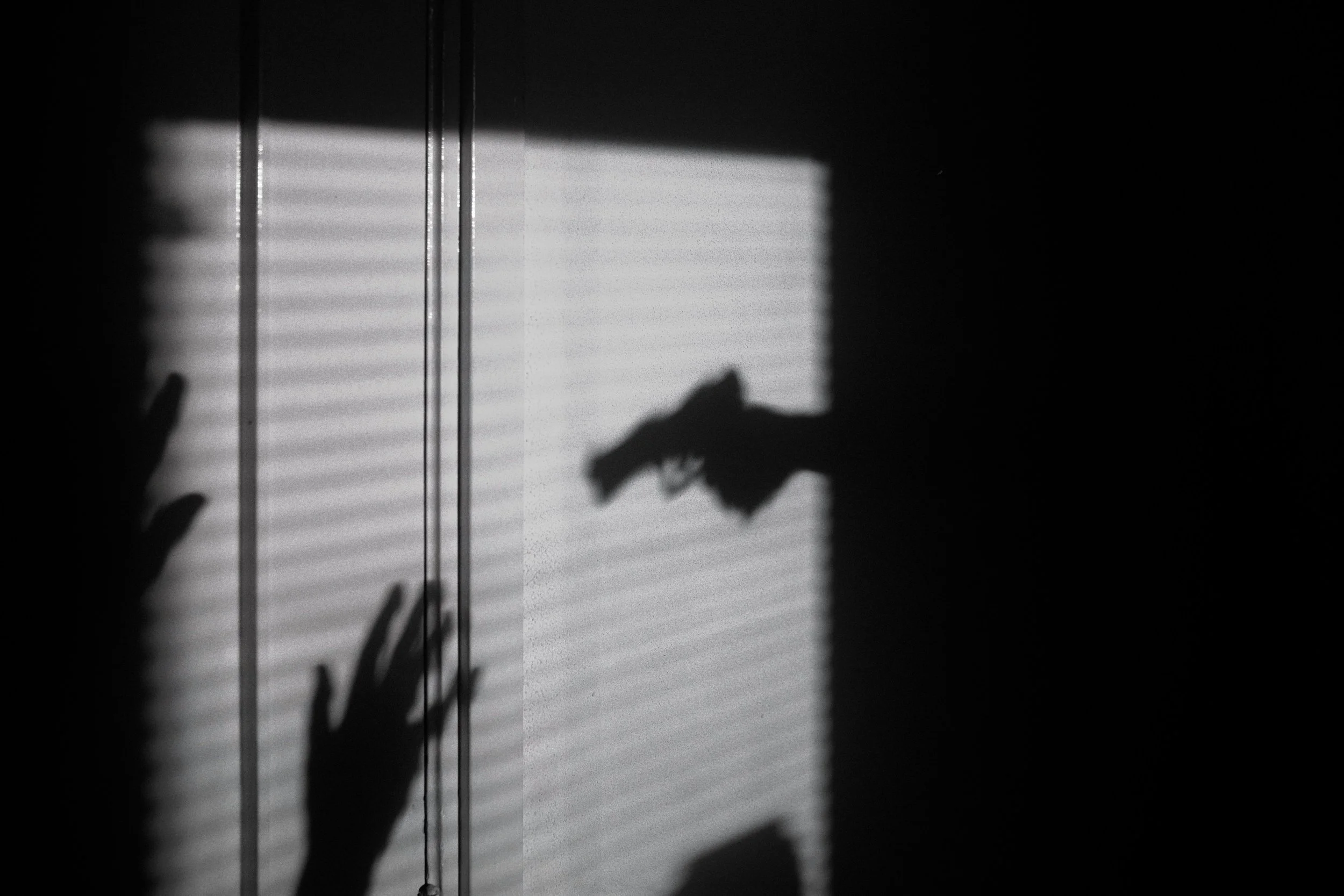
A week later, when she looked at the gun in her hand and the three bodies in the bed in front of her, she wondered if this was what they needed and if now their needs were met. Hope had gone to visit her mother, and she had been trying to get a hold of Cleptus the whole evening. His phone had been off, and her contractions were getting closer together. She looked out of the window and saw Mphatso’s car in their driveway. She wobbled to their house and, in the sitting room, saw Cleptus’s phone on the table. It clicked almost immediately what was happening.
She stomped to Hope’s safe and got her gun out. When she opened the door and saw the naked bodies on the bed, she didn’t hesitate. She started with Cleptus; he deserved to be first. It wasn’t that he caused her pain, it was that he was nothing, made her feel nothing, made nothing, and would amount to nothing. The second one was for Mphatso, for the pain he caused her friend. The last one was for Lyness. It was unfortunate about Lyness because she was merely a product of her circumstances, but she didn’t deserve it any less.
After the shots, Faith watched the bodies. Cleptus was still short, Mphatso was still bald, and she wondered if even in her death, Lyness was submissive.
ABOUT THE AUTHOR
CHILUFYA NCHITO is an emerging Zambian writer who loves fiction and is passionate about how stories can provide escape, but also how they can say the things we are sometimes too afraid to say.
* Cover Image by Maxim Hopman on Unsplash