

•
Redemption
• Redemption
February 26, 2026
Redemption
A story by CHRISTOPHER ARMOH
It was twenty-four minutes past midnight. Selman had just prayed the aura of peace into his space and tucked himself when his ringtone shattered everything. He rolled his eyes, not tonight! Then turned onto his left side, fished for a pillow and pressed it over his right ear and face, willing the sound to stop. The ringing stopped. He lay there, weighing the possibilities; who could this be at this hour of the night? I’m tired. If I don’t answer, will it be too late by morning?
He lifted the pillow slightly so he’d not inhale his own warm breath. The phone rang again. Fine! He wriggled his legs in the blanket, then flung it aside and sat on the edge of the bed for a moment before walking barefoot to his study, where the phone was.
He picked up the phone and immediately recognised the number. He swallowed saliva as an attempt to tuck his irritation carefully out of reach before answering.
“Hellooo.”
“I’m sorry for calling you at this hour, but could you come see a sick girl?”
“Is it urgent?”
“She may not live through the night.”
“I’ll come at once,” Selman said and hung up.
He let out a sigh, turned on his phone’s flashlight and walked back into his bedroom. Then he placed the phone face down on the bed and grabbed the blue button-down and black trousers he’d flung in the laundry basket just two hours ago. He flapped them to reduce their rumples, then wore them just as rumpled. He yawned, stretched, rubbed his palm heel on his eyes, yet the blur of sleep stayed. He sat on the edge of his bed to put on his shoes. His thoughts drifted as he stared at his shoes, and for a moment, he saw his mother, bent over the pair, tying the laces with quick hands. He looked down. The knot hadn’t even started yet. A light and sudden tap called his attention to his window. A car’s taillights washed his room with a brief red glow. The colour slid across the walls and crossed his chest, suddenly transporting him to the night his friend, Mensa, sagged in his arms, his mouth open in a gasp and his eyes fixed on nothing. Both of them had ambushed someone, and it had gone horribly wrong. One moment, they were in a scuffle, half-lit by an amber streetlight, and the next, Mensa staggered back and cried out, “Ajieee!”
His hands went below his left chest.
Blood came fast.
Selman turned towards him, and in an instant, the other person tore himself free and ran. Mensa staggered back again. Selman rushed, caught him, and went down with him. Blood soaked through Mensa’s shirt and flooded Selman’s hands. He pressed harder, called his name, shook him, but Mensa’s body sagged in his arms. He couldn’t move him or call for help. And he did not want to drag him, so he lowered Mensa to the ground and left him for the world to find the next day.
For days afterwards, he couldn’t sit still. He fought phantom battles in his sleep. Every shadow felt heavy, as if someone was stalking him, ready to strike.
On the third Sunday, he found himself returning to his old Sunday school building. He lingered there night after night. Sometimes he stayed on the steps or in the vestibule until one evening his former Sunday school teacher, Mr. Agyeman, by then a youth minister, noticed him and invited him inside. He sat in the last pew. He didn’t speak or move more than necessary. When the choir sang “Rock of Ages, Cleft for Me,” he didn’t sing along, but his upper body moved to the rhythm and shifting feet of the choir. Some days after, he would catch himself humming the chorus of the song. The following Sunday, he asked Mr. Agyeman if he could borrow a hymn book, and he was given a new copy. Slowly, hymns and church services began to fill his routine. He arrived early for service, sat a few pews in front of the last, and he nodded or simply smiled when people said things like, “It’s good to see you”
“I like your voice, you should join the choir.”
“I like your shirt.”
It wasn’t comfortable for him, but it was enough to keep him going back. And one Sunday, after a sermon on repentance, the minister called out, “Anyone who wants to give their life to Christ should kindly lift their hands while I pray with them.” Hands went up sparingly. Selman hesitated, then slowly raised his halfway. He repeated the salvation prayer with the others. And at the end of the prayer, another invitation came, “Those who prayed should come forward so we can all pray for them.”
Selman’s heart beat fast against his ribs. The last thing he needed was every eye on him. He looked around, but most people had their eyes closed and were humming along to the organist’s tune. When he was certain only a few people could see him, he joined the ripple of movement. He walked down the aisle slowly to the front. The prayer was short, and when it ended, he rushed to his seat as the choir began to sing “Amazing Grace” before benediction. When service ended, Mr. Agyeman walked up to Selman and placed his hand on his shoulder and said, “I’m glad you walked up to the front today, well done.” Selman nodded and watched him walk away. He stood there for a while watching people talk in low voices and children tugging at their parents’ sleeves for coins to buy sweets. Some of his old friends walked up to him and chatted briefly before disappearing into the scattered congregation.
His phone dinged. He picked it up and glanced at the screen, but didn’t open the message. He let out another sigh, tied his plimsolls, grabbed his car keys and stepped toward the door. Lord, give me the strength to carry on, then he opened the door. The cold and damp air hugged his face. He locked the door behind him and walked to his car. He opened and sat, turned on the ignition, placed his hands on the steering wheel for a little while before he drove into the night.
Selman’s formative years involved church. His mother believed he was an answered prayer, the child she had long hoped for after many years of miscarriages and broken relationships. She christened him as Selman Kwame Nyamekye; Selman because she was “fortunate and God is wise,” Kwame was his kradin, soul name; amongst her tribe, the Akans, children are named based on days they were born. Kwame is the name given to a male born on Saturday. She added Nyamekye, which means “God’s gift.” She never let him out of her religious orbit. Every week had its own rhythm of church. Tuesdays were for prayer meetings, Wednesdays for midweek service, Fridays for fasting and prayers and Sundays for main service. Each time, she would lock her provisions store and go and pray. Sometimes she would let him skip school so she could take him along. At first, Selman obeyed, quietly and dutifully. But when he became a teenager, he began to see church as a constraint. On Sundays, they’d leave the house at six o’clock, and he was expected to fast. Sometimes the service dragged on for hours and by the afternoon, his stomach ached, and his head spun. Whenever he complained, his mother would say, “That’s the devil tempting you to eat.” Fridays were his worst nightmares. He had to do a compulsory 12-hour fast and prayer. The time moved at the speed of a sloth, and he hated every minute of it. He longed instead to play ball, talk about his favourite teams and players, and laugh and joke with his friends. But he couldn’t. One time, he fainted after 12 hours without food or water. He was so terrified that he swore never to fast again, and it eventually translated to not going to church almost every day. He convinced himself he was fine without church and prayers, and fasting. He moved around with boys who wouldn’t think twice before ambushing anyone for a few cedis, just to keep themselves high on weed and drunk on alcohol.
On a humid market day, when the stink of unwashed bodies mingled with the foulness of momone, urine, rancid food, rotten eggs, and rusted zinc sheets, Selman and two others moved through the market. They walked shoulder to shoulder through shoppers and vendors who shouted till their voices went hoarse, laughing and chatting as friends and hiding what their hands were taking. They had just performed one of their choreography on a vendor and were already working on their next victim when a man pushed through from behind them. He was barefoot. His shirt, inside out and stiff with sweat and grime, hung on his lean frame. His locked hair was matted with dirt, and he rocked slightly on his heels. He shouted, “Selman Kwame Nyamekye!” A few people turned their heads. Selman turned to find his hands pointing at him and moving towards him and his friends. He started screaming, “Nyame ankasa na w’afrɛ wo! Wo betumi adwane no sɛ neɛ wo pɛ bia, nanso wo ne me mmienu nim sɛɛ, sɛ wo dwane Nyame me a, wo ntumi nsie no, frisɛ wo shɛ n’ani ase!” “It is God himself who has called you! You can run away from him any way you want to, but you and I both know that you can’t hide from Him, because you’re right under his eyes.”
Selman turned to his friends and laughed too fast, like the way you do when you need the moment gone.
“Did you hear that? Odii, you got the wrong guy. Next time, pay attention. It can never be me”
One of his friends scoffed. “Called by who? Man, this guy can barely make it to noon without a joint.”
The other also responded, “If that’s true, then the Most High is calling the most high”
They laughed, slipped back into the crowd, and continued their work. But the man’s words stayed with Selman more than he cared to admit. He didn’t know this man, and he never saw him again after that day, but his words would return to him unbidden. And though he tried to push them away, they plunged him into memory, and he remembered he’d heard similar words many times from different prophets, but there was also some stubbornness in him that detested these memories. He didn’t hate these prophecies, just the lack of specificity. Everyone kept saying he was born for something substantially great, but no one gave him the details. And his mother’s grasshopper-like hop from one church to another disconcerted him. It seemed as though he was more her trophy than her child. The subtle gloating and delight on her face whenever a prophet invited them to the front of the church, prayed, and prophesied over them were unmissable. What troubled him especially was the dirt and dust. Most of these churches were often nothing more than wooden structures with bare earth for a floor. His mother always insisted that he wear white down to his shoes to church. When he pushed back, she’d quote 1 Corinthians 6:19-20. He walked into those meetings, hoping desperately that he would not be thrown to the ground because the burden of washing the stained clothes was his. He would stiffen and plant his leg firmly on the ground to avoid falling whenever a prophet approached him. He continued to go to church with his mother on Sundays until he didn’t. His mother never stopped. She believed every prophecy spoken over him, and that belief chased him through his youth.
A few months after being born again, he got baptised and joined the prayer and evangelical team. Before that, he had joined the choir. He often went out to the places he used to hang out with his friends to share the gospel with them, and sometimes, he’d simply chat with them. They’d tease him about the market experience and nicknamed him “the most high son of the Most High.” He got a few people to go to church with him and eventually led them to be born again. Mr. Agyeman and his friends at church praised and encouraged him, and he vowed to God and himself that his singular purpose for as long as he lived would be to help others get born again.
*
Adwoa Nyameaye met him at the clinic’s entrance. If he didn’t know any better, he’d say she’d been looking out for his car. Her hello was hurried. Her eyes were heavy, maybe with stress or grief. When she turned to walk him to the ward, he noticed that her green uniform was rumpled at the butt-area. The long corridor smelled of disinfectants, undercut by the faint metallic tang of blood, but that was a smell married to his nose. The room was hot. The ceiling fans whirled lazily, producing air that made a dent in the heat. In this part of town, electricity had only just arrived, and blackouts were more common than houseflies. The lights flickered, they drew power from a generator that seemed to be on life support. The eight beds in the room were all taken. Adwoa Nyameaye halted beside the bed of a young girl, maybe eighteen. When she spoke, Selman had to lean closer. “I want to, gi-ve, give, my - life, to, to, Christ, before I, before I die.” Her breaths came shallow and uneven, each one thinner than the last. Sweat glazed her temples, and her fingers clawed at the faded blue bedsheets covering her. Her brows knit slowly as she stared at the man standing over her. The fear that clung to her face like a stubborn pimple was unmissable. Her body was thinned. She had lived with sickle cell all her life. She had managed its tantrums and pain with medications until two months ago, when she was diagnosed with severe anaemia. It ate through her body slowly, weakening her organs and breaking her down piece by piece. First was her lungs, then her liver gave up and dulled her strength, and finally, her kidneys, leaving her heart to labour against all the weakness.
Selman knelt beside her bed and asked her to put her right hand on her heart and repeat every single word he uttered. He led her in prayer. He watched her lips move, trying to morph the words. A knot tightened in his chest, and his eyes betrayed him; they were wet against his willingness to hold it together. God, please, he looked up briefly. She was in so much pain, and there was nothing else he could do for her. He gripped her hand tightly when she faltered, murmuring encouragement, letting her know she was not alone, even as tears slipped free from his eyes. At the end of his prayer, he began to sing “Just as I am…” She attempted to sing along, but her voice was feeble, broken, weak and wavering.
“Come on now, sing with me. Just as you are.”
She hesitated. “I…I don’t remember all the lyrics”
“That’s alright, just the parts you remember. Let it out.”
She tried again. Fragments surfaced from morning devotion sessions at school and from songs sung during parades.
“Keep going, you’re doing great”
Her words remained unintelligible until the last line. Every last ounce of strength in her body must have gone into, “O Lamb of God, I come, I come!” They would be her last words.
Selman rose slowly. Adwoa Nyameaye moved beside him and drew the faded blue sheets over the still body. Her practised hands shook. Silence settled between the soft beeping of monitors and the lazy whir of the ceiling fans. She broke into quiet sobs. Selman lowered himself onto a chair beside the bed and hunched forward with his head in his hands. He stared at the sheet, at the unmoving shape beneath it and something twisted inside his stomach, surged into his chest, and tightened in his throat. No words passed his lips for a long moment. He stayed there, suspended between measured breaths and thoughts.
The wheels of the trolley rattled against the cemented floor, pulling him back into the room. The mortuary attendants had arrived to take the body away. He whispered a final prayer over the body, then turned and reluctantly walked out.
ABOUT THE AUTHOR
CHRISTOPHER ARMOH is a Ghanaian poet and cultural storyteller whose work explores identity, memory, culture, the mundane, and social consciousness. He is the winner of the 2025 Adinkra Poetry Prize and a 2026 LOATAD Black Atlantic Resident.
His poetry and fiction have appeared in Brittle Paper and other literary platforms. His poem “Focus on Africa,” published in Of Voices and Movements, is taught in the undergraduate curriculum at Kwame Nkrumah University of Science and Technology (KNUST), where he earned a B.A. in English in 2022. He was shortlisted for the inaugural New Voices Poetry Contest and is a 2025 fellow of the Ubwali Masterclass, the Duapa Mentorship Programme, and Writing Laboratories.
Beyond the page, he hosts the Take Um So Podcast, a space where young people and professionals discuss urgent social issues and share stories of struggle, entrepreneurship, resilience, and innovation. He is also the founder of BOYS & BOOKS, a literacy initiative that encourages critical engagement with African literature among boys and young men.
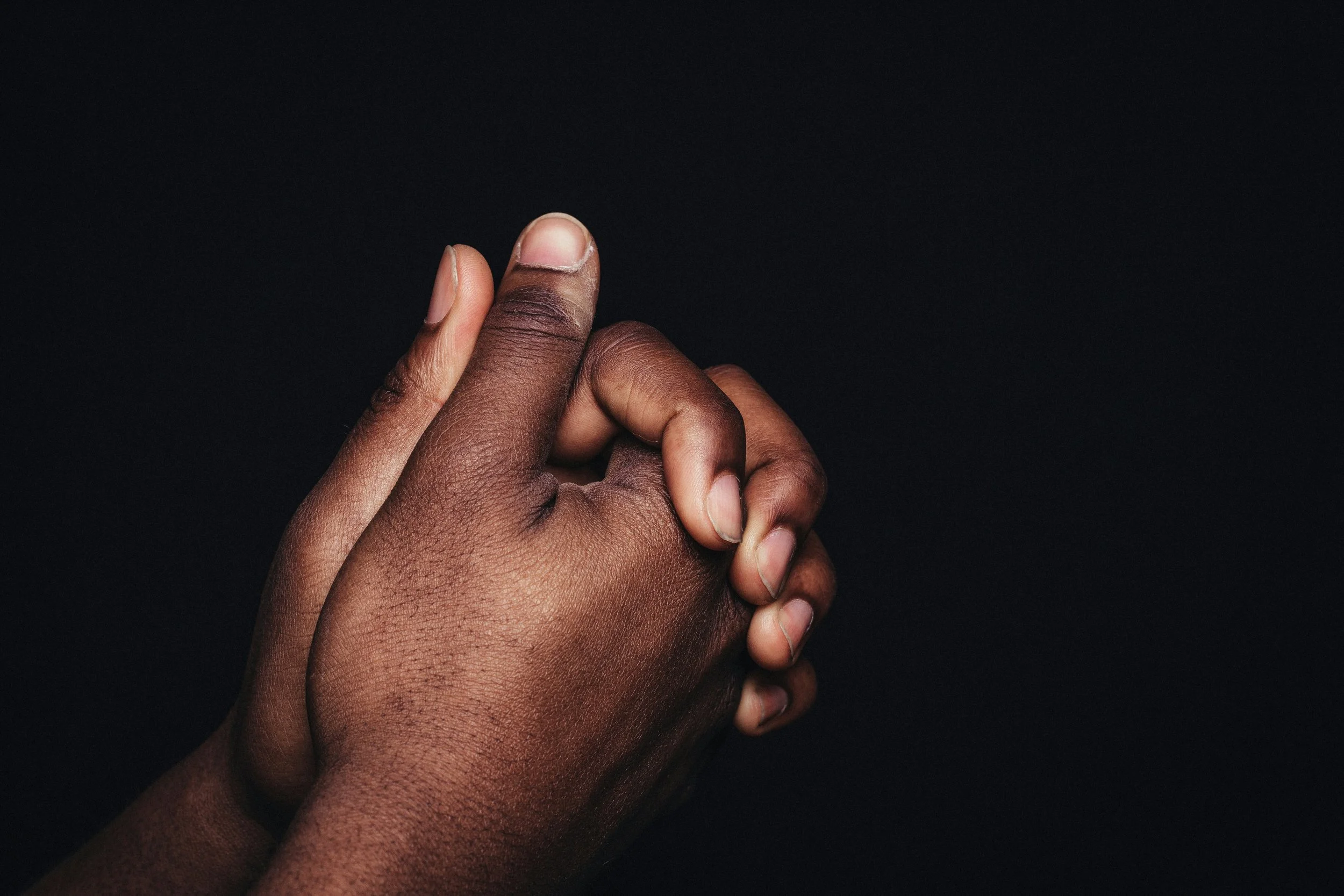
* Cover Image by Nsey Benajah on Unsplash