

•
The Tale of Marengo
• The Tale of Marengo
February 25, 2026
The Tale of Marengo
A story by ALLY BAHAROON
Yesterday, my brother, Marengo, got shot, right in the middle of the forehead. For disobedience. Kaka said he deserved it and that it was all for the best. I am just glad Marengo is no longer subject to Kaka’s cruelty.
*
It is morning again, and the box next to me is quiet. The sun travels from the creaky gate of the plot over the charcoaled walls, and after caressing the uneven grass, it sneaks into my box. Its shiny beams move onto the box next to me. They miss Marengo, and so do I.
Marengo was a handsome black Arab. He had two white feet and a lovely white stripe on his forehead. His coat was as sleek as polished mahogany, and his eyes were as bright as the morning sun. But above all that beauty, he was simply a nice individual. Even Kaka knew that. All the children loved Marengo, and he loved them back. I shudder to imagine their devastated faces next week when they learn that he is no more.
*
I was born at Chanika Greens, a large estate owned by a middle-aged army veteran named Babu—a kind-hearted man who spoke in hushed tones. Babu worked alone on the estate and only arranged for a young fellow to roll up the dried grass into food. Babu rarely had company except for his five-year-old granddaughter, Mjukuuwangu, who was brought on the weekends by his only son.
As I grew, Babu taught my brother and me how to wear a saddle and bridle and to carry him on our backs. He did this with gentle pats and talked to me the whole time. I spent my days gallivanting, feeling the cool breeze ruffle my mane and the soft earth beneath my hooves. I loved nothing more than the feeling of freedom as I raced Marengo across the estate.
During feeding time, he would fluff up and dampen the hay even though Marengo and I would nibble at it as soon as it was put down. There was a steady diet of carrots, cucumbers, and apples. On special occasions, Babu would include grapes and watermelons in the trough. He instructed us not to become startled, or bite, or kick. Especially not to kick—that was a grievous crime: an unforgivable one.
One Sunday, Kaka, a short and stocky fellow with beady eyes, visited Chanika Greens. He came into the stable to look at us. One by one, he examined our eyes, cupping our heads and lifting our lids to check their clarity and brightness. He moved to our mouths, gently parting our lips and feeling along the gums and teeth to judge our age and health. Finally, he ran his hands down our legs, pressing the muscles and joints, lifting each hoof and watching how we bore our weight before stepping back to observe us standing still. He made Marengo and me walk, trot, and gallop before him. Marengo and I grunted our reluctance, but Babu really needed to make some money, so he jostled us into putting on a good show.
The following day, Babu got on my back and rode me around the estate. The grass was soft and wet, making it a pleasant stroll in the cool, fresh mist. After that, he put me back in the stable and saddled Marengo. Babu wanted to do the same with him, but Marengo had none of it. Babu entered the box and laid his hand on the smooth coat at the sweet spot where the back and the neck meet. Soon, Marengo’s eyes were half closed, and he became relaxed again. Marengo brushed Babu’s shoulder, which was signal enough to start his stroll.
As the sun grew to the top of our heads, Kaka came by with a sputtering truck. He gave Babu a wrapped brown paper bag. They went inside the house for a few minutes. After they came out, Kaka took our reins and boarded us onto the truck. There was barely enough room for Marengo and me on the metal floor. My feet felt stiff and uncomfortable, but I got used to it in time. As the truck was leaving the estate, l turned back to look at Babu, but he was nowhere to be seen.
Leaving the estate was new to us. I had never seen more than two cars at once, and now there were hundreds. Motorbikes whizzed around and sneaked between vehicles. Some were deafeningly louder than others. Marengo tried to shake his ropes loose so that he could jump onto the roof of the salon next to us. Kaka caught him and then loudly slammed the side of his door to caution Marengo, who quickly decided against the experiment. I could not believe the rush of these horse-powered motorcars.
*
Kaka lived in a farmhouse near the airport. It was a tiny abode with a makeshift four-box stable crouched on the other end of the plot. It was right across from Kaka’s bedroom window. Marengo and I were ushered into the stable. Two older mares, Zenyatta and Rungu, grinned their teeth at us. The poor lights of the stable did not conceal the cuts in Rungu’s forelegs. They seemed to suffer from a lack of compassion and consideration, the type that Marengo and I had been privileged with at Chanika Greens. I started to miss Babu already, and I think Marengo felt the same. After being escorted into my box, I was locked. The bedding beneath my hooves was damp and sour, a churned mixture of old hay and waste that clung to my legs. When I lifted my head, it brushed too close to the low beams above, forcing my neck into an uneasy bend. The air was stale and thin, and I stood there, already weary, knowing this narrow, unclean space was meant to be my night.
Zenyatta and Rungu, I soon found out, had been with Kaka ever since there was a fire at their old master’s ranch. They were gifted to him for his bravery in saving them and their peers during a fire. Being the host horse and wishing to test the grit of a mare that is newly arrived in unfamiliar company, Zenyatta challenged my brother to a fight. Marengo trotted around her and then taunted with a jab of his right foreleg. Zenyatta let out a cry. She quickly assumed sternal recumbency to let him know that she was not going to continue with this skirmish. She rolled over on her side, but Marengo did not care for her surrender and continued to jab her with his two white legs at once. Seeing that Marengo was not showing any signs of stopping, Zenyatta decided to get back up and face off again. They stood for a moment, forehead to forehead, until Zenyatta squealed and delivered a kick with both front feet. The quarrel was loud enough to get Kaka running out of his shack. He landed a tight-handed slap on Marengo and another one on Zenyatta. They both back-trotted and whimpered. He returned them to their boxes.
On the weekends, Kaka would load the mares into the truck and disappear for half the day. The older fellows would come back exhausted and hungry. They would sleep immediately after feed time, their bellies filled with a bitter, ashy meal of burnt rice. Its grains were scorched hard and smoky, mixed with dry, fallen leaves that tasted of dust and rot. Watching them eat out of exhaustion rather than enthusiasm, I wondered where they had gone and what they would have done to return in such a tired state. I would have asked, but did not want to bother them further.
This went on for a few months until, one day, only Rungu returned. Where had Zenyatta disappeared to? Marengo and I grew more concerned and frightened of Kaka’s demeanour, perhaps an unfortunate outcome of selective breeding.
The following weekend, it was our turn to hop onto the town-ace and see life beyond Kaka’s domain of detriment. The car sailed towards the coast and soon enough arrived at Oyster Bay, a serene and calming place where tall coconut palms stood on the side of the road. The waves twirled and galloped onto the white sands before back-trotting into the Indian Ocean to start the performance from the top again.
Kaka drove all the way up to the quieter northern strip of the beach to saddle us up before parading us down south towards the commotion. Men and women lined the roadside, selling baked potatoes, fried cassava, barbecued corn, and a variety of finger foods. Children ran towards us, pointing and shouting, “FARASI! FARASI!” They swarmed around us and tempted us into committing the crime.
It later became clear that these children and their parents were not interested in riding but just posing for pictures. Adults were heavy, so children were a comfortable option. I knew Kaka wanted adults whenever he could persuade them to hop on for a quick ride. It was a cumbersome ordeal, at least for me. Unlike grown-ups, whose bodies carried caution and hesitation in every movement, children climbed on and off with unthinking ease, treating the ride as a bright adventure. Marengo, on the other hand, seemed to love the showering of attention he got from the children. As soon as a child was mounted, Marengo would walk, swishing his tail. Whenever I wished to start in a mad gallop, Kaka’s tight grip on my bridle would restrain me. Cheerful children mounted upon a dejected-looking soul who would rather be back in Chanika Greens, where he was not exhausted and annoyed, where love reigned, and Mjukuuwangu was Queen.
One lovely weekend, Marengo and I encountered a fair-skinned woman with silky black hair walking towards us. She was holding the hand of a plump boy. To my wide eyes, she moved with the calm certainty of a lead mare, her steps steady, unhurried, carrying no fear. The woman’s chiselled face was high and clean like carved stone, her dark eyes alert, watching the ground ahead as if measuring every path. I caught the faint scent of leather and wind clinging to her clothes. Her hand rested firmly around the boy’s, guiding him with quiet strength.
“Shillingi ngapi kupanda farasi?” she asked carefully. It was obvious that Swahili was not her mother tongue.
“Five thousand big horse,” Kaka declared, attempting to bait her into taking the ride herself.
“Two thousand small,” he added in English. It is hard for people to haggle in English. What is stated is what is required—no ifs or buts.
The woman looked at her rosy-cheeked son, who was already nodding with excitement. He was ready to ride. She held his waist and hoisted him up onto my saddle herself. Her body radiated a pleasant lavender. Her gentle touch on my neck reminded me of Babu’s care. My reminiscing was rudely disrupted when Kaka slapped me so I could start walking. A man dressed in a black shirt and trousers followed us the whole time. I was around important people. It seemed I was carrying an important, stubborn boy. Maybe the woman was the important one. She certainly seemed to be one with her quiet and confident approach towards me. Soon, the ride was over, but I did not want my new friends to leave. As the boy was dismounted and escorted back to the waiting SUV with the woman and the man in black, I wondered if they would return. I wished for them to be with me forever.
*
Yesterday, a young man with a camera shuffled towards us as Marengo and I were feeding on some apples from Kaka’s hand. The young man wanted to ride Marengo, but Kaka told him to wait until he was fed. The young man tugged Marengo’s mane. That was a mistake. Marengo immediately went for the young man. He started away with a stiff trot, his ears flattened, and his neck outstretched. His teeth bared. Kaka quickly tried to rein him in. Marengo fought against the reins and pulled Kaka with all his might. He was too strong to be contained, and so, within a few minutes, was able to break free! Kaka mounted me and rode up in such hot haste. I tried to get myself as close to Marengo as possible.
Kaka flung himself from the saddle to get hold of Marengo’s bridle. He missed it by an inch. Marengo was closing in on the young man’s heels. The young man stumbled and looked back in horror. Marengo reared up his white forefeet and knocked him over. The young man wailed. Kaka’s face turned red. He immediately unholstered his gun and shot my brother right in the forehead. People gathered around, and soon, the police did, too. Everyone wanted to see what had transpired. An ambulance came to attend to the young man who was still wailing. The truck to hoist Marengo would not be available till the following day. So, my brother was left on the beach, still and lifeless. With each advance, the waves gathered themselves and rushed forward, collapsing in heavy sighs that slid up the sand to reach him, then withdrew again, only to return moments later. At irregular intervals, they crept higher, washing over his white forelegs and licking at his bloodied forehead, the saltwater darkening the stains before retreating, as if the sea itself were testing how much of him it could take back.
On our way back to the farmhouse, I thought about Zenyatta and wondered if she had met the same fate as my brother. I also thought about how I always did my best to please Kaka, but he was such a brute. There was no way of being in his good books. He did not have any.
*
The next Saturday, I board the truck as usual, and Kaka hauls me over to Oysterbay like clockwork. I notice that there are more people than usual this particular Saturday. Kaka drives to his normal spot on the upper side to saddle me up, then parades me south towards the usual place. I soon realise that it is the last day of Diwali festivities. Indian families spread picnic blankets laden with ladoos and chevdo.
The breeze rushes between my ears and ruffles my mane. I pass by children frolicking in the sand, their faces painted all sorts of colours to celebrate the triumph of light over darkness, good over evil. It is a nice day. But this time, Marengo is not here, trotting on the wet sands with the waves coming in every now and then to pull us. I feel the absence of my brother as I pass by the boulder at the midpoint mark, where he died last week. I genuinely miss him.
Before I can start reminiscing about the times I spent with Marengo, I notice a chubby kid being violently shoved across the beach by his spectacled dad. I think the kid’s arm will snap off any minute now. They are gunning straight for Kaka, who is sitting beside me and chewing on baked cassava. “Kaka, bei gani?” (Brother, how much does it cost?) The dad asks.
“Two thousand kid, five thousand big,”
After throwing the child on my back, who almost slides off the other side, Kaka starts walking us. As soon as I reach the boulder, I rise and shake off the boy. Kaka shouts for me to stay still. He lets go of the reins to catch the boy. I start galloping. Shouts of excitement and apprehension fill the air.
“A horse is on the loose!”
I kick up the pace and trot into traffic. Cars halt frantically as skid marks are left all over the tarmac. I continue galloping, my heart pounding with exhilaration, till I have long left the beach road. I enter a fancy neighbourhood with huge houses, each with a different national flag in front. I am ecstatic. It feels good fleeing away from Kaka. I stroll down the flowered boulevard. It is a beautiful feeling to roam around at will. I linger a bit, looking at the shiny mailboxes that stand outside the mansions. I now must apply for refugee status in one of these countries. I stop near a slightly opened red gate. I nudge it open with my head. The verdant garden is intermittently watered with a sprinkler. Pink Bougainvillaea flowers mark both sides of the interlocked pavement. The grass is soft and wet. It feels just like the field in Chanika Greens. I remember selfless Babu. I remember sweet Mjukuuwangu. I remember soft love.
“Mama! Look! A horsey in the garden,” a youthful voice shrieks from behind me across the garden. A young, fair boy with black hair on his brow points his arm at me. Mama, wearing shorts and a tank top, quickly jumps out from behind the boy. She walks towards me with a familiar air of quiet confidence. I pick up a familiar lavender scent. She lays another familiar feather-light touch on my flank.
This wife of the Kazakh ambassador would now be my new Babu.
ABOUT THE AUTHOR
ALLY BAHAROON is a creative writer, community organizer, and founder of the Zanzibar Book Fair. He holds a BA in English Literature from Simon Fraser University and is an alumnus of the Ubwali Masterclass 2025. His fiction writing has appeared or is forthcoming in AFREADA Literary Magazine, Caine Prize Anthology, Down River Road Journal, Best Small Fictions by Sonder Press, and his short story collection, The Freedom of Flight. He was a finalist in the AFREADA x Africa Writes competition 2019. He is a 2023 Mandela Washington Fellow and a children story finalist in the 2024 Mwalimu Nyerere Creative Writing Prize. In 2025, he was one of eight African writers selected for the Caine Prize Online Editing Programme. As chairperson of the Zanzibar Renaissance Literary Society, Ally runs a community library in Unguja which allows him to enjoy and facilitate clarifying moments of joy. His creative work primarily investigates compassion and absurdity. Find more about Ally at www.allybaharoon.com
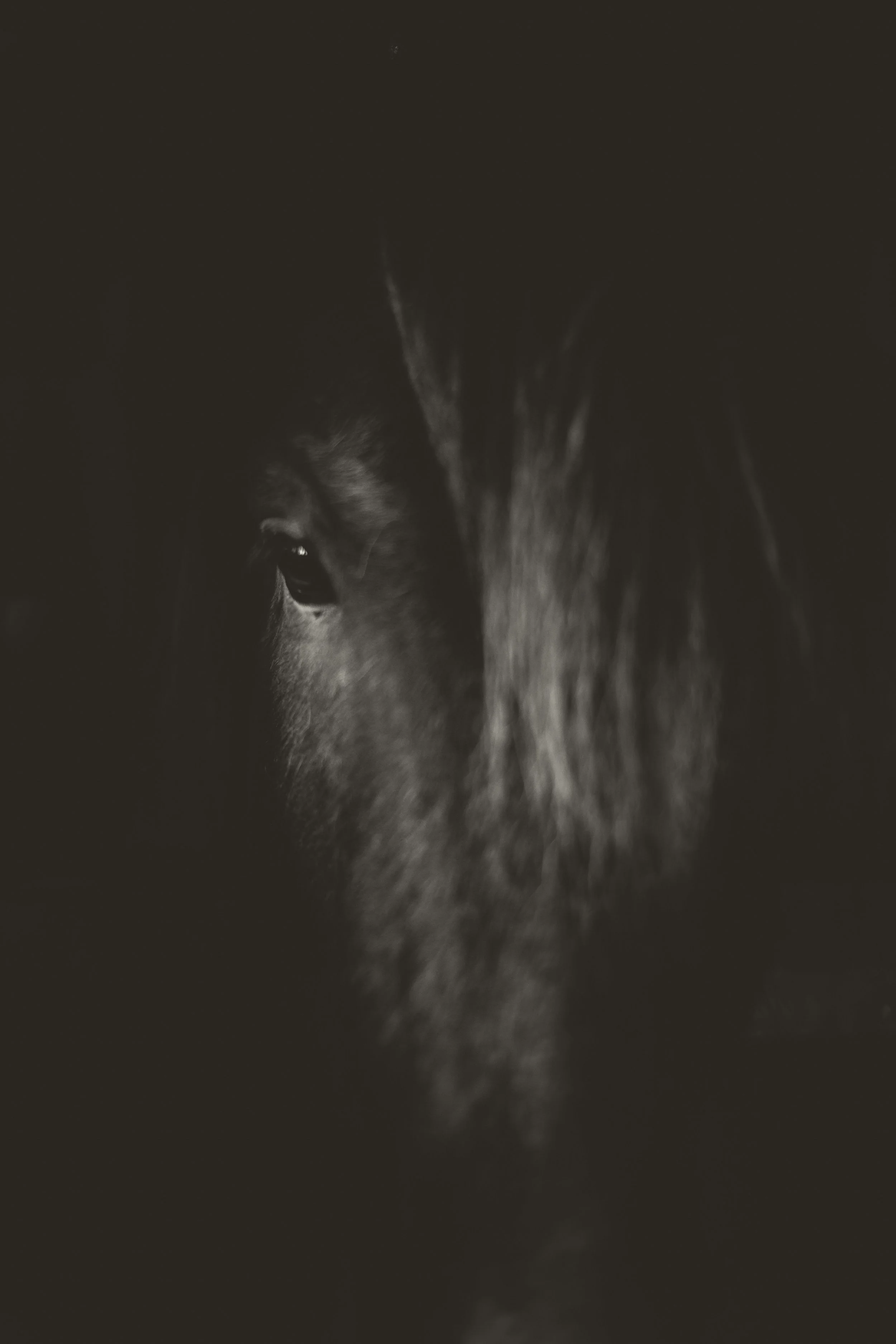
* Cover Image by Connor Wilkins on Unsplash