

•
Solace
• Solace
February 25, 2026
Solace
A story by NATASHA MUKAMBA
Tasheni
Surely, I must be cursed. You are tall, with skin that is the colour of earth after rain, and your beard, peppered and untamed, carries the weight of someone who has stopped paying attention to himself. Your dreadlocks hang heavy to your shoulders, threaded with silver like undergrowth, as though neglect itself has claimed you. You look like you crawled out of a Sir David Attenborough documentary on an undiscovered tribe. You remind me of Kalongosi, the abandoned old man our community centre feeds. Not in likeness, for he is bald, but in bearing. You both carry the look of men the world has learned to tiptoe around.
I chuckle, then I sip my red wine. Why on earth would my sister hook me up with someone who looks like he snuck his way into earth? You don’t fit in here, the prestigious Tanga Tanga, a freaking five-star Hotel. How can a man like you, in that rough-handled, oversized, sun-bleached grey t-shirt, fraying at the edges, even afford this place? I shut my eyes and hope that when I open them, it will be in my flat in Kabwata, me wearing my faded black Paul Ngozi t-shirt, lying on my bed, typing away on my laptop, and eating Ba Wile’s kantemba popcorn. But I am vividly awake. You eat your nshima and chicken stew as if you have no care in the whole wide world. Wait! Did you just suck your thumb clean just now?
Tasheni shuwa! Is this how far you have fallen?
The gravy drips on your beard. I force myself to smile, but your eyes, just barely visible beneath those bushy eyebrows, are fixed on me, daring me to answer. “Hmm?”
You hunch over and go quiet, keeping your head bowed. Then you nod as if conversing with a voice in your head and, finally, you sigh. “You are not listening to me, are you?”
A pang of guilt stabs at me, but only for a second.“I am sorry, what did you say?” Just a glance at my rose gold watch, and something cold wraps around me and squeezes. Kabaso thinks I should stop wearing it, but what does my sister know about wearing a piece of a lover? My heartbeat quickens, so I blink away the moment and remember to breathe.
“Your work...” you say, “Kabs told me you write.”
I smile, not because I’m amused that you’ve shortened her name, something only family does, but because she let you, a stranger, in on my business. “What else did she tell you about me?”
“Nothing. Just that we would get along.”
I stare at my watch again. The lid holding my memories begins to rattle, threatening to fall off.
Your voice pulls me back. “Do you have somewhere else to be, or am I just boring?”
“Both.”
You laugh: an unexpected, beautiful, deep belly laugh that throws me off guard.
“Well, that’s me alright.” You stuff more chicken into your mouth, and I ask the waiter for a refill.
The next few minutes are filled only with the patrons’ voices, speaking over the smooth Amapiano music. The saxophone lingers on the beat, flowing beautifully, unlike our conversation. I take a small sip of my wine. Then another, longer this time. I barely notice myself tipping the glass again until it’s empty. I set it down and wonder if I should have ordered something stronger instead. I’m going to kill Kabaso. Why did I even agree to this stupid date?
“It’s been three years, that’s why,” Kabaso’s voice resounds in my head, and my mind drifts to her living room where she combs Sanika, her toddler’s, hair. She stops, stares me down, and shouts, “I’m exhausted, babes. Look at you, still crying over someone that’s not coming back.”
The cutlery clinks on the next table, and I’m back with you.
“Do you want to leave?” You ask, your eyes pinned on me. Something familiar lies in them, I just can’t name it.
“You have barely touched your steak,” you say flatly.
I snicker. How do I tell you that my appetite walked away the moment I laid eyes on you? That it wasn’t you, not really, just the timing, the ache, the way grief has ruined my manners. So instead, I reach for the thing that feels safer.
“How are you still single?”
“I beg your pardon?” You ask, your voice cracking. I see it then, the flinch you try to hide, the way the question lands heavier than intended.
“You,” I say a little too quickly. “Aren’t you what…forty?” And as the words settle between us, something in my chest tightens with the uneasy awareness that I’ve struck something tender because I recognised it in myself.
Josiah
There is something broken about her. I can tell.
She is interesting to look at: her skin glowing under the restaurant lights, long golden braids framing her face, eyes that belong on a canvas and a nose ring that catches the light when she moves. She is stunning, I cannot deny that. Yet something about her reminds me of the porcelain dolls Ambuya kept on a high shelf in Livingstone in the 1990s, fragile figures I was never allowed to touch. Except she is the one with the cracked lines, the one that Ambuya would never throw away, but treasured because of its fractures.
Talking to her feels like painting under bad light. Every detail is distorted, every attempt at connection dull and unrewarding. Still, I try. I talk about art, literature, exhibitions, everything her sister swore would light her up. But she only sits there, watching, as though willing me to disappear. Her fingers curl around a glass of wine, refilled too often. Her body is present, but her mind is not in the room. Yet, there’s something enigmatic about her aura. This mix of beauty, her sister forgot to mention, and the haunting disinterest she wears proudly, keeps me talking, it tells me there's more to her. It’s captivating. And exhausting.
I wonder why she came at all.
She drowns her disinterest with wine, and when she finally speaks, her words are harsh and hurried. I could tell her I am not yet forty, that life has simply been unkind, that sadness has aged me faster than years ever could. But I don’t. I only watch her fingers drift, again, to her arm, touching that watch like it’s borrowed.
The table next to us grows louder, their laughter spilling into the space between me and her. The sound pulls me backwards to a time when laughter still lived inside me. Before the light went out: before Bianca’s breath became both my comfort and my undoing.
I still talk to her sometimes, in my head. I still look for her in crowds, as if longing could bring back lost lovers, even dead ones. I should be in my workshop painting her before memory dulls her features—chasing the curve of her lips and the gentleness that once lived in her eyes. Instead, I am here, seated across from a woman who doesn’t want to be here either.
Bianca’s face floods my mind, stunning and warm, with her radiant smile that lit up rooms. For a moment, it is Bianca sitting across from me, not this stranger. When the woman laughs, it is Bianca’s eyes that crinkle, but when she speaks, this woman's voice breaks the illusion.
“Josiah, right?” She spits, “How are you still single?”
Just a blink, and Bianca is gone. It is only the woman again, sitting where Bianca should be.
“I’m a widower,” I say at last, the words settling heavily. “I told Kabs this was a mistake.” I know if I stay any longer, I might fold into myself, unravel publicly, turn myself into something pitiful.
She stares at me, head tilting slightly. Her mouth opens, and she hesitates, suddenly unsure.
But I have already lifted my hand, signalling for the waiter.
Tasheni
“Kabaso, why didn’t you tell me he was a widower?” We are outside her vegetable stall along Burma Road, and she removes the soaked vegetables from a blue bucket and ties them in bundles, careful not to wake the sleeping child tied on her back. A man in a suit approaches to buy tomatoes and spinach.
“That was not my place,” She hands him a blue Rambo plastic bag and turns to me. “Just like it was not my place to tell him about you and Zeek.”
Zeek!
She has broken my rule: never to say his name out loud in my presence. When I hear his name, I’m back in 2022. He’s standing next to me outside my sister’s stall, laughing at my dry jokes, exactly where I last learned how easy loving him felt. We put green peppers into small plastic bags for sale as Kabaso waddles her way towards us. “I should make you pregnant just so I can see if you will walk like that.” He flashes a smile at me and winks.
“Choka apa.” I laugh.
“We are going to have beautiful babies, babe,” he says. “But let’s get married first.”
“I’d like that very much,” I whisper.
The baby’s soft coos ripple through the air, loosening the grip of memories I wish weren’t mine. I blink back tears and kiss my teeth.
“Zeek is not coming back, sis,” Kabaso utters. “Don’t you think he would want you to say his name?”
Ahead, the dust rises and falls with every passing minibus. Most are packed with people travelling to and from town - like sardines in a can, Zeek would always say. I remember to breathe.
“How did his wife die?” I finally ask.
“Childbirth.” She says, staring at her hands, avoiding my gaze.
*
It’s five days until I see you again. The ache gnawing at my conscience drives me to your door with a potted aloe vera plant in my hands. Kabaso said I’d find you here, in Lilayi, at your workshop, painting. Having asked about the grief you bear, the same grief I’ve learned to carry myself, I believe I owe you an apology. But my presence annoys you. I can tell, not just from your sigh but from the way your eyes narrow at me. I turn my gaze away from them to your paint-infused overalls. My eyes linger where they shouldn’t: along your jaw, down your neck, to the curve of your shoulders, tracing parts of you that feel almost forbidden to look at. Your dreadlocks, now pinned up, reveal details I somehow missed before, and a warmth floods my cheeks. How long has it been since I felt anything other than cold, bitter and numb? And I wonder, at the lines etched on your face, if you too, still weep in the dark for what was taken in the light.
“I am sorry about the other night at the Tanga Tanga,” I murmur. “I was not kind.”
You lean against the door frame and fold your arms across your chest.
“I shouldn't have been so mean.” I peek into your workshop and wonder if you will let me come in.
Josiah
When I open the door and see her standing there, a tired sigh escapes me before I can stop it. Her again? The thought flashes through my mind. She stutters through an apology making me wonder how much Kabaso told her.
“I shouldn’t have been so mean,” she says, slipping a glance into my workshop. I listen to her, but still do not invite her in. She exhales, then pushes on, “ Josiah, I haven’t been on a date in a while… I don’t know how to talk to people anymore.” Her lips tremble, and a shy, awkward laugh escapes her. “Also, it didn’t help that you looked like a freaking hermit.”
“I’m sorry, I look like a wreck,” I say.
Her face softens, a glimmer lighting her eyes. “Kabaso told me what happened.” She says softly, and my eyes linger on the beautifully wrapped gift in her hands. “Anyway, I brought you this.” She holds out the potted plant. “I’ve been told it purifies the air and helps with anxiety…even in grief.”
“That’s very thoughtful of you.” I say.
Our hands touch when I take it. She does not pull back; neither do I. “Thank you.” I say and I smile- the kind that starts somewhere inside and takes its time, warming me from the inside out before reaching my face.
*
As days fold into weeks, my heart grows fond of her. Slowly, we find a rhythm: calls, texts, memes, long silences that don’t feel awkward, and she becomes my person. So it doesn’t feel reckless when, one evening, I ask, “A friend is curating an exhibition at the Lusaka Museum next Friday…one of my paintings will be showcased. Would you like to come?”
“Li-like a date?” She exhales.
A date? Those words press against the weight I have been carrying for 5 years, and hope flickers in my heart. “You can call it whatever makes you feel comfortable,” I add, soft and careful.
The ensuing silence does not surprise me, but what she says next does.
“I’ll meet you there, Josiah.”
A portion, forged with equal proportions of joy and fear, empties into my heart, and for the first time in a long while, I listen to its quiet yearning. It’s still racing when I see her at the entrance of the Lusaka Museum. The night is beautiful: stars scattered across the sky, a gentle breeze carrying the hum of the city below, a perfect backdrop for the Under the Lusaka Night Sky Exhibition.
“You look amazing,” I say, praying she doesn't notice how long my gaze stays on her sculpted form. “I should paint you in that dress.”
“Thank you,” she smiles, her eyes shy but steady.
“Come, let me show you around,” Leading her through the crowd, I notice the way she moves- graceful, untethered. How her eyes take in everything and how they pause, instinctively, on my painting.
“Is this the one?” She asks softly.
I nod, “It’s my first time showcasing it.” My voice catches. “I didn’t know if I could do it…so I asked you to come.”
What I want to say is that her presence is a soothing balm on this fractured heart, that I want her here, close enough to touch the fragile parts of me, but the words stay lodged in my chest. I can’t name the feelings yet. So I simply watch her.
“It’s stunning.” Her eyes rest on Bianca carrying our baby on her hip, walking away into the glaring light, and I can tell, from the sheen in them, that she gets it. A silence floats between us, almost making itself at home, until she tilts her head and breaks it, “How are you doing…really?”
A nervous, tight laugh escapes from my mouth. “I don’t know. It all just feels like one long nightmare I can’t wake from…”
Her gaze locks onto mine. She knows this space too, the one where grief lingers.
“I lost someone too,” she says slowly as if to steady her voice. “Maybe one day I’ll tell you about it.”
We stand together, quiet, aware that something delicate has begun to take form – weaving its magic beautifully between us.
Tasheni
My life bends towards you, the way sunflowers lean to the light. Maybe that’s how I find myself in your workshop, wine in one hand, paintbrush in another. The unfinished canvases sit in front of us. You paint quietly, the air thick with the scent of turpentine and memory. You glance at me, and my stomach dips. You are quietly taking up the space in my heart that once belonged to Zeek, and I’m afraid, afraid that my heart is capable of stretching for someone other than him, afraid that there might not be room for both of you. I look away, but not before catching the corners of your eyes crinkle with your smile. The stunning painting you exhibited yet refused to sell hangs comfortably on the wall.
“Will you ever tell me about him?” I realise you have been watching me. “It helps, talking about it.”
I smile, avoiding your gaze. “Not yet.”
You nod, your eyes fixed on your painting. “Keeping it in doesn’t make the pain go away. It just buries it deeper.”
You guide my hand through the paint. “Don’t smudge the lines.”
When our hands touch, a warmth spreads through me, stirring every part of my body. “I know what it feels like.” Your finger softly traces mine. “I’ll be here.”
The light in your eyes draws me towards you and when you kiss me, I do not stop you.
Josiah
The memories of our kiss linger in my mind. I cannot stop thinking about Tasheni, the softness of her lips, her sweet scent that is now etched in memory and how quickly she fled my workshop after it happened. Though I understand why she is avoiding my calls and efforts to reach her, my heart still aches for her. For the first time since Bianca, I have found myself smiling at new memories that have Tasheni in them. She rushed into my life slowly at first, uninvited, and now, like a rising torrent, I want to drown in her existence. But only if she lets me.
So I come to her door in Kabwata, and she opens it wearing that faded black Paul Ngozi T-shirt I have seen a dozen times on video calls, and I pause, struck by how beautiful she looks.
“You haven’t been answering my calls,” I say, but she says nothing. “I miss you. Can we talk…?”
“What do you want?” Her voice trembles.
“I wanted to see if you’re ok.”
She sighs, asking again, as if I somehow missed it the first time. “What do you want from me, Jo?”
What I want to tell her is that she is stitching me back together, piece by piece, just by existing. That her presence alone brings light into this darkness I once called home.
But instead, I say, “I’m falling for you,” and she freezes.
“No, Jo. Don’t say that.”
“What are you afraid of?” I ask finally.
“Everything.” She seems afraid that the walls will hear us. “He was my home.”
Her voice breaks, and she reaches for me. For what feels like a second, we hold each other. When she finally lets go, I see it. Perhaps I should have listened when my heart told me she wasn't ready.
Tasheni
I’m on the floor when you leave. Had you turned around to look at me one last time, you would have seen what this madness has done to me. I was fine until you showed up. Sitting pretty in a room surrounded by the walls that grief and I built. How can I tell you that for the first time in a long time, I feel seen? That you make me laugh till my sides hurt? That each time we hug, your warm embrace reminds me of Zeek, a man death snatched from me. I did not realise that when you kissed me, the walls holding me together were cracking, letting light seep into this void that had claimed me for itself.
As I watch you finally disappear from view, something inside me breaks, and I’m back in 2022. Cherub Trust General Hospital. My graduation gown is still on. Zeek’s body is being wheeled into the emergency room.
“Wake up!” I scream. “Zeek uka!”
The rose gold watch, his gift to me, glitters mockingly on my hand under the fluorescent light. I should be marching down the graduation square with my fellow Master’s in Literary Arts graduates, but I’m here acting like I have lost my mind, staring at him lying limp on the stretcher. He should be shouting my name, clapping as I do the kopala dance like we rehearsed, but Zeek is gone, his life stolen in a heartbeat by a drunk driver. I crumble to the cold floor, a scream clawing its way out of me.
And because my sister is there that day, I grab my phone and call her.
“Hey,” Kabaso answers on the other end of the line, but all I can do is sob. “Are you okay?”
“Zeek.” I whimper.
“I am on my way.” She says before I hang up.
I hold myself, and for the first time, I don’t try to stuff the grief back into the deepest part of my heart. I let it out and say his name out loud again and again.
As the weeks pass, I feel your silence, Josiah. No more late-night calls that stretch into the morning. No texts or funny memes. No impromptu dates to art exhibitions or food markets. Until today.
Today, the yard is alive with joy and music— my niece’s birthday party. I hear your laugh before I see you walking through a sea of screaming, laughing children, dressed as superheroes, a brightly wrapped present tucked under your arm. You look different, and it’s not because you’re carrying pink and purple heart-shaped shiny balloons in your other hand.
Your beard is neatly trimmed, your locks pleated fashionably down to your shoulders. My mouth goes dry at the sight of your white shirt hugging you in all the right places. When you see me, you hesitate, briefly, like an old friend unsure whether to offer a hand or hug. When I lean closer, you relax, draw near and hug me. I inhale your scent and close my eyes.
“I hoped I’d find you here.” You say, your voice low. Sanika runs towards you, squealing in utter joy at the sight of her present and balloons.
“You look beautiful,” you say finally. Your gaze dwells on me, and you smile.
“I know.” I smile too, and you chuckle, still watching me. As I catch the familiar crinkle at the corners of your eyes - the kind that appears when joy sneaks up on you, I finally get it.
Maybe healing doesn’t erase the love that was lost. Maybe it just teaches the heart to breathe again, differently.
ABOUT THE AUTHOR
NATASHA MUKAMBA is a Zambian writer and storyteller. Her work explores love, the complexities of family, and the emotional landscapes of African womanhood. She is the author of Bits and Pieces, a 2025 COPPA Book Award–nominated non-fiction book for young women, where she emerged as a runner-up. Natasha’s fiction and essays appear in Ponmois a Bird That Has No Placein a Cultured Culinary Sky and Other Stories (Noisy Streets), Alone and Other Short Stories, the Sister Wives Anthology (Myaambo), and WOMEN’S WORDS: Experiences and Realities (The African Dialogue). She has been featured on The Girl Table’s GT Story Project, The Stripes Literary Magazine, and other platforms. In 2025, Natasha was honoured with the Creative Woman Award in Literary Arts at the HER Night Awards in Lusaka. She was runner-up in the 2026 Ubwali Hope Prize.
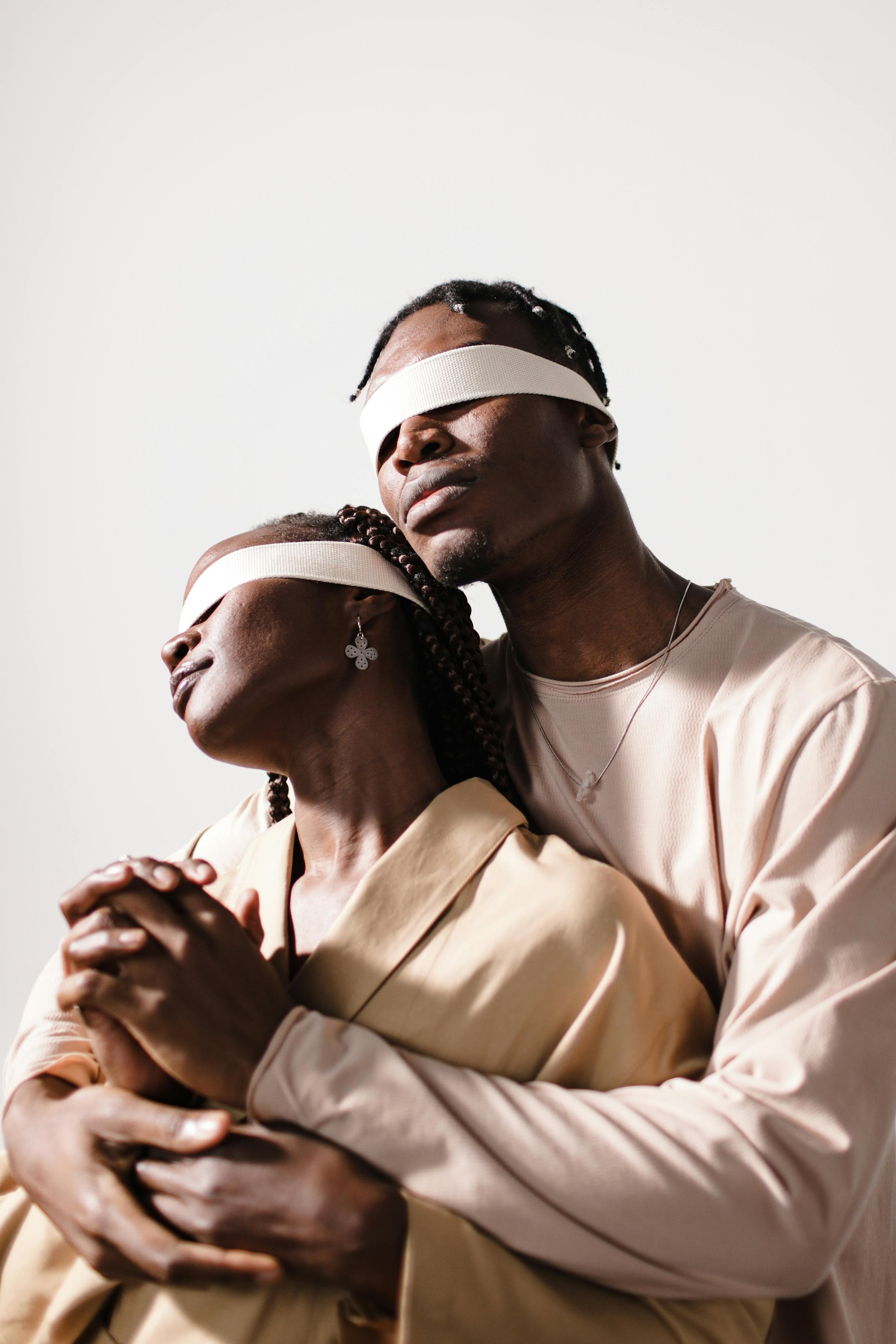
* Cover Image by Cottonbro on Pexels