

•
Tethered
• Tethered
May 25, 2026
Tethered
An essay by MUSONDA MUKUKA
My parents met at the University Teaching Hospital of Zambia (UTH), the country’s largest medical institution and one of its most important public spaces. Sometimes I wonder if I was a thing born of great love or great illness or just two people’s desire to rid themselves of both.
Back then, the hospital still carried the sheen of promise. This was before the decay, before the walls appeared more yellow than white. Before the seats lost limbs and gained stains. Before the HIV/AIDS epidemic that consumed the 80s and 90s, and gloves and test tubes and pills and potions and minds and lovers and doctors and patients and very nearly, Zambia itself.
I was not conceived there, but I like to think the idea of me was—perhaps in a sideways glance at the foot of an operating theatre, in an awkward smile exchanged over a blood pressure machine, in the feel of a hand sheltered beneath a latex glove. My parents were students then. Maybe less jaded, maybe more hopeful. They had not seen death in its full scale then, only sparred with it in pages and practicals. But neither had they fully seen life, and maybe the blueprint of their lives included mine; perhaps it didn’t. Maybe I was a room sketched and idealised a long time ago, or an unexpected addition. The kind that made them notch off a few goals from their own lists to make space for mine. I am unsure. In a traditional African household, these are not the kind of questions you can ever ask out loud, but in a slightly scientific one, you can read the context of your existence, make assumptions, hypothesise, and deduce from there. These will never be solid facts, but they will have to serve as truths for now.
What is certain is that one of my parents is a doctor, and the other is a nurse, and it is in the order and the gender you’d expect. I am the third and last-born child—a role that seems a bit redundant to me. There was a girl, and then a boy, and then there was me: the second daughter and the third child. A rough replication. A series of seconds. A blurry copy of the first girl they were blessed with, coupled with the added pessimism of their age and presence on foreign soil—in Lesotho, where they had moved for work—would never quite hit the same. And truthfully, I have always found comfort in the scent of industrial-strength sanitiser, in the persistent bleach of a white lab coat, in the shocking chill of a stethoscope.
My parents left Zambia in 1995. They did not pack the sofas or the fridges, the tablecloths or the curtains. They could not uproot the mango trees from the yard, only themselves and their children. So I did not know Zambia. I had taken my first breaths there, and my story had been decided there, but my first reluctant footsteps were in a country more mountainous than green; the language I heard the most could not decode the meaning or the pronunciation of “Musonda”. Without ever being taught the word, I was in limbo; I knew I was not at home. But I did not know what home was. I had not had time to plant any roots, so I was untethered. But while I was in limbo, my parents were at a loss. For the language, the people, the accents. For all the things you cannot carefully fold into a suitcase and take with you. For every syllable of their mother’s tongue slipping away from their children’s mouths, each replaced with some strain of accent that was as foreign to their mother as her children eventually became.
Excuse my meanderings, excuse my dips into distraught about the diaspora that so many readers find irritating. I only tell you about the loss of home to tell you what became of it. Home was already unfamiliar, already unmoored in this new city and country—and then one day it slipped through my brother. When he was 4, he went missing. Soldiered outside the door of our apartment and somehow ended up alone on a minibus in Maseru, a town of crowded taxis, corrugated rooftops, and streets that smelled of dust and diesel. My brother was gone for three hours. To me, the length of six kaleidoscopic episodes of cartoon shows they showed in the afternoon. To me, it was the length of ruby-red lollipops sucked and handed to me by my sister as a distraction. To my parents, he was gone for an infinite amount of time, where the possibilities of ways he could have been hurt multiplied with each second. What led him home was not the wail of police sirens or the missing child posters my father so diligently distributed. It was not the shifting of the beads of the rosary that my mother passed through her hardened hands. It was the hospital. When the other passengers came across a toddler and tried to discern where to return him, what this child, who had not yet learned single-numbered equations or even the alphabet, recalled was the hospital his father disappeared to daily. And there they took him, and there he was returned to us.
They say medicine consumes you more than anything else. You get a cushy salary and status, but sign over your life and your nights to a job where “it’s not a matter of life and death” is not a valid excuse. And consume him—and us—it did. On Mondays, Fridays and Saturdays, it swallowed him up. On birthdays and Christmases and school plays, too.
A path trickled from the hospital into our house. Which overflowed with textbooks bought long ago but still referenced. There was a diagram of a skeleton we called Skelly, over which we placed modelling clay and notebooks with the names of medications we could not pronounce to treat diseases we did not know existed. They say it consumes you, and it consumed us.
It was how my brother knew the hospital before his address. It was how I found comfort in the scent of sterility, wanting to nestle into a syringe rather than run from it—because the man holding it was home. So I like syringes and injections and the taste of cough syrup. I like the cold, narrow hallways, the waiting rooms and the nurses people say are unfeeling. I like calendars, pill bottles and body scales. In the absence of a home, the hospital became mine.
I never saw a doctor that wasn’t my father, never considered that the hands holding a stethoscope couldn’t be warm, or that the face behind it could be unsmiling, until I was an adult. Never considered that anyone could feel anything other than safe. Some time ago, my friend lost her father. She called me and described driving past the hospital where it had happened—how the building was this concrete monument to loss. I had never considered that, for most people, that was the case.
They say it consumes you, and in a way, my childhood was haunted. I was not allowed to climb trees in grade school. Unable to rollerblade down concrete streets or try to imitate flying on a trampoline. Where I saw monkey bars to hang off of, my father saw a broken bone. Hurdles, gymnastics, skateboards, all these things that looked like new heights of fun to us just looked like potential injuries to him. Our childhood was haunted by the things he had healed and the things he could not heal. But is it not better to be haunted? Especially after being in purgatory for so long? A ghost only haunts a place it has called home. To haunt and be haunted is proof of it. And in that mountainous brown of Lesotho and the blankets needed to survive it, in the forever green fields as well as sudden thunders of the midlands, and even in the emerald peace of Zambia, the place my roots were tethered to, I had this thing that had consumed my life more than a landscape or a map did. A consistent thread. Bleached and sanitised and completely sterile, but one that tethered me to something - even if it was sickly.
This was both love and illness, inseparable. The pulse passed from him to me without my ever picking up a stethoscope. It ran down the red of his thermometer and kept me in Zambia, hot even in the midst of the South African winter. This great love, this great illness. Both wounded and healing, like a surgical knife that cuts you open only so the doctor can stitch you back together better than before.
It etched itself into my notebooks, my history and my childhood. It altered my perception; the way I think, the way I feel and the person I have become. It made me want to heal in different ways, even as it was healing me.
And so I carry it still—Zambia’s heat, Lesotho’s mountain air, Cape Town’s winds, Durban’s endless rain—each place marked by the same thread. Whether I was in joy or misery in each place, whether I had a sense of myself yet or no idea at all. I had something to look to.
That thread began at the University Teaching Hospital of Zambia, where my parents first met. Before the epidemic, before the walls turned yellow, there was promise. Perhaps I was conceived not in body but in idea, in a glance exchanged across a ward, in a smile over a blood pressure machine. And perhaps that is the truest inheritance: that my tether — to medicine, to love, to illness, to home — began there, in UTH, and has held me ever since.
ABOUT THE AUTHOR
MUSONDA MUKUKA is an emerging Zambian writer whose poetry and short stories have appeared in Ubwali Literary Magazine. One of her short stories is forthcoming in Copper Monstera’s The Boy in the Red Car and Other Stories. She was one of fifteen African writers who took part in the inaugural Ubwali Masterclass and is a 2025 Modzi Arts artist-in-residence. In addition to her creative writing, she has contributed numerous articles to Nkwazi Magazine and other platforms. She was selected for the 2026 Zambian Women in Film and Television Lab. She is the winner of the 2026 Ubwali Hope Prize.
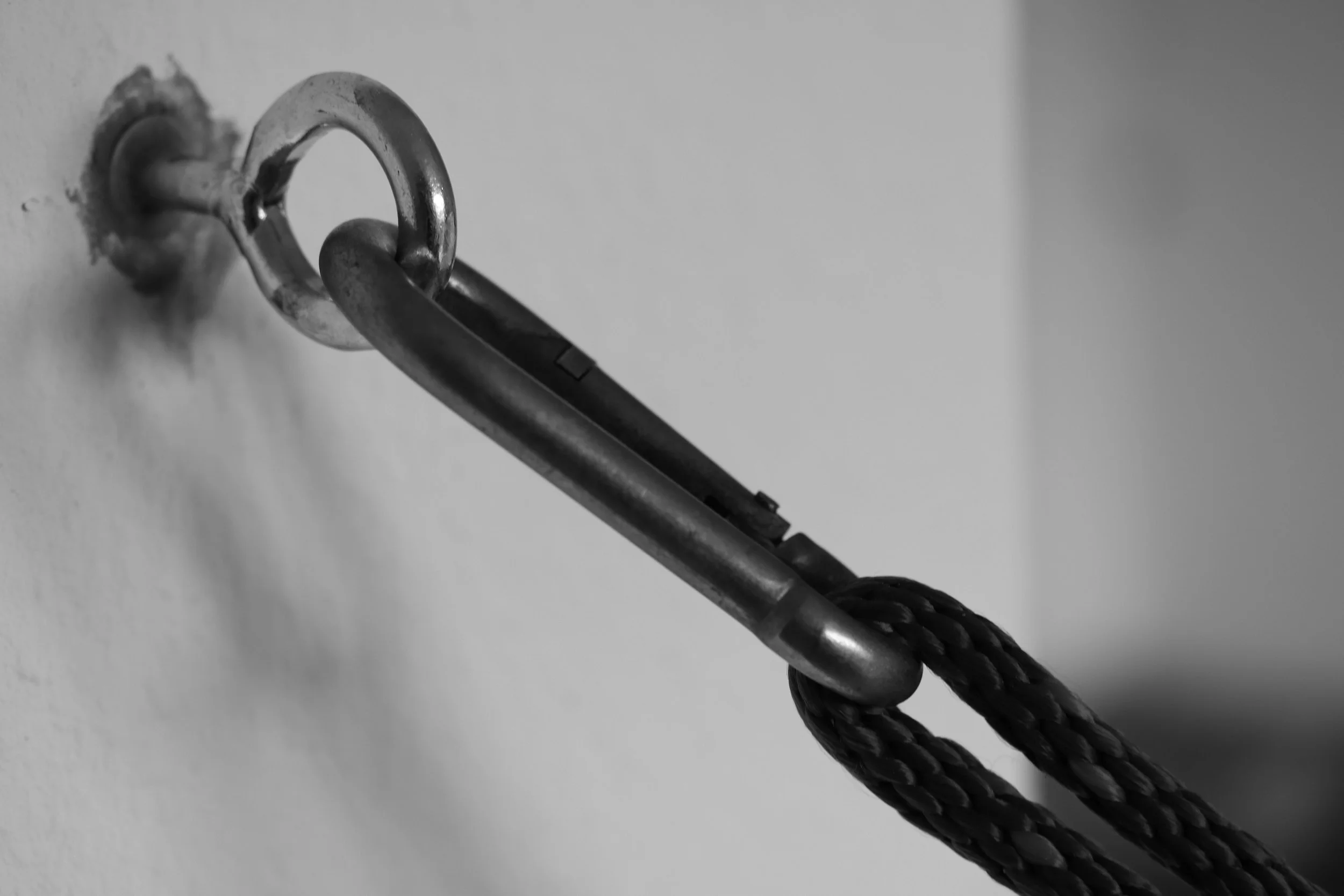
*Cover Image by Joachim Schnurke on Unsplash