

Poetry of the Afterlife
This interview is a result of notes sent via Google Docs between Kisumu and Vienna
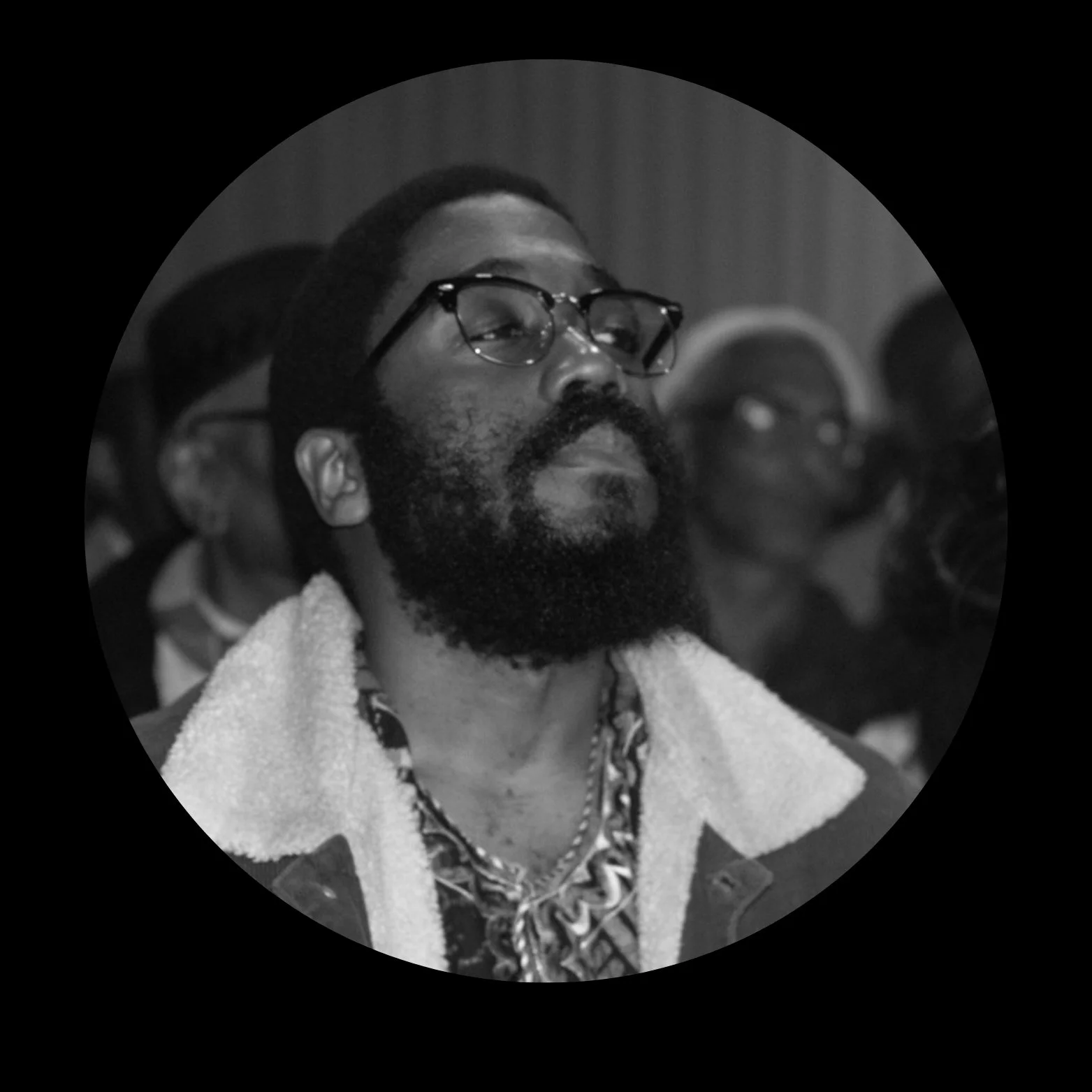
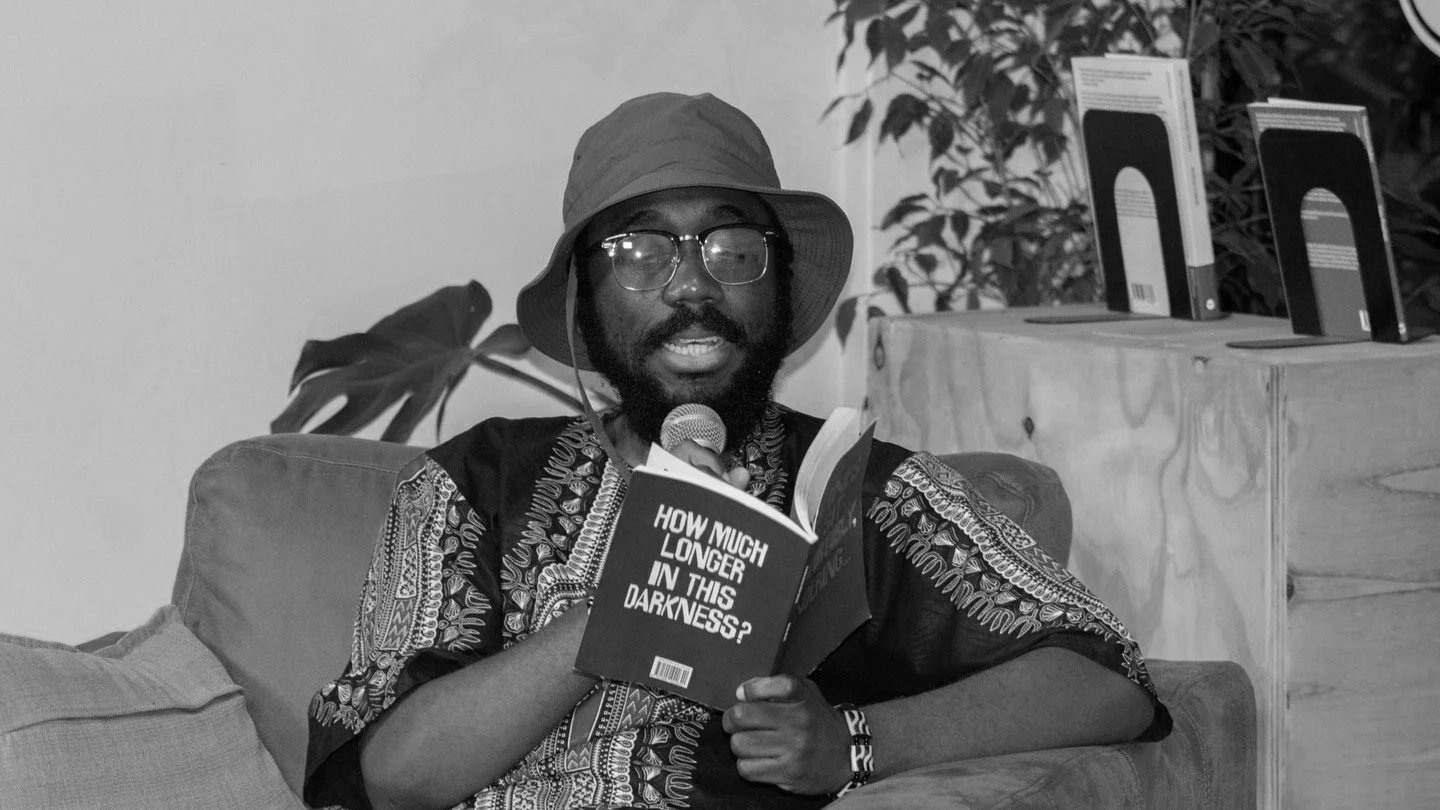
Akal: Welcome, Sihle. Whenever I think of you, read you, you are always with a bucket hat. That is simply how you are registered in my mind. Of course, your beard, your eyeglasses, your smile, are part of the image, but the bucket hat features prominently. “The bucket hat,” as put in this article, “is one of the nerdiest items of clothing in existence”. For a light start as well as out of curiosity, could you please share your ‘bucket hat’ story? Do you remember when you first put it on? Do you agree that it is the nerdiest item of clothing in existence?
Sihle: Thank you for having me. Yes Akal, I laughed out loud when I first read your question. The bucket hat was something I started wearing during my time as a postgraduate at Rhodes University. The very first one I ever bought was large enough to cover my eyes, I remember feeling safe underneath it so I was not wearing it as a fashion statement. I would disagree with them being a nerdy item but I do agree that I feel a great deal of comfort when I have one on. I have a small collection at home, I’ve lost some, others have shrunk in the dryer and I still replace them regularly. I will say though that the best thing that I enjoy about them is how they tend to put me at ease.
Akal: A friend visited South Africa last December. Days ago when we were catching up about her trip she shared that she admires the ornate, lyrical, artistic way in which South Africans speak. She recalled how an Uber driver used ‘propose love’ in place of ‘ask out’. You are South African and primarily a poet. My question on this might be passé, but if you don’t mind, could you please talk about the influence of sounds in the street to your poetry. The Uber driver, the cobbler, the vendors. Do you hear it as poetic? Does it enrich your poetry?
Sihle: I’d have to say poetry is all around us. I can still recall unofficially attending some creative writing masters workshops with the legendary poet Lesego Rampolokeng at Rhodes. In one of these classes he described grandmothers as the original emcees, especially in moments of an intense verbal dressing down of the younger generation.
So to answer your question I’d say yes, South Africans tend to be ornate, lyrical and artistic but so are Zimbabweans, Zambians & Nigerians etc. African expression at its very essence can be very lyrical. I often found myself being thoroughly entertained overhearing some gossip based on the way it is told. So this is to say, the very spirit that compels these storytellers to share is what enriches my poetry.
Akal: This presence of poetry around us has always kept me in a loop where I keep trying to translate everything(to mean most things) into poetry. Do you think this is a good thing? ‘Because truth is, Sihle, at times it chokes me out. It limits me from reveling in moments. I see a car; I see a beautiful man or woman or child; I see a building; I see a unique fork, and all I want to do is fimd a poem for it. My Google search goes as low as ‘Poetry for Red Converse shoes.’ From reading a couple of your poems, I see that you do this, too. For instance your poem, Banana Republic is prompted by a scene in Narcos. Can’t you just watch a series without thinking of a poem, one would ask. I use these many words to ask you this: should poetry come in the midst of life? Or should it come after? Do you think in lines and verses?
Sihle: Well no, it is not good but it certainly does tend to happen. With that Narcos line, I was looking for a dramatic image to start the poem, one that would help me describe the stupidity of the theft of state funds during the pandemic. I am a bit better at it now but I was certainly more guilty of looking at everything poetically back then. I don’t really think in lines or verses but they certainly can come to you out of nowhere, can’t they. My process now is more about gathering rather than stopping everything to put the poetry of the world into a jar. I don’t keep a notepad or anything but I definitely have some ideas I have at the back of my mind that I may put down later in a poem, if I forget them or lose them then I guess the idea wasn’t strong enough.
So to speak for myself, my poetry comes after life rather than during. I recently went to see the Mzansi Philharmonic Orchestra with my twin brother in December. It was my first time going to see something like it. No doubt it is considered very white where I come from. I had been intending to go and see a black cellist by the name of Abel Selaocoe, whom I had spotted on an insert on BBC in 2024. He has been on my radar ever since I saw a ten second clip of him playing the powerful chorus of Ka Bohaleng. There was a spiritual quality of the performance that moved me, this is not something I think I would have experienced if I was there as a poet.
Akal: I am one of those who read comments on posts. Comments and captions. I do so because I realised that there is lots of poetry in some of those comments. I bring this up because I am just done listening to the powerful chorus of Ka Bohaleng, and man, what a chorus! Someone in the comments says: ‘some people make music, some people ARE music!’ This, depending on how you read it, could be an ambiguous and/but accurate comment all at once. Wait, before I even go ahead, do you think people can ever be music?
Poetry gives us such lines, and some of these lines, despite becoming cliche, are still very alluring. Your line: ‘& perhaps a truth of this world is suffering’ is an example of a line that I have heard in iterations but is ever new to me. In your thinking, what is it that makes certain lines, verses, poems, eternal?
Sihle: My belief is that there are indeed people who ‘are music’. There are people who go into trances whilst in the process of making and or playing the music. Abel Selaocoe is a good example, then I also think about Nduduzo Makhathini, whose performance I saw in 2023 with a friend in Johannesburg. Looking into his eyes, it appeared as if he was in the middle of receiving divine instruction from another spiritual realm while his hands were left gliding over the piano keys.
Most times the most accessible lines are the ones that stand the test of time. I like lines that deal with the daily task of being human, or put into a few words what is difficult to explain. Muhammed Ali was known for ‘Float like a butterfly, sting like a bee’, precisely because of how simple it is, the explanation was describing his boxing style, but the imagery used made for a more accessible understanding. For me an eternal line is one that makes room for the most people to consume it.
Akal: It seems to me that people can be anything, only and only if the imagery/metaphor used holds meaning. Which reminds me of a line in your latest collection, Owele,“The history of the land becomes the history of the person.” Even better that instead of doing direct comparison, you bridge people to land using history. I haven’t read the entire collection since I still don’t have a copy to ascertain that these are the three major themes in the collection, but I know that the land question is a question that many South African writers have tried to explain, or at least explore. Tell me something about people, land, and histories, Sihle.
Sihle: Credit to my publisher, Nick Mulgrew, for writing those lines that you’ve just quoted. Well, there is a lot that could be said about the land situation in particular; people and history are definitely connected to it. The architecture of Apartheid had a lot of depth to it and was insanely intricate. One of the ways that the oppression was perpetrated was through forced removals, with black people being forced farther away from the central business districts (or city centre).
The legacy of this is still present insofar as the existence of the townships, which is the South African equivalent of the slums. The township where I am from is called KwaMashu, it is named after a Scottish sugar plantation farmer Sir Marshall Campbell, the same man who introduced Durban to the rickshaws. As much as I write about, I don't believe the township is a place that black South Africans should be proud of based on the history of how it came to be. In fact, I believe once they are able to, the best thing anyone can do is to move.
Akal: Do you mind saying a bit more about Owele? Is it in any way in conversation with your other works?
Sihle: My second collection, Zabalaza Republic was written the year before the 2024 South African elections. At the time I considered it to be the most important election since the first democratic one in 1994. The honest truth is nothing happened, and life is often that way, like the moment after the moment you’d been waiting for. Since Stranger I had been developing the foundations of what would inform my style, one I would loosely classify as ‘urban-Zulu’. It's still mostly English and ‘literary’ but has the sensibilities of someone who grew up black in the late 90’s and early 2000’s.
So my third collection Owele is in conversation with all that, but at the same time an intentional departure that touches more on origins, roots, Zulu ancestry, history and landscape. No doubt it is probably the most difficult that I have ever written since it is a bilingual work. Instead of having predominantly English poems with a touch of Zulu here and there, I have written a small but generous portion solely in isiZulu. I did feel like it was time to do this work now based on the evidence of a silent erasure of indigenous languages in South Africa.
Akal: I am just done looking at a list of notable African Books published in 2025, curated by the Nigerian writer, Tolu Daniel. Owele appears in the list. Your intention for this collection might have been for it to do a host of things, however, what has been the reception of Owele especially from those who can’t speak/hear/ understand isiZulu?
Sihle: To be honest, this kind of work requires you to be brave. The reception is something I look at, yes, but I don’t think it is something that should be used to determine the validity of the work itself. I will politely sidestep the question and instead say that indigenous languages are still a vital part of the world we live in. There was a white middle aged woman who said that she enjoys works like this with translations to make it easier for her, and I thought to myself that is precisely the problem. There is a whole community back home, in my very neighbourhood that I had been alienating for a long time.
Akal: I hear you, Sihle. The vitality of the indigenous languages is most times overlooked. I know that there is an entire politics that brings about this prejudice. It's interesting that you are devoting parts of your poetry to preserve your language. Kudos!
As we end, I can see from your ‘gram that you will be performing in an open mic tomorrow(29th). Best of luck! I'll be stalking your page, waiting to see what bucket hat you will wear for your performance (laughs).
It has been a pleasure. Happy 2026!
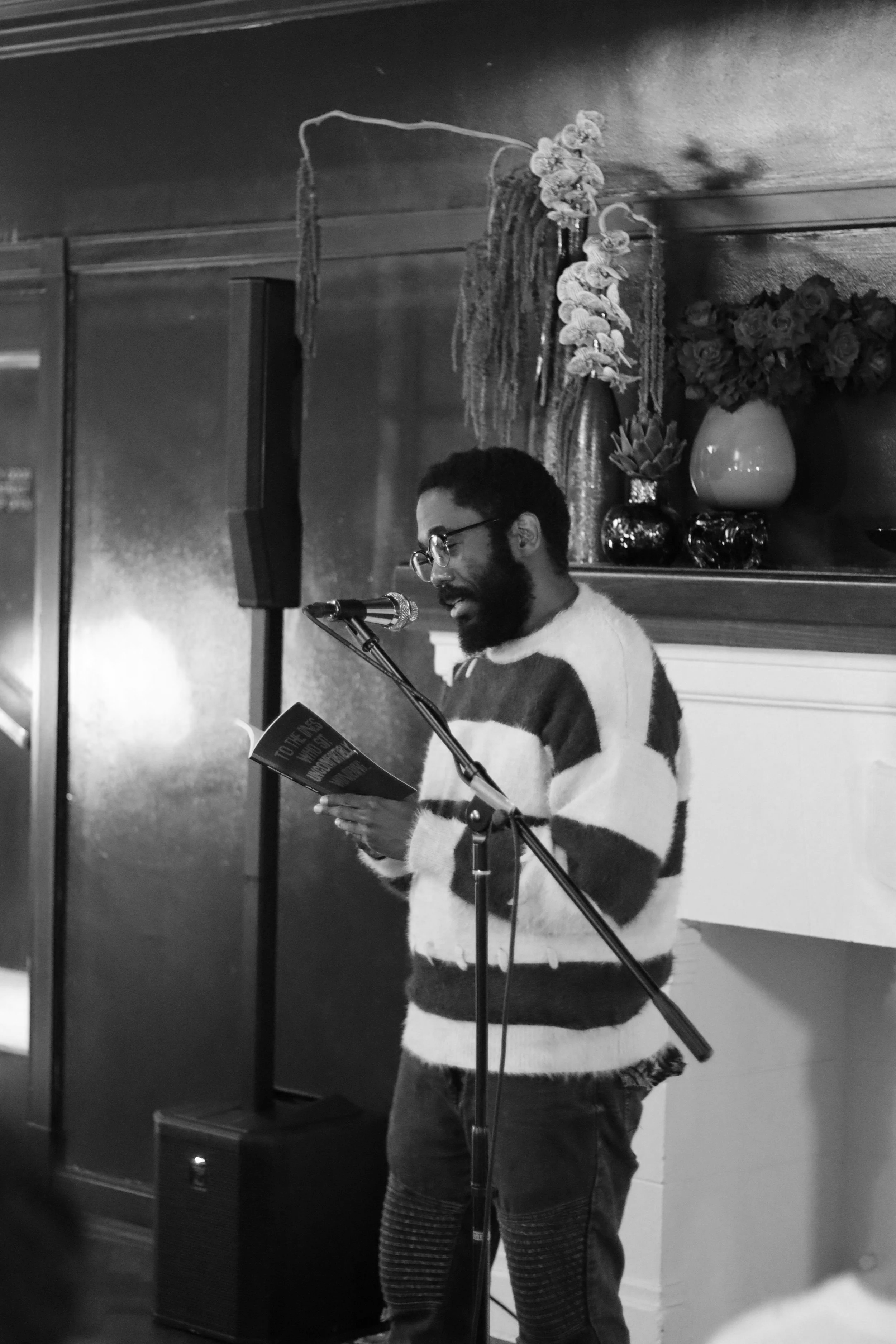
Sihle: There will most likely be no bucket hat for the event in Vienna, there is no being cute during a northern hemisphere winter, the cold takes some getting used to. We also have a podcast recording with the University of Vienna coming soon, so be on the look out for that, hopefully it will come out shortly after this interview is published.
Thanks to you and the Ubwali team for having me. All the best.
___________________________________________________________________________
AKAL is a Kenyan short story writer, essayist, and poet. He has previously been shortlisted for the Africa Writers’ Award in poetry. Akal is also a 2023 Idembeka Creative Writing fellow and Ibua Novel Manuscript workshop attendee. In 2022, he was a recipient of two digital residencies organised by the University of East Anglia, one of which resulted in a short story collection that he contributed to. Akal reads in trust and writes in faith.
SIHLE is a South African poet, editor and curator born and living in Durban, South Africa. His writing has been supported through fellowships and residencies by the Johannesburg Institute of Advanced Studies in South Africa, The Centre for Stories in Australia, The Caselberg Trust in collaboration with the Dunedin UNESCO city of Literature in New Zealand and Literaturhaus Wien in Austria. He is a 2024 Best of the Net winner and the winner of the 2024/2025 Diann Blakely Poetry Competition. His most recent release is the poetry collection Owele (2025) published by uHlanga.