

•
Building the Nation
• Building the Nation
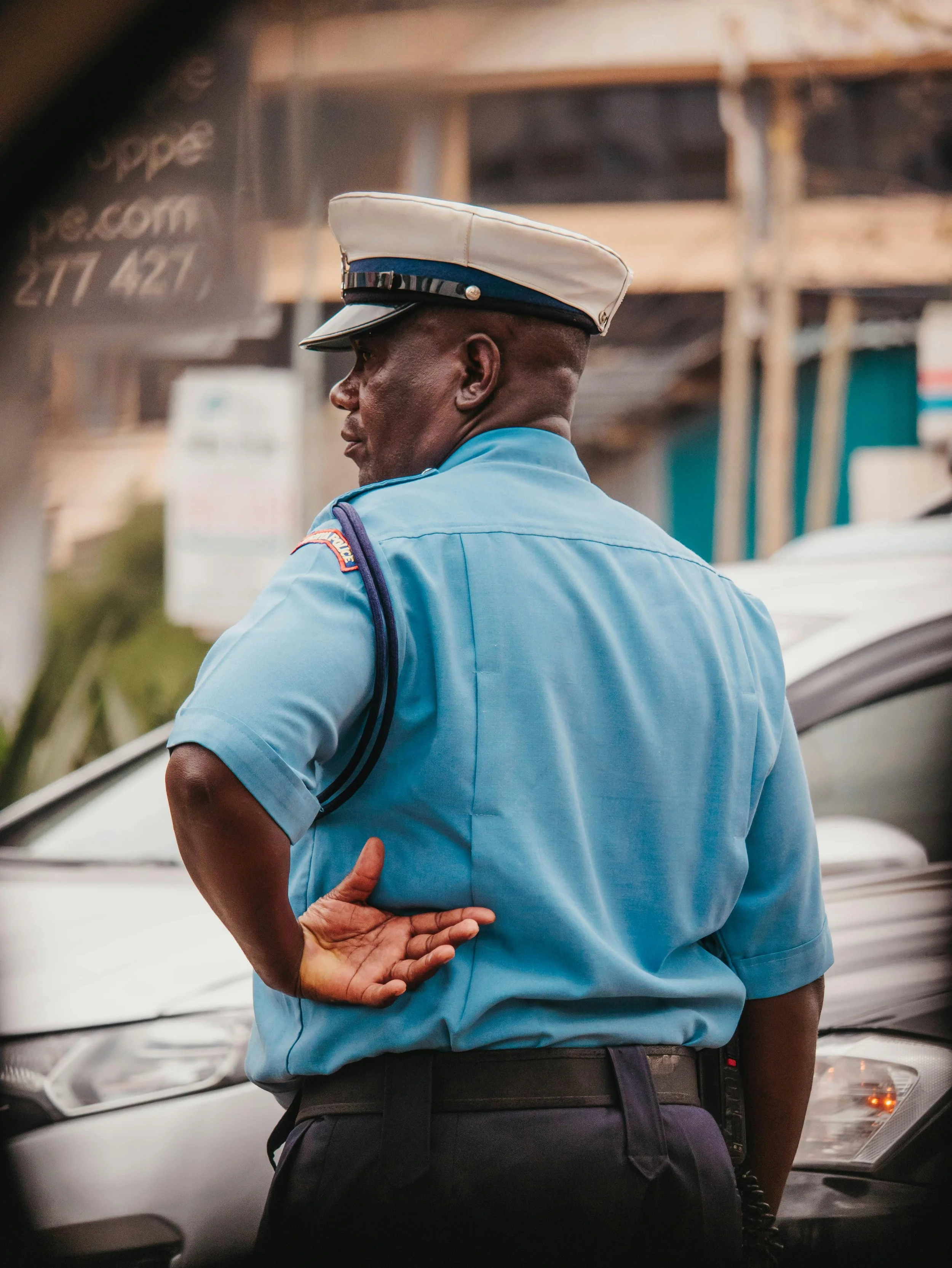
Building the Nation
A story by MAKENA ONJERIKA
He is difficult to track down, but after four years, you find The Priest in Zimmerman. He is now The Shopkeeper, owner of a sizable general store on the ground floor of a tenement building.
In the early hours of the day, you join the unemployed men who gather on the bench outside his shop to offer commentary on the day’s newspapers. They have all laid eyes on the great men of Kenya—Matiba, Shikuku, and Kibaki—at some political rally or other, and one even claims to be a distant relative of one of these men, but is tight-lipped when asked which. Between customers, The Shopkeeper leans against the frame of his blue door, arms crossed at the chest and listens to their debates. He seems amused when one of them declares that Moi may have won the ‘92 elections, but that they will remove him come ‘97. To you, later, when you are tied to a chair, he will declare these men and their favourite leaders in the opposition dreamers and fools; Kenya will belong to Moi for a long, long time.
He will tell you about the night in 1952 when he ran away from home after a severe beating from his father. He trekked three kilometres and sought refuge in Kirimiri forest, where he climbed a tree when night came. He will swear to you that he watched a man shed his clothes and skin and transform into a leopard. He thought himself well hidden, but the beast looked right at him, growled, then vanished in the undergrowth. It was Dedan Kimathi, he will say. Now, whenever one of the public holidays comes around, and KBC plays its routine clip of the freedom fighter in the hands of the British, handcuffed, emaciated, and laid out on a stretcher in his leopard hide, The Shopkeeper reminds himself that heroes are hollow things. You are not surprised. Of course, your brother’s killer is a cynic.
And a transmogrification. What the residents of this street in this barely-middle-class Zimmerman see is a man of unremarkable height with an emergent pot belly from drinking too many Tuskers on the weekends, a typical mid-forties Kenyan man. They observe that he squints when he reads the labels of the goods on the shelves of his shop and seems to hate cigarette smoke. He wears a golden band on his left hand, a family man. What no one but you sees is a creature of folklore made incarnate—the ogre, a half-made thing still dripping God’s mud, ugly, disproportionate and insatiable.
Ask around here, and you will be told that he is a righteous Christian, that he charges fair prices and gives credit to those who prove themselves worthy. Even now, he polishes his leather shoes to a high shine every morning and wears the same Casio watch he bought after his first raise in 1986. But something about him is unspecific and undulating. If you look away for a moment, following a fleeting distraction, you will find that you no longer recognise him. Which is why he has eluded you for so long. You wonder if this is truly the man who has spun your nightmares for four years, the man survivors call The Priest. Tell me your sins and I will free you, he used to say to them. This diminutive man?
His shop is known for cereals and especially the alkali-soaked, de-germed maize called muthokoi. Boil it with nyayo beans, drain and fry the mixture with onion, tomato, potato, carrot and some dhania, and serve it with finely chopped green chilli and avocado slices, and you will have made him happy. Yes, after all that blood and gore, he is still a man who loves his food.
At quarter past one, as you partake of what will be your last meal—ugali with stewed beans—in a kibanda illegally squatting on the plot of land across the dusty road, two boys emerge from the gate of the building next to The Shopkeeper’s general store. Boys in shorts, bright t-shirts, and Bata slippers. Beautiful, healthy Nairobi boys who are very unlike you and your brother at that age. You were skin and bones. Everything you ate went into working your father’s farm. But you had the same sparkling laugh, the same impatient, helter-skelter energy that would not let you sit anywhere for too long. Your father used to say that you and Wanyama had ears for decoration and hardly any brains. He used to say this just before slapping one or both of you across the room. And then you grew up, and thought you were inviolable, but this man, this friendly neighbourhood shopkeeper, now beckoning to the two boys to bring him the toy one of them carries, this man offering them sweets and patting their heads, this man tore your brother apart piece by piece.
The toy owner receives his toy back and suddenly runs off. The other boy shouts, “Kim, wait for me”, and your childhood goes with them. Then The Shopkeeper looks squarely across the road and holds your gaze. He knows that you are stalking him; he telegraphs that he is waiting for you, and you feel fear rise through you, cold as revelation, but it's too late; your mind is already made up. When he closes shop this evening, you will follow him home. You will wait for a dark, quiet corner in which to attack him. You are younger and taller with a bulkier build, but you will fail.
His speciality in the interrogation rooms was breaking bones, pulverising them so that an arm became a thing and the man attached to it screamed and screamed. He did not enjoy the work, he will tell you; he did what was necessary to keep Kenya safe. He can talk for hours about the CIA, MI6, MI5, Mossad, Russia, Uganda, Frelimo, traitors and dissidents. Why did you have to come looking for me? he will ask. These days, he is living the simple life of selling toothpaste, bread, and steel wool. None of this pain was inevitable, he will say, and you will spit at him.
He did it for the money, he will confess, and the damn money wasn't enough anyway. But you know he is hardly a poor man: a pick-up truck, fifty acres of agricultural land scattered across five provinces, the stock in his shop, a mixed-use rental building in Embu town and five hundred and fifty thousand shillings in a secret account. When you list these, he will punch you and weaken an incisor. He will whisper that your generation doesn’t understand what it takes to hold this patchwork of a country together. What were you at six a.m. on August 1st 1982? A child, he will spit.
You were actually a teenager in Kakamega, cutting napier grass for your father’s zero-grazed cows. Mist swallowed your bare feet and shrouded the coffee bushes nearby. Your machete was describing an arc when your sister called. Your name travelled to you over the graves of your grandparents and a step-mother. So urgent was her voice, you thought something had happened to your mother. Not to your father—the drunkard could die a thousand times for all you cared. You found the family huddled around the radio in the main house. You heard every word Leonard Mambo Mbotela uttered, but you did not understand.
“They have taken the government,” your elder brother rejoiced.
Your father’s large hand fell on his face and made him stumble.
“Shut up, you fool.”
The Shopkeeper will tell you about the purge in the army after the attempted coup and about the hundreds dead. But they did not learn, he will say and kiss his teeth, they just had to go start that Mwakenya business. Did they think that Moi would not find out? The man runs a personal network of informants—eyes and ears right down at the ward level. There is nothing that does not reach him through the dedicated phone line beside his bed.
The Shopkeeper will laugh. Let people sing all they want about multiparty democracy, he will say, Kenya is still Moi’s shamba and every weed will face the cutlass. Do you believe in God? he will ask, then tell you that it was God himself who gave this country to Moi, and if Moi wanted names and punishments, no one could stand against God’s will. They too had children and wives and mothers and bodies clothed in thin life and uncertain breath. We are all sacks of flesh waiting to rip at the slightest prick, he will say. He will prod your temple with his pistol. Do you understand?
You will not allow him atonement. He cannot be forgiven. But why hate him and not the men and women now in wealthy retirement or in high office? He was hardly anyone in the operation, he will say. All he did was sit at the back of the Land Cruiser with a foot on the men and women prostrate and blindfolded on the floor. All he did was move them from the Land Cruiser into the holding cells in the basement of Nyayo House. All he did was stand guard. He couldn’t refuse the work—he didn’t sign up for it, but how could he refuse it without giving up his own neck to the ax? He was no fool. He did his job. He did what was necessary.
He will look at you hard when you accuse him of doing much more than transportation. So you are informed, he will mock. Indeed, he flooded the soundproofed, black cells and sprayed water on their ceilings so that hours later the dripping water pierced the silence like bullets and impaled dissidents with fear. Yes, he heard them drop like sacks when they grew tired of standing and fell asleep. Pap into the water and wide awake from the shock. Yes, he worked the control panel. He pumped cold air into the cells, then hot air, then dust. Yes, he took and catalogued their clothes or ripped them off because there was always someone who thought resistance was an option. He led them naked from their cells to the doorless toilet and watched them defecate, or he told them to go in their cells and then drink the water when they cried of thirst. He built their hunger, brick by brick. Yes, he beat them. Those were the orders. He listened to them cry and call for their gods and their mothers. He shut metal doors against all hope. It was what had to be done. He locked up wives in cells adjacent to their husbands and told them their children had been picked up too. All day and night, he played the recordings of crying children and of screaming adults and of echoing footsteps. And on the other twenty-four floors of that building, life went on: people got their passports from the Immigration department and went abroad, and KTN even broadcast news, and no one dared to hear the cries from below. Can you imagine? he will ask. We are all cowards, he will say.
He will pull at his cigarette and exhale in your face, full of the desire to confess, certain that you will never tell anyone, anyway. Natural progression, he will say. He was good at his job. Eventually, the higher-ups noticed, and he began escorting the dissidents—naked and blindfolded—onto the lift that served only the basement and the three top floors of that brown and yellow building overlooking the denuded park named Freedom. On the ride up, all he did was talk. He did not even slap them around. He gave them a chance to confess. He tried to reason with them. What were they really suffering for? A quick confession would lead to an arraignment before H. H. Buch and a trip to Kamiti Maximum Security Prison for 6 -7 years. Was that not better than the pain that awaited them on the twenty-sixth floor? But the brady-matha-fuckers thought they were heroes, fighting for the masses, even while Moi gave speeches: “They are trembling in their holes. We are collecting them one by one, and those at large are not sleeping comfortably. They should expect a knock on their doors at any time. We will deal with them.” And the great proletariat clapped and called for all enemies of the nation to be eliminated, then took the gifts Moi gave, a little money, some flour, some cooking fat, and went back to hungry homes to lie in bed with poverty.
And, the will of the people was done.
He joined the panel of interrogators soon enough. He will want you to know that for him it was simply a job, but for men like James Opiyo, it was a calling. Opiyo was the god of life and death in those interrogation rooms.
A thin, bespectacled man. Very calm. Very disciplined. He preferred the broken leg of a chair and applied it with such efficiency, avoiding all the very sensitive parts and extracting maximum pain everywhere else. The man was neat. He rolled up his sleeves with exactitude and never got blood on his shoes or clothes. He had a certain clarity. He rained down sweat. His subjects wanted to leave their bodies, sometimes their spirits even attempted flight, but Opiyo brought them back again and again. Noses broke, teeth leapt out of ripped mouths, rectums leaked. Opiyo cut through mumbling, screaming, and even unconsciousness to attain the purity of confession.
The Shopkeeper’s excitement will bring a globule of sick to the back of your throat, but your glare will not pierce his reverie. He will proceed to tell you about the woman who survivors call Yellow-Yellow. He will describe her as young and beautiful, curvaceous and always lipsticked, wearing strong perfume and hair that could only be a wig. She had such talent, he will say. Anyone she handled was sure to give up even his dear mother. You will describe those talents as told by survivors and watch his discomfort. An astounding thing to see. You will hate him more for this bit of shame. Didn’t he watch Yellow-Yellow work and even help her hold the men’s legs apart? Didn’t he see her fondle, violate, burn, pierce, kick and crush gonads? How could they all look each other in the eye after their day’s work?
I did my job, he will retort and consider his hands. Now they handle packets of EXE flour and delicately wrap eggs in pieces of newspaper. On occasion, they dole out free sweets to the children who live in the buildings around the shop. But before, they made people whisper even in their own bedrooms. These hands held the country together, he will proclaim.
Congratulations, you will say to him, because his oldest child has just completed university and is headed to the Kenya School of Law. His youngest will soon join Form One. Congratulations for the country you have built for them. Are you proud? A bad move mentioning his children, but he will not react as you expect.
Instead, he will tell you about famine and ask if you know what it is to be seven years old and to dread coming home from school to see no smoke rising from your mother’s kitchen. He will tell you about eating rats and roots. Then his father died when he was in his third year of secondary school, and that landed him in a distant relative’s house as a houseboy for six years. They beat him for supposed laziness and called him a dog, but none of that mattered, he will say: he had food in his stomach. He knows how to make do, Kenyans should too. The Old man will die anyway, sooner or later. No, before that, we will have justice, you will declare. He will lift your bleeding chin. No, young man, the Old man will die peacefully in his bed, untouched by any retribution, he will say. Do you not understand how intertwined these politicians are, kijana?
He will tell you all this while you are tied to a chair because you will have been stupid enough to think him retired, and therefore, weak and unprotected. Nevertheless, you would have come after him. He killed your brother, but your accusation will not perturb him. He will only ask what your brother’s name was; he will not remember any Wanyamas. That will hurt you worse than if he applied a hammer to each of your toes.
Your brother, five foot ten. Your brother with a smile full of gaps. Your brother who read so much book that he had to procure glasses. Your brother, whose name meant the howling of wild dogs. Your brother, who believed that food, jobs, healthcare and education were possible for all. Your brother, who dreamt that change would come. You will describe the nick your brother had on one ear from the time the head of an axe you were using on some firewood flew off and cut off a piece of his ear. You will once more experience the guilt of having almost killed him.
Aah, the University Student, the Shopkeeper will say at last. Yes, he processed that one. He will shake his head without regret. All people had to do was keep their mouths shut and accept that they were small in the face of the state machine, that it could roll over them and not even notice that it had killed something. But your brother gave a speech against Moi in public.
He will recall your brother’s dreadlocks and ask if you know what happens when hair that greasy burns. You will shut your eyes, but that will not extinguish your need to know. You will let his words shave you down to impossible thinness. You will have travelled through four years to this day just to share a small part in your brother’s final anguish. At the morgue, you identified Wanyama by the nick on his ear. The rest of him had decompiled from a twenty-seven-floor fall onto the pavement. The police and the media labelled it a suicide.
The intent was never to kill, The Shopkeeper will insist, only to secure names and confessions. But accidents did happen. Your brother had the will of seven bulls. They knew that he was a low level MwaKenya operative, but that he knew someone who knew someone. What a waste. His pistol will clang on his own metal chair. Wanyama muttered the lyrics of Watoto Nyara as they beat him:
Watoto tucheze ngoma
Vijani tucheze ngoma
Wanyama flew off the building simply because they needed to hide evidence of torture among broken bones and mashed flesh. Don’t you see, he will ask, don’t you see that Moi could have had them all disappeared? Instead, they faced the law, they are serving their time, and one day they will walk free. They still have their lives.
And Peter Njenga Karanja, you will ask. And many others who did not survive Nyayo House and the prisons? War has its casualties, he will say. The strongest won. And had MwaKenya won, had they toppled the government as they had planned, would there not have been blood? And will the leaders who replace Moi never use the police or the army to secure their interests? Will they be less corrupt and not allocate themselves land, cars and large salaries? Will they stop selling us to whichever foreign power can pay? And now that the torture chambers are closed, do you think Kenyans will never again be abducted and tortured? Have you considered the many ways to cripple a people? He will laugh at your idealism and slap you around.
Then he will take off his watch and roll up his sleeves. And now, he will say, now you will tell me how you tracked me down and who you are working with.
What will you endure at his hands? Pins under the nails, electrodes on the genitalia, safari ants or hungry rats, fraying on the soles of the feet, a rod up your anus? His is a grotesque art perfected on hundreds of bodies between 1986 and 1992. He will select your serving carefully; you will die across many days.
Listen. Do not be a hero. Turn back now. You need not follow him home. Your brother will not resurrect even if you manage to kill this man and all like him. You will simply become a hunted fugitive. Forget it all. Look at all these Kenyans going about their lives. They have forgotten all about it. Some have never even heard about the torture chambers. We are a decade away from the Second Liberation, from the cameras that will go to the Nyayo House basement and show the world where the bodies were broken. Why die for nothing?
No nightmare will ever touch this man. Not in this life and perhaps not in the next. The morning after he buries you in a shallow grave or runs you through an industrial meat grinder or dissolves you in a drum of acid, he will push the doors of his store open and greet his customers with clean hands. He will observe a dog raise its leg to mark territory. He will wrinkle his nose at the sulfurous, rotten-egg emissions of the leather tannery two kilometres away. He will greet the two boys playing banoo in the dirt outside his shop, boys as untouched by the realities of Kenya as you and Wanyama once were. And then he will get behind his counter and continue the business of building the nation.
This story first appeared in Black Warrior Review, issue 48.2 in 2022
May 25, 2026
ABOUT THE AUTHOR
MAKENA ONJERIKA won the 2018 Caine Prize for African Writing and was shortlisted for the 2020 Bristol Prize and the 2022 NOMMO Award for Short Fiction. In 2024, she attended the Oxbelly Writing Retreat and was a finalist for the Flowers Fellowship to attend the Disquiet Literary Program. Her fiction has appeared in Granta, the Johannesburg Review of Books, Wasafiri, and Black Warrior Review, among others. She is working on a novel-in-short-stories that blends the real and the speculative. An ADHDer, she works and lives in Nairobi.
* Cover Image by McGzay, Pexels