

•
Omo mei jo
• Omo mei jo
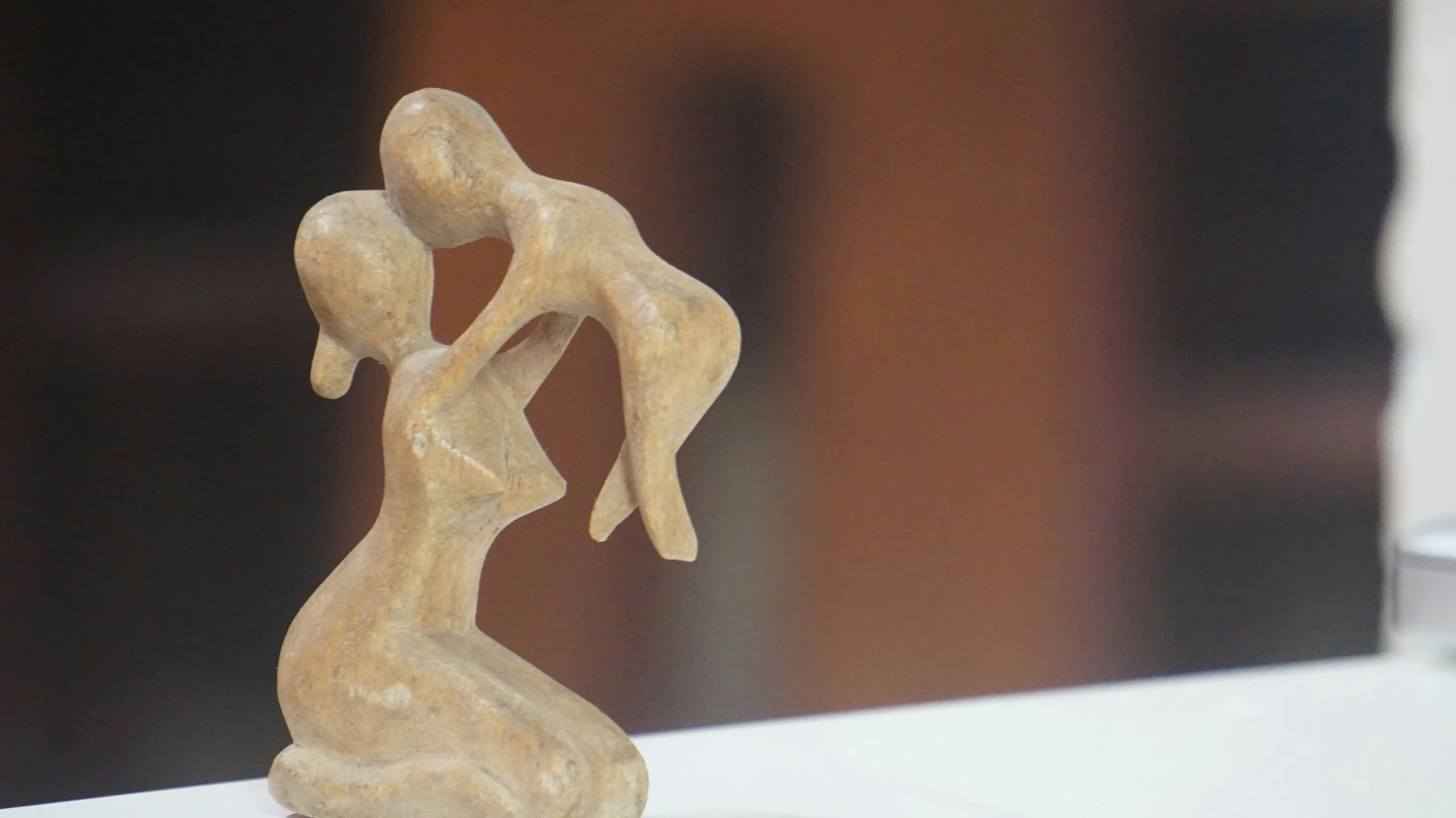
Omo mei jo (Of Childhood and Motherhood)
A story by JOSEPH JEGEDE
Whenever Adebisi dies in her sleep, her body awaits Alake’s call for resurrection. The first time Alake woke her up at five in the morning with her piercing melody, Adebisi had cussed. How did this woman manage to get a house in this estate? Time and time again, she imagines herself storming out of her compound towards the voice in that unfenced bungalow to vent her anger. But she knows her rage would melt once she sees Alake and that pitiful child of hers. She had seen them yesterday while driving out, as Alake observed her baby, who, at five, still played with his drooping saliva. And it was only until Adebisi felt the teardrop on her lap that she realised Alake was not the only one mourning the sight.
As Adebisi gets out of bed, sighing heavily before heading for the bathroom, she cannot shake off the sadness beginning to envelop her. She shuts the door quietly behind her and leans against the shiny walls of the bathroom. Her heart begins to palpitate. She does not feel it. She hears it. A medley of thoughts fight themselves till they rip down her chest and tear her apart. She breaks down in tears.
*
Adebisi admired their new two-room self-contained apartment in Ogunsulire, Yaba. Apart from the fact that it afforded them the luxury of sharing a toilet with just one neighbour as opposed to their former house, where all the over-ten families queued to use the only pit latrine, she and her younger brother, Adeniyi, also had a room to themselves. And that, in itself, was a big win. Every time they got back from school, Adebisi and Adeniyi would assemble with the rest of the children from other blocks on the mountain in their backyard. They liked to meet on this rock because it showed them the world. From there, they could see Orioke Olifi, a giant, wide mountain that surrounded the whole of Ondo town like skin, whose face, like the sky, one could see from almost any angle of elevation or depression. Baki, who everyone knew to have a crush on Adebisi, used to tell them that the mountain was Ibadan, and because none of them had ever been to Ibadan, they believed him. After all, he had been to Ibadan, Lagos, Osun, and Akure; none of them were as well-travelled as he was. Not even Daniel, who was a few years older and never hesitated to remind them to accord him the same respect they would accord their elder siblings.
Usually, when the children met on the mountain, it was a concoction of discussions, assumptions, wishes, and trophies. It was during one of their meetings that Adebisi learnt she could have uncountable trillion, billion, million, naira. She wouldn't have believed Baki when he said it was possible to have that kind of money if Adeniyi had not confirmed Baki’s claim.
“See, Obasanjo have uncountable billion naira, sef,” Adeniyi had cited. As the meeting continued, Adebisi wished in her heart that she would have uncountable zillion, trillion, million, naira. She would face her studies so that she could be rich like Stella Obasanjo.
What usually followed the “uncountable million” discussions was Adebisi’s nanny duty, which was the only thing that could drag her away from a meeting where being the only female often made her the centre of attraction. Adebisi loved Aunty Clara’s twins like they were hers. She used to tell Aunty Clara that when she grew up, had plenty of money, and married a fine man, she’d have her own set of twins. Aunty Clara would smile and tell her she could achieve all of that if she faced her studies.
“Come, I need to make dinner. Help me watch after these little ones…” Aunty Clara would say, even though she did not need to say. Though she was just twelve, Adebisi knew just how to care for those eight-month-old bunnies. She knew how to feed them, how to cradle them, knew the best lullaby to make them sleep and the best one to make them stop crying and expose their toothless jaws. She always kept the babies’ company, grinning and smiling in the hope that one day she, too, would not only have an uncountable amount of money but also a beautiful set of twins. Identical.
*
Adebisi exits the bathroom and walks back through the bedroom into the living room. She switches on the light and tarries at the entrance as she takes in the spotless white walls of the living room and the white chairs sitting on the black shiny tiles. She walks towards the glass table at the centre of the room and sees her clear reflection before collapsing into a seat. She broods as the orderliness of her space disturbs her. Here she is at thirty-five, no uncountable trillion naira, no basket loaded with twins. So she asks herself what she lives for.
*
A few days after she clocked thirteen, she woke up to realise her body had rebelled against her and gotten wet; she panicked. She had initially thought it was the handiwork of Adeniyi, because that boy never learned how to control his bladder. He was no longer allowed to sleep on the mattress but rather on a rubber mat, which only he used. In the mornings, he would, amidst the mockery of the other children, shamelessly drag the mat with him and spread it somewhere on the rock. Despite the words of wisdom which often followed in forms of bickering and shaming from their mother, he never lost his appetite for food. On some nights when he believed so much in his ability to control his bladder, he would climb into the mattress by Adebisi’s side and turn it to a smelly sea before the break of day. Initially, his mother would beat and scold him for ruining the mattress, but soon the pattern changed. Adebisi began to take the beating because their mother said she indulged him.
But on this particular morning, Adeniyi slept like a drunk on his mat below, leaving Adebisi lonely on the top of the mattress. The realisation dawned on her when she touched her undies and saw blood. She rushed to her parents’ room in panic. Her mother kept a blank expression as she led her to the living room, where it was woman-to-woman.
“Adebisi. You are now a woman. Don’t let anybody touch you, it is very dangerous for you….” She had gone on and on in the usual euphemisms and metaphors used to discuss pregnancy and sex with teenagers, giving Adebisi all the education she thought was sufficient.
Afterwards, they put on their clothes and set out for the market because her mother said such a milestone was worth celebrating. She had earned herself a live chicken. As they alighted from a keke, tricycle,at Iya-alaje and started touring all the corners and contours of the ugele, market, for a fair price for fowl, Adebisi took in the congregation of buyers and sellers haggling prices and products. She believed this was the most populated congregation and industrious place in the world. A week earlier in school, they had learnt about the bombing of the World Trade Centre somewhere in America. Right there, she thought, if those terrorists knew this place existed, they would have come to Nigeria instead. As she pondered this thing, the voice of her mother haggling with the fowl seller rented a space in her head before her eyes fell on a woman.
From afar, Adebisi could see the woman dancing, but there was no drummer with her, and it didn't look like she wore earphones. It appalled her to see a grown-up dancing in the middle of the market, ignoring the spectators feasting on her. The closer she drew, the more Adebisi saw. The woman wore an Ankara skirt and blouse whose cool colour almost rhymed with her dark skin. On her head was a gele of the same fabric. Her neck was white with powder. In her hands, she carried two babies whose necks were as white as hers. Adebisi wondered if this powder was part of their costume or was just meant to eliminate the ifo that often lumps with heat. Adebisi’s loud thought of the woman passing by her so that she could get a better view probably chased the woman away into the other part of the market, far away from Adebisi’s view.
“Did you see that woman? Why is she dancing in the market?” She asked her mother after they had bought their fowl and were penetrating further into the ugele to get the ingredients which would make the chicken stew. Her mother had chuckled lightly before she replied.
“She’s not mad. They probably asked her to go and worship Orisa-Ibeji, the goddess of twins, for the sake of those children she carried in her arms.” Despite all of the explanations, it still didn't make sense to Adebisi. After all, Aunty Clara had twins too, and never had she seen her dancing in the middle of the market or going to worship one goddess of twins. Yet she knew not to push further regarding this topic with her mother, as she now struggled with the live fowl her mother had forced into her hands. Adebisi dared not protest, even though she’d prefer to sleep in a rat-infested room than touch a live fowl. But her mother insisted she must do this herself because she was becoming a woman. As they continued roaming about the market with Adebisi trying to concentrate on the fowl she carried, her mind fought her. She could not get the whole thing out of her head. And there, right there in the market, on the day she became a woman, she told herself she no longer wanted twins. She preferred to have her kids come the way she came. One at a time.
*
As she dumps herself on the sofa, a thirst arises in her throat. She checks the wall clock and realises it is almost five thirty. She drags herself to the kitchen and fetches herself a cup of warm water from the dispenser. If she were still in France, she would probably be taking coffee. Although the economy in this fatherland is crumbling and things are no longer how they were when she was younger, she still likes it here. The hot, sunny weather, the noisy markets, the unprocessed food, and most importantly, the fine species of men. The first gulp of water misses its way, dragging out a cough from her oesophagus. It seemed like an eternity before she would come out of the torture. Even though she is not looking at herself in the mirror, she knows the colour of her eyes is now like that of the atarado which she used last night to spice up the chicken stew now sitting on the multifaceted gas cooker. She opens the pot of stew. Twenty years ago, the sight of a stew this rich and its aroma would have driven her mad with happiness, but right now, all she can do is stare at this sumptuous meal without an appetite for it.
There is no need to count the pieces of chicken in the pot; no one will steal them like she and Adeniyi used to. No one will steal money from her wallet and lie to her after she catches them. It dawns on her that children are a blessing, not because of the well-wishers that flood their naming ceremony, or because you can always call them from their rooms to come and lace the shoes on your feet for you, but because their wails snatch the sleep from your eyes. And soon, you have to start saving them from the many ways they try to unalive themselves, like trying to chew on the sharp edge of a knife. Give them five years, and they will start taking money from your wallet to buy sweets. You will punish them for that, of course, because stealing is not good, even though you stole from your parents, and your parents from their parents. And give them fifteen years, they begin to lie about having extra lessons in school, even though you suspect they might be spending time with a boy or a girl. Depending. Children remind us of ourselves. Children are like iwin, shit, you can only tolerate your own. And no matter how disgusting you think it is, you become worried when you cannot go. This gift of going daily, you don’t cherish until you’ve experienced what it means to not be able to go. So are children. You don’t cherish their destructive, rebellious act until you’ve wanted children but can’t have any, then you see what a blessing these negative things are. And there at that point, Adebisi realises what her mother meant when, at eight, she said to someone, omo a mu hun e, no child will steal from you.
*
Adebisi remembered it vividly because what had started as a mild headache after her father travelled to the north for business had metamorphosed into a fever. They were still in their old house. She watched as her mother panicked when she refused every food her mother offered. Eventually, she said she wanted beans. The alacrity with which her mother sprang to her feet with sleeping Adeniyi on her back appalled her. She observed as she returned with the stove and lit it within a millisecond, even though it was prohibited to cook inside. As the beans boiled, her mother swallowed her in a warm embrace as she sang:
Omo mei jo, omo mei yo, (My child is the reason why I’m dancing, she’s the reason why I’m rejoicing)
Omo mei soso uli, d’ogbigba ma gba a (May nothing take this child that adorns my house)
D’ogbigba ma gba ma m’owo d’ota mi ma yogho mi, (May nothing snatch her from me lest my enemies laugh at me)
D’ogbigba ma gba ma m’owo d’ota mi ma yo (May nothing snatch her lest my enemies laugh).
A teardrop hit Adebisi’s face. When she looked up, she saw her mother’s eyes red and misty, and Adebisi had compassion on her. The moment had barely passed when the door flew open. A man in his thirties barged in, dropped the pot of beans from the fire, turned off the stove, carried it out, and flung it without saying a word. He did everything as though he’d rehearsed it. Adebisi cried as her mother ran helplessly after him, shouting, “I’m sorry, this child is sick, and she wanted beans. That’s why I'm cooking inside.” As the stove landed on the floor, its body spreading out to different parts of the world, Adebisi’s mother stopped running after the caretaker and began hurling curses at him while the other tenants watched the spectacle. “Useless man, when you don’t have a child, how would you have compassion on a sick child? Omo a mu hun e, no child will steal from you.”
After the caretaker left, her mother said someone had tipped off the caretaker. Adebisi agreed. Because how else could the man known to come at this particular time? When she asked to help her mother pick up the pieces of the stove into a bowl, her mother declined. “I just need you to do one thing for me, my darling, get well,” she said, and Adebisi nodded, moved to tears. For even though she was a sick child, she understood the weight of all that had transpired that day. Later, she heard her mother weep, her tears and mucus harmonising. She must have thought that her daughter was sleeping. But Adebisi caught her. It was the first and only time she saw her mother that vulnerable. She never brought it up. Till this day.
*
Adebisi drops the cup in the sink and heads back to the living room. This time around, she ignores the white colour of the walls, the furniture and the blue curtains. Rather her eyes catch the various medals and awards hanging on the wall from the first medal she ever received for becoming a finalist in an intra-state spelling bee competition when she was in SS2, to the multiple ones she received for her academic and political prowess in her faculty, to the one that had her picture as the best graduating student in the faculty of science, to the multiple she won during her Masters studies in France, and the multiple she has received for her contribution to researches and vaccines in the hematological field. What else could she want?
*
Of all the children who played together in their Ogunsulire house, Dapo was a special child. Special. Not in the way one often describes children with disabilities, but because he was an only child for whom his mother would do anything. They were in Aunty Clara’s living room one Friday, watching a movie about an overprotective, single mother who pampered her child so much that the boy ended up depending on his mother even after thirty. To Adebisi and many of the children, this was just another interesting film. But to Dapo, it meant more. It was a satire, an image of his and his mother’s life. No one knew this until the next day, when Mummy Dapo, who was a nurse and deaconess, called on the twenty-four elders to rain hail on those who mocked her for not having more than one child. Adebisi opened the door to Aunty Clara some moments later. She had come to Adebisi’s mother to tell her own side of the story.
“Clara, don’t think about it too much. Just ignore her,” Adebisi’s mother had said. The matter died down, and the children continued their friendship until one evening when Daddy Baki caught Adebisi, Baki and Dapo doing “daddy and mummy.” Baki had kissed Adebisi, causing her to smile. Dapo, who sat with them, got jealous, so Adebisi asked him to kiss her too, and he did, just in time for Daddy Baki, who had been watching through the window of his room, to catch them. He ordered them to kneel. He gave Dapo and Adebisi two lashes of cane on the palm, while Baki received ten on the buttocks before he was asked to squat. When Adebisi’s mother returned, Daddy Baki informed her of what had happened. He had barely finished the story before she landed her daughter a blacking-out slap. Eight strokes of the cane and multiple ear-twisting later, Adebisi knew never to do “Daddy and mummy” again.
They were having dinner when they heard the shout from downstairs. From the voice and choice of words, Abebisi could deduce who it was and why she was shouting. She looked at her mother, who shook her head in pity and muttered, “Aye olomo kan sha.” Life of a mother of one.
*
If there is one thing Adebisi finds attractive about Nigerian men, it would be their snores. Like the one currently in her bed with his naked black butt, snoring like a tired banker who lives in Ikorodu and works in Victoria Island. But she knows that the pounded yam and egusi soup that Simbiat, the housegirl, prepared yesterday could knock anyone out. As she walks back into the bedroom, she contemplates putting on the light and waking up Idris, her husband, but she thinks against it. She would do it some other way. She stands by the bed, observing the rising and falling of his black hairy chest. Whenever she counts her blessings, she counts him twice. “Even if it takes us a hundred years to make a baby, I will wait. We are in this together,” he often reassures her.
Adebisi cannot remember having cold feet on her wedding day like most brides, but she does remember she was the happiest woman on earth. She paid little attention to most of the things the Alagas⸺ the MCs at a Yoruba traditional wedding⸺ said as she could barely keep her eyes off her man. Usually, most grooms feel so proud of themselves for bagging such a beautiful bride, but in their case, the pride went both ways as Adebisi knew she had taken her eyes to the market. So whenever she had the thought of bearing Mrs. Jegede, a surname she didn’t find attractive, she’d console herself with the fact that their children would never play the devil in school and church plays. Like most women, her wedding is one of the most memorable moments of her life. She had just been barely a year in Nigeria after an eight-year sojourn in France. Perhaps her stay abroad had birthed a hunger that made her cherish the culture more than before. Which was why she danced heartily as Idris's mother sang in her Akoko dialect with her friends
“Oni a mu’kara k’omo o, d’o na’owo oke,” (he who prays to feed a child should raise his hands), and the rest chorused:
“Emi a, emi a mu’kara k’omo o, mo na’wo oke.” (I, I pray to feed a child, so I raise my hands).
Although she didn’t speak the language, she knew the song had to do with the blessings of children. Who else should dance to such better than a bride? But it was not really the lyrics of the song that made her unable to stop her legs from moving; it was the harmony of the old women as they sang. It was neither classic nor the R&B she liked. It sounded ethnic, and that rendition was one of the best she had ever heard.
So whenever she thinks of her wedding day, she does not think about the part where one of the Alagas asked her to pick an item from the gift basket, and she picked a white bible not because she wanted to, but because she was supposed to, or of the part where she danced toward her parents and the Alaga instructed that she sit in between them for pictures. What she rather thinks of, apart from Idris’ bearded black face and the agbada which hid his muscles, are the songs. Those folksongs from her favourite omo mei jo, which her mother sang for her as she knelt in front of her, to the rest of the folk music that took over the day. This is all she thinks of, even now, as she remembers that day half a decade and two years after.
Despite a series of examinations that prove they are both fine, Adebisi wouldn’t stop whining. Idris gave a series of options, including adoption and surrogacy, but this bride of over seven years will trade nothing for the sleeplessness of pregnancy and the pain of childbirth. So, gently, she climbs back into bed beside Idris and takes his third leg in her mouth. He stirs.
*
Aunty Clara’s marriage was one you could describe as conventional because nine months after their wedding, she was put to bed. Two bouncing babies. It became unconventional when, five years later, the twins had no successors. Even though her husband expressed his contentment. “After two children, what more can one ask for?” Aunty Clara was never satisfied with just one “labour.” Later, when she realised she was pregnant, she became the happiest person on earth. One would think she had never had a baby before, but she said only she understood what this meant. Because her Chi did not understand like her, he took the fetus from her when it was barely three months old. It seemed as though Aunty Clara would break; she whined and cried. Adebisi, who by then had matured, understood, or assumed to understand, what it meant for a mother to lose her baby. She hoped never to be a victim of a miscarriage. She would break.
*
Idris awakes with a moan as he bounces Adebisi’s head on his morning wood like a basketball player. This is the best way to morning a morning. Adebisi feels him respond to her service. When she has had enough, she lies on her back with her thighs open wide and lets him take charge of the assignment. As he makes his way into her, desire burning in his eyes, Adebisi hopes this will lead to something worthwhile at least: triplets, twins, or even a single. She will not mind dancing in the marketplace for the cause, or being an overprotective mother, or being insane. As Idris climaxes, Adebisi hopes that this living will not be in vain, that she too will be able to sing “omo mei jo” to her child, like her mother sang to her, like her grandmother sang to her mother, like the mothers before her were sung to. This living must not be in vain.
May 25, 2026
ABOUT THE AUTHOR
JOSEPH JEGEDE hails from Ondo State in Nigeria. His works have been longlisted and shortlisted for the Awele Creative Trust Prize, Carnelian Heart Publishing Short Story Prize for African Writing, and Kepress Anthology Prize, respectively. He has appeared in Lolwe, The Kalahari Review, Novelty Fiction Gazette, and elsewhere. He is a lexicographer.
*Cover Image by Hamed Taha on Pexels