

•
Larai
• Larai
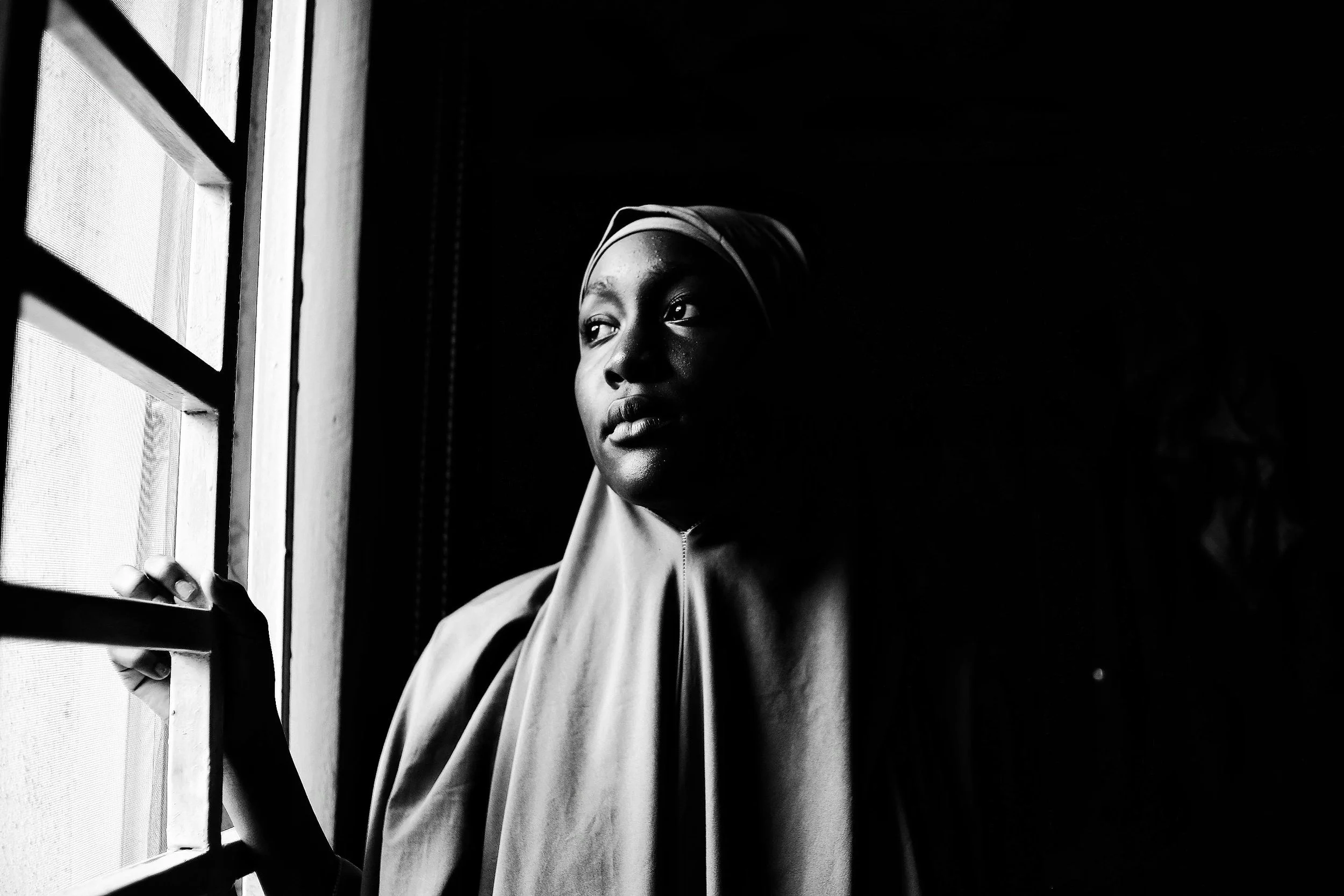
Larai
A story by UBAIDULLAHI UMAR
I
The morning after Talle was buried, Toka returned to itself with the speed of habit.
Smoke rose from cooking fires before the sun had fully cleared the trees. Goats moved freely through open compounds, stopping to nose at discarded peels. The call to prayer travelled across the village, steady and untroubled, passing over rooftops and fields the way it always had. By midmorning, the paths were busy again. Life did not pause to confirm that anyone was ready.
Only Larai’s compound remained unsettled, as though something essential had been removed and the ground had not yet agreed to it.
She woke before dawn, her eyes open in the dark. For years, she had measured the day by the sounds Talle made—the rough clearing of his throat before prayer, the scrape of his sandals against the threshold, the cough he never tried to soften. That morning, there was nothing. Silence pressed itself into the room, wide and unmistakable. She lay still, listening for a sound that would not return.
Walida rose first. The girl folded her mat with care too deliberate for her age, smoothing its edges again and again. Muneefa followed, slower, rubbing her eyes, confused by the quiet that had not yet formed meaning. Yar-Auta slept on, one arm flung across the mat, her breathing light and even. Larai watched them without speaking. Motherhood, she knew, did not suspend itself for grief.
By midmorning, the women began to arrive.
They came with millet wrapped in cloth, with bowls of millet kunu, with words shaped by repetition. They sat in the shade and spoke softly, their eyes returning often to Larai’s face, as though searching for signs of collapse.
“You must be strong,” Yaya Hajo said, patting Larai’s knee. “This life does not wait for those who bend too long.”
Larai nodded. Strength, she had learned, was a word people used when they did not know what else to offer.
Others spoke of Allah’s wisdom, of patience, of the virtue of submission to the will of Allah. Advice moved easily among them, settling into the spaces grief had not yet filled. Larai listened, answered when required, kept her gaze lowered. She felt herself already being placed somewhere—between caution and expectation—though no one named it.
In the afternoons, the men entered.
Not together, not openly. One after another, they hovered at the edge of the compound, offering greetings that lingered longer than necessary. They spoke of help, of protection, of what was proper. Their concern settled around her like dust. Larai responded politely, briefly, her hands busy, her eyes fixed on the ground. She could feel herself entering conversations she was not part of, her name moving through the village without her.
When Kawu Bobo arrived, he did not hover.
He stepped into the compound as though it still belonged to his brother. He greeted Larai with the familiarity of kin, his voice calm, assured.
“Allah knows best,” he said. “You are not alone.”
Larai lowered her head. Kawu Bobo had always spoken well. His words carried weight in Toka, shaped by age, by the authority of being a man who belonged.
He stayed longer than the others, speaking of arrangements, of responsibility, of how things would need to be handled carefully. He did not ask questions. He spoke in conclusions. Larai nodded where expected, listened where required. Silence, she knew, was already being interpreted.
That evening, when the compound finally emptied, Larai washed the dishes slowly. The sky darkened, and the air cooled. From somewhere beyond the farmlands came the loud, steady mow of cattle—once, then again—measured, unhurried. The sound travelled, thinned, and settled into the night.
Later, lying beside her daughters, Larai stared into the darkness. Widow. The word had not yet been spoken to her directly, but it waited nearby, ready. She did not reach for it. She counted her breaths instead, listening to the village rearrange itself around her.
Something had already begun to move, quietly, with purpose. Whatever it was, Larai understood this much: it would not announce itself before arriving.
II
Kawu Bobo did not return the next day.
He waited three days—long enough for the women’s visits to thin, for the compound to feel exposed, for Larai’s grief to settle into something less visible. When he came, it was in the late afternoon, when the sun no longer burned but still watched.
Larai was winnowing grain with Walida. The sound of it—the dry fall of grain into the calabash, the chaff lifted and carried off by the wind—had steadied her since the burial. Kawu Bobo stood at the entrance and cleared his throat. He did not announce himself by name.
“You are tiring yourself,” he said, stepping inside. “This is not good.”
Larai greeted him and continued her work. In Toka, attention was a form of permission.
He sat on the low stool Talle had favoured. The sight of it tightened something in her chest, but she did not move to stop him. Kawu Bobo spoke as though continuing a conversation already agreed upon elsewhere.
“I have spoken with people,” he said. “With elders. With those who understand these matters.”
Larai nodded. Nodding, she had learned, did not always mean agreement. Sometimes it only meant listening.
“The girls,” he went on, his gaze moving briefly to Walida, then past her toward the room where Muneefa and Yar-Auta were playing. “They should not remain here alone with you for too long. You are grieving. Children need structure.”
Walida’s hands paused mid-motion. Larai felt it before she saw it—the way the air shifted, the way words rearranged the space.
“They will come with me,” Kawu Bobo said. “For a while. It is better that way. People are watching.”
Watching. The word carried more weight than it should have.
“And the farm,” he added, as though remembering something minor. “Talle left matters unfinished. I will manage what is there. Until things settle.”
Larai’s mouth opened, then closed. She thought of the land beyond the compound—the uneven plots bordered by henna plants, the sorghum stalks drying like upright brooms, the work she had done there beside her husband. She thought of how easily land changed hands when a man was no longer alive to stand on it.
“Only for a while,” Kawu Bobo repeated, his voice gentler now. “It is what is done.”
Yaya Hajo came that evening. She listened without interrupting, her head tilted slightly, as though weighing something invisible.
“He is right,” she said finally. “People talk. And talk is dangerous.”
Larai asked nothing. Questions, she knew, did not always bring answers. Sometimes they only brought attention.
The following morning, Kawu Bobo arrived with a small bag and firm instructions. Walida did not cry. Muneefa did, quietly, her face pressed into Larai’s side. Yar-Auta laughed when lifted, thinking it was a visit.
Larai tied the bag herself. She straightened Walida’s scarf. She held Muneefa’s face between her palms longer than necessary. When the girls were led away, the compound did not feel empty at once. Absence, she was learning, spread slowly.
Later, Larai went to the farm alone. She stood at its edge, unsure where to begin, then realised she did not need to. The land was no longer hers to work. The henna plants marking its boundaries stood unchanged, bright and indifferent.
That night, Larai lay on the mat and counted her breaths. Somewhere in Toka, her daughters were sleeping under another roof. Somewhere, men were calling this arrangement mercy.
She did not correct them.
She stayed awake instead, waiting for her body to understand what her mind already knew: that what had been taken would not return untouched, and that whatever care meant here, it did not mean her.
III
The days settled into one another without ceremony.
Larai rose before dawn, as she always had. She prayed. She swept the yard. She boiled water. Her hands moved ahead of her thoughts, performing tasks that no longer needed deciding. Grief, when it had no audience, learned to be efficient.
She prepared food in quantities that still reached four calabashes. She noticed only at the end. She adjusted without comment. The body, she was learning, remembered before the mind agreed.
The village observed the first three days closely. People came openly then, voices low, eyes attentive. After that, mourning loosened its grip. The prayers on the seventh day were smaller, quicker. By the fortieth, they felt almost procedural, marked more by habit than by loss. Life returned fully to itself, and Larai was expected to follow.
She did not.
She stayed within the rules of waiting, but she did not disappear inside them. She dressed plainly, spoke little, kept her movements measured. She did not beautify herself, nor did she neglect her appearance. Either choice would have invited comment. Balance, she knew, was another form of vigilance.
She did not return to the farm that had once been Talle’s.
At first, this felt like hesitation. Later, it became decision. Instead, she worked the narrow spaces no one paid attention to—the strip behind Yaya Hajo’s compound where weeds grew freely, the edge near the footpath where the soil was thin and uneven, the small patch beside an abandoned hut where no one bothered to claim ownership. The yield was poor. The work was slower. But it was hers in a way nothing else was.
People noticed.
“You make things hard for yourself,” Yaya Hajo said one afternoon, watching Larai clear stones from the ground.
Larai nodded. Hardness, she had learned, was not the same as danger.
At night, she counted what she earned—small coins, uneven in value—and tied them into a corner of her wrapper. She did this carefully, alone. No one needed to know how much she had, or what she planned to do with it. Privacy, she was learning, was a kind of wealth.
Men began to come again, this time more cautiously. They did not speak directly. They asked after her health, her patience, her faith. They spoke of how difficult the world had become for women alone, how children needed stability, how Allah rewarded endurance. Their words hovered, waiting to be received.
Larai answered briefly. Politely. She did not encourage. She did not offend. Survival lived somewhere between the two.
Alaramma came differently from the others.
He did not enter the compound at first. He greeted her from the path, spoke of small things—the heat, the harvest, the way the village had changed since his youth. When he mentioned Talle, he lowered his voice.
“May Allah widen his grave,” he said.
Larai thanked him. Grief, when shared publicly, felt thinner, as though it lost substance when passed between hands.
He returned the following week. Then the next. He did not hurry his words. He spoke of patience as though it were a shared language. He admired her restraint. He said it was rare.
When marriage finally appeared in his speech, it did so indirectly, wrapped in conditionals.
“If things were different,” he said once, “I would have spoken sooner.”
Larai listened. She did not ask what things he meant. She had learned that questions often led nowhere useful.
At night, she dreamed of her daughters in fragments. Walida was standing still, her face turned away. Muneefa crying without sound. Yar-Auta running, always just beyond her reach. Each time she woke, the same thought settled into her chest—that they were learning new habits without her, that their lives were being shaped elsewhere.
Weeks passed. Then months.
One afternoon, Kawu Bobo sent word asking her to bring the papers Talle had kept. Larai folded them carefully and went. She placed them before him without comment. He thanked her, nodded, and dismissed her with the ease of someone who did not expect refusal.
When she returned home and unfolded the bundle, she noticed what was missing. One document—the one that named the boundaries of the farm—was no longer there.
She sat for a long moment, the papers spread before her. Then she folded them again, slowly, and put them away.
That late afternoon, as the sun lowered itself behind the farmlands, Larai stood outside her compound and watched the shadows stretch. Somewhere nearby, grain was being pounded, the rhythm steady, indifferent. She listened until the sound stopped.
Inside, the rooms waited, holding the shape of absence.
Larai stepped back into the compound and closed the door behind her.
IV
The girls returned without warning, on a morning that began like any other.
Larai was sorting dried sorghum stalks when she heard footsteps at the edge of the compound—more than one pair, uneven, hesitant. She looked up and saw Kawu Bobo standing with them, his face already closed to discussion.
“They will stay with you,” he said. “Things have changed.”
He did not explain what those things were. He spoke instead of burden and duty, of how one must not overreach, of how arrangements had become difficult. His voice carried the tone of finality, as though the matter had been resolved elsewhere and was only now being delivered to her.
Larai listened. She always did.
When he finished, he nodded once and turned away. No prayer. No apology. The dust he raised settled slowly, as though even it needed time to understand what had happened.
The girls entered the compound like guests.
Walida waited for instruction before sitting. Muneefa asked where things should be placed, her voice careful. Yar-Auta touched the doorframe, then Larai’s wrapper, as though confirming both were real.
Larai prepared food. She did not ask questions whose answers might wound them further. Some things, she knew, returned best without being named.
That night, the girls slept close to her, their bodies tense, waking at small sounds. Larai stayed awake longer than usual, counting their breaths, measuring their nearness. Motherhood, returned, did not come as relief. It came with reckoning.
In the days that followed, neighbours came again. This time, they brought praise.
“It is good they are back,” Yaya Hajo said. “Allah restores what He wills.”
Larai smiled. Restoration, she had learned, did not mean repair.
She went once more to the farm. The henna fences still stood, bright against the soil, but the land inside them no longer felt responsive. The ridges had been reshaped. Some crops were gone entirely. The ground bore the marks of another hand.
She stood at the edge for a long time, then turned back without entering.
Walida began to help with chores without being asked. Muneefa spoke less, watching more. Yar-Auta followed Larai everywhere, as though afraid the ground might open again.
No one spoke of the inheritance. Not directly. The silence around it was thick, deliberate. When Larai finally asked Kawu Bobo about the land, he sighed, as though burdened by her lack of understanding.
“Times were hard,” he said. “You know this.”
Larai did not argue. Argument suggested the possibility of reversal, and she knew better now. What had been taken had already done its work elsewhere.
Life did not soften after the girls’ return. If anything, it grew sharper. The attention of men resumed, cautious now, framed by the presence of children but not diminished by it. Proposals were hinted at, then withdrawn. Conversations ended early. Names circulated and disappeared.
Alaramma stopped coming.
When Larai heard he had begun visiting another household, she felt nothing sharp enough to name. She understood then that promises were another form of waiting, and waiting was something she could no longer afford.
She began to sell small things—firewood, ground grain, whatever she could carry. It was not much, but it was hers. Each evening, she counted the coins and put them away carefully. There was no one to see her doing it. That mattered more than she expected.
At night, when the village quieted, Larai lay beside her daughters and listened to the sounds she had once shared with Talle. They belonged to her now alone. She did not know what shape her life would take, or how long the narrow path she had chosen would hold.
But she knew this: what had returned was not what had been taken, and whatever came next would have to be built without asking permission.
V
Larai’s life did not turn. It settled.
Months after the girls returned, the days began to resemble one another again—not with ease, but with predictability. She rose before dawn. She prayed. She worked. She returned home tired in a way that felt earned, not imposed. The rhythm did not comfort her, but it held.
She no longer went to the farm that had once been Talle’s. Instead, she worked smaller spaces that no one watched closely: behind compounds, along footpaths, beside edges considered too little to matter. She gathered firewood, sold ground grain, helped other women during harvest when they needed an extra pair of hands. Sometimes she earned coins. Sometimes food. Sometimes nothing but the right to return the next day.
It was enough.
Walida took on responsibility without being asked. She learned when to speak and when to remain silent, a skill the village rewarded quietly. Muneefa stayed close to Larai, her questions fewer now, her gaze more deliberate. Yar-Auta forgot faster than the others. She laughed again, cautiously at first, then freely, as though testing whether joy was still permitted.
Men continued to pass through Larai’s life, though less often now. Word had spread that she did not hurry her answers. That she listened too closely. That she asked questions of her own. Suitability, once assumed, became uncertain.
Alaramma passed her once on the path and greeted her with the politeness reserved for distance. She returned the greeting and did not slow her steps.
Kawu Bobo remained present in the way people like him always did—not nearby, but influential. He spoke of her occasionally, as though she were a matter already resolved. He did not return what he had taken. He did not need to. The village had agreed, without discussion, that the account was closed.
Larai did not reopen it.
Instead, she measured success differently. By the steadiness of food on the mat. By the way her daughters slept without waking at small sounds. By the fact that her name, when spoken now, no longer carried speculation.
One evening, as the sun lowered itself behind the farmlands, Larai stood outside her compound and watched the shadows stretch. The henna plants along nearby boundaries caught the fading light, their leaves darkening. She thought of all that land had once represented—security, inheritance, loss—and felt no pull to return to it.
What she had learned could not be taken again.
That night, lying beside her daughters, Larai listened to their breathing and allowed herself a small, private certainty. Not hope. Not victory. Just the knowledge that she had stayed, and that staying had changed the terms of her life.
Outside, Toka continued as it always had. Smoke rose. Grain was pounded. Prayers were called.
Inside the compound, Larai closed her eyes and rested in the shape she had made for herself—narrow, quiet, and finally her own.
May 25, 2026
ABOUT THE AUTHOR
UBAIDULLAHI UMAR is the former national treasurer of the Nigeria Society of Campus Writers (NSCW) and founder/president of the University of Jos Chapter of the same society. His works appear in World of Poetic Renaissance: An Anthology of Global Poets, Stripes Literary Magazine, and elsewhere. He edited the University of Jos Journal of Campus Writers: Voices from the Heartbeat of Peace.
*Cover Image by Muhammad-Taha Ibrahim on Pexels