

•
How to Carry a Millstone
• How to Carry a Millstone
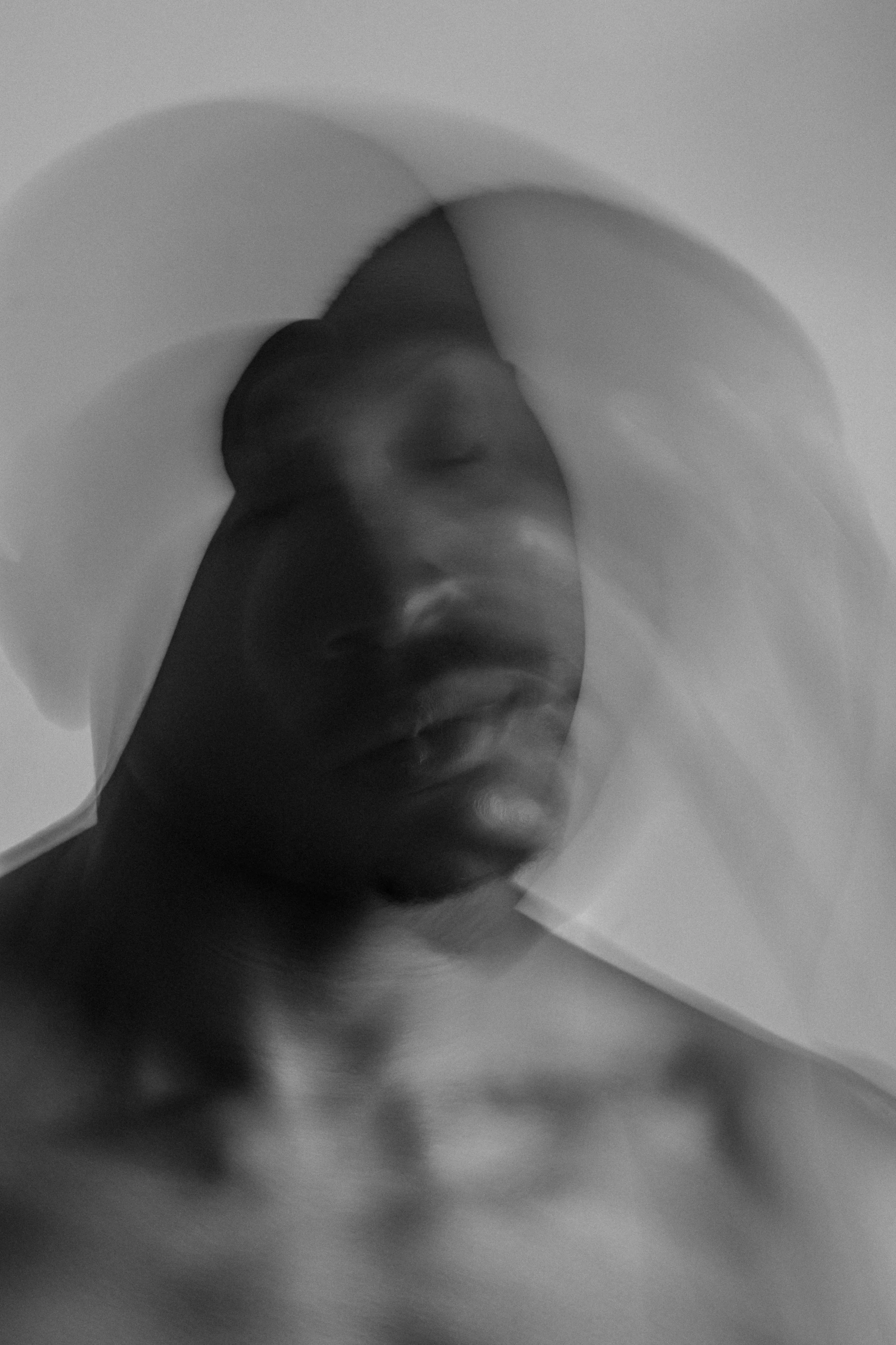
How to Carry a Millstone
A story by ADÉDOYIN ÀJAYÍ
Bíódún – Yorùbá name. Means “born into a festive year.” Intended to evoke joy. Can be given to a child as an irony in sorrowful circumstances in a bid to reverse misfortune.
When your cries split the air as you tear your way through your mother’s body, her screams will be loud.
Like congealed milk, her screams will curdle in her blood and her bodily wastes in a smelly, shameful feast, mourning rather than celebrating your arrival. Four years earlier, the same doctor had pulled your elder brother from your mother’s body and placed him in her arms while your father smiled, his heart swollen like a water balloon in his chest. But not you. Your father — who isn’t your father — can’t be bothered to be here, and tears fill your mother’s eyes at the squiggling mass that is you. No, not tears of joy. Tears at her nightmare come to life. Tears that remind her of her shame.
Right there and then, she’ll name you Bíódún. She knows there’ll be no joy to celebrate your arrival. A naming ceremony? Your family would see you dead first. While you were in your mother’s belly, they’d poured indignation on you and rolled a barrage of curses out for you like a red carpet.
So, she’ll name you Bíódún. It’s a weak attempt to avert the circumstances of your birth and a bid to blow away the hideous curses swirling in the air over your head. Those hideous curses—too black to be reiterated.
It won’t work.
But your name — Bíódún — remains.
*
You had no right to be born. Even worse was that you had no right to live. Not when your three-year-old elder brother died just a year ago.
When you get into primary school, you won’t know why Mama Seun slaps the chewing gum you give her son out of his hands when she fetches him at the end of the day. When Aunty Bukola picks up Bíyì and Ladé, your siblings, and croons to them while they cackle with glee, your cries of “me, Aunty, me!” will go louder till you decide perhaps her right ear doesn’t work so well. However, you like it when your Uncle Dámì strolls by. He prefers to hold you close when your small hands clutch his trousers. You’ll be too interested in the Supa Strikas comics he brings for you to see your father shooting daggers at him and Uncle Dámì’s defiant, baleful stare in return.
But when your father’s scowling face emerges whenever he sets his eyes on you, it makes your childish mind even more confused.
When your parents speak of you, they rarely mention you like you’re there. It was like your dead older brother was here, and you were the one who was gone. It was a crown ripped from your head, a title denied you. You competed with the dead for affection. You were the ghost, the invisible fly on the wall begging for attention. A living dead.
“Why doesn’t Daddy like me?” you’d asked your mother.
She was shocked. She knew it was only a matter of time. But she hoped your phase of childhood oblivion lasted longer. How was she supposed to tell you that two months after your elder brother fell down a flight of stairs and died, her grief had driven her stumbling into Ajani’s arms for comfort? That same Ajani, her ex-boyfriend. That same Ajani, her husband’s brother, who’d died after humiliating your father. They tell you he’d savoured every bit of his last rendezvous between your mother’s legs, like a drunk lapping up the dregs of his last shot of whisky just before a bar’s last call. He was probably laughing in his grave. But here you are, bearing the weight of his last hurrah.
She couldn’t have told you that you reminded her husband of his grief, his humiliation, and his pain. You were the black, black ghost of his dead son, and his humiliation on two legs. One that got blacker every time he grudgingly paid your school fees after your mother grovelled before him.
You were a concealed, shameful secret, the left hand, the sinistral evil, a foul apparition of everything his dead son wasn’t.
Your mother can only smile weakly at you. You’re the manifestation of her shame, of her ruin. And you’ll bear that invisible weight like a millstone around your neck. You’ll wait for her to say something.
She says nothing. She’ll leave you to wear the millstone alone.
*
You’ll walk ten miles and won’t find your father’s affection. You’ll find that it’s ten thousand miles ahead. With every gaze, he reminds you that you’re a morsel of food that’s hard to swallow. You retreat into yourself, believing a smaller version of you is more lovable, but nothing changes. You’re an annoying speck of dirt staining the gleaming white canvas of his life. His grief. His shame. His disgraced manliness. You’re not good enough for him to love. You’ll learn to make do with the half-full cooler of food your mother gives you to school. On the school playground, you’re the alien, the monster under the beds the other kids never played with; the ones their mother warned them against. But you try, still. When you ride your bicycle alone down the streets of Ojuelegba, the laughter of the children huddled in a corner will hover above you like a helicopter. A part of you tells you ten-ten amuses them, while another fast-growing part reminds you that you’re the focus of their amusement.
When your siblings go off to FGC Ijanikin, your father ships you off to FGC Kiyawa in faraway Jigawa, a million miles from Lagos, as if warding off your presence like an evil. You wonder if he would bother if you were kidnapped on the highway. He’d probably be happy. Sometimes you think your mother loves you. Other times, you’re not so sure. She shrieks happily when you come home, but you remember the burn scars on your forehead when, in her anger, she’d locked you indoors and you’d spilt hot water on yourself while your eight-year-old self was trying to cook noodles. You’d howled and cried alone until she came, dressing your wound like an unfortunate task that she was forced to undergo.
The scar sits above your left eye like a cruel reminder of a crown of affection forcefully ripped from your head.
This thought will remain with you throughout your secondary school days. It won’t leave you. And the few times you go home, the blank look in your father’s eyes won’t abate in its intensity. Nor will your mother’s wishy-washy love. They won’t care that you throw yourself into your academics with a zeal that makes you the school’s darling, the star. Your scar — your mark of who you are — is greater than that.
Your achievements mean nothing. They’re not good enough. At your convocation, your father’s smile will look forced, almost like a grimace.
You’re not good enough.
*
You meet Abísólá in the university. When you’re not in accounting lectures, you go for poetry readings. But you don’t meet her there. You meet in Forks & Fingers while trying to buy lunch in between classes. Ever the people-pleaser, you’d made way for her on the queue and let her go ahead of you.
“Thanks,” she says, her pearly whites flashing at you.
You simply nod. You can’t trust your tongue to form anything meaningful. The contrast of her white teeth against her dark skin sends your mind recreating Obafemi Martins’ iconic somersaults. She’d left her bottle of water on the counter, so you bring it over and place it on her table. She smiles sheepishly and laughs at herself, her expression as open as a cloudless sky. Maybe it’s her laughter that draws you to her, or the way her dark skin makes a beautiful contrast with her orange blouse that hugs her pleasantly sizeable chest, you’re drawn to her.
“Sit with me,” she says.
You can’t recall the conversation. But you remember laughing a lot with her. You remember her skin as smooth as cream and her afro that looked as soft as a cloud. The jingle of the bangles around her slim wrist is a sound you won’t get tired of hearing. You remember she likes Minimie chin-chin and likes listening to Demi Lovato. And when she smirks at you when you both finish your lunch and says, “Fine boy, you won’t collect my number?” your smile comes from somewhere glowing inside you.
She giggles and tells you that you like her too much when you call her four times every day. You hope she won’t hear your nervous chuckles. When you hug her tightly, even though you’d seen her the previous day, she simply hugs you harder and melts into you like a chocolate bar in the sun. You’ve heard of girls dumping guys over texts. Every time your phone chimes with a message from her, your heart takes off down a highway in your chest. That text never comes. Only kissy eyes emojis. And when you tell her the sappiest compliments, she smirks at you and asks you what novel you pulled them from. She never gets tired of hearing L.S. Senghor’s “Black Woman.” You liked to recite it to her after you’d made love, your hands tracing over her dark skin, punctuating each line with a kiss on the places your hands touch. She likes holding your hand just as much as you do — all the time. Your imagination of her in another guy’s arms when she misses your calls evaporates when she comes by later, sits on your thighs and kisses you, and calls you silly. When you call her your soulmate, she giggles, moves half of her wardrobe into your apartment off campus, and begins spending her weekends with you.
You feel like a million bucks when you walk in public, holding hands, and she lays her head on your shoulder. The breeze feels lighter on your shoulders when she does that.
But you don’t know your name is a mockery. The air-blackening curses that swirled above your head when your mother expelled you from her body remain with you. You’re the kid without joy. Abísólá will develop a pain in her face. Her face will begin looking puffy like an overripe cherry. Frequent nosebleeds follow. You worry. You tell her to take it easy. She loses her sense of smell a week after.
The doctors tell her it’s sinus cancer.
No matter how hard you hug her, she can’t smell you anymore. The drugs don’t work. You see a part of you dying in her memories. She gets weaker. She goes for more tests.
It’s all a blur. Spread, spread some more, stage four, lymph nodes...her afro reduces in size. The cancer eats away at her with a wicked, feral appetite. It’s unrelenting. It’s unfair. Her hair becomes brittle like fallen leaves. Senghor’s “Black Woman” loses its magic. Her skin quickly loses its lustre, and when she screams in pain, it feels like a machete hacking at your insides.
Nothing you do will keep her with you. No amount of your love will keep her with you. It’s powerless. You’re powerless. When she dies, you feel like a lost ship abandoned on turbulent seas. She loved you, scar notwithstanding. But you’re the kid without joy - hated for all you were, despised for all you weren’t, yet she loved you nonetheless. Now that love is gone, leaving a gaping hole in you. A deeper hole than the neglect you’d faced your whole life. You couldn’t whittle yourself down enough for your family to at least accept, if not love you. Nor could you love Abísólá into staying alive. You’re not small enough to be loved, and you’re not big enough to make love stay when it came.
You’re Bíódún. You’re the kid without joy, after all. The kid without love. You feel inadequate.
Let’s face it, you’re not good enough.
*
It is this inadequacy that will make you believe Chidera loves you even when she leaves you to receive her phone calls, speaking in muffled whispers. You met her in Ikeja’s BRT terminal after recognising her as a regular on the evening queue. Small chitchat soon turned to holding a space for each other in the queue. Seeing each other at the end of the day became an anticipated event on weekdays. Her tortoiseshell glasses and zigzag braids quickly became permanent features in your memory.
Your fear of being abandoned, being marooned on love’s lonely raft will make you ignore the many woody scents that follow her. It’s that same inadequacy that will make you stay hopeful, like a stray cat starved of water and cuddles. When you’re not at your accounting job, you’re getting used to her flitting in and out of your life — too fast for you to hold. You fill the voids she leaves behind with thoughts of Abísólá. When it gets too heavy, you turn to the bottle. It keeps you from lingering on and falling from the many slippery slopes of your mind.
You rarely see your parents anymore. At your younger brother’s wedding, he carries his bride, and her loud giggles saw through you brutally. Your father had only nodded at you, and you couldn’t decipher the look in your mother’s eyes.
You’d sat at the table, your younger sister Ladé trying her best to involve you in the conversation, while your hands found comfort around the many cans of Heineken on the table. When you were to give a speech as the eldest sibling, you’d been too drunk to think coherently. But not drunk enough to miss the deep scowl on your father’s face nor the tears in your mother’s eyes.
You no longer hear from Chidera.
You don’t care much. You’re done trying to love and be loved. Àníké sashays into your life amidst many bottles of beer, strobe lights, and booming music in a bar. You’re numb to the pain. When it creeps up on you, Heineken bottles form a dam that keeps it at bay. With Àníké, it’s just sex. Perfect. The sex is good enough to forget the things you want to and give you some sense of happiness. Though she has neither Abísólá’s dark skin nor her cloud-like hair, the way she tickles your navel with her tongue makes you howl. You also like the way her strong thighs piston up and down on yours with sweat dripping off your bodies. The vigorous sex makes your nights dreamless. She likes Heineken too. You both wake in the middle of the night, go to the kitchen to share a bottle, after which you hold her up against your fridge. Or the couch. Or back in bed. It doesn’t matter. Rinse and repeat. You rarely think of Abísólá anymore. It hurts too much.
You’ve finally found a kind of joy. Though not the one your mother tried to wish on you.
*
You try to go to book readings when you’re not at work or in bed with Àníké. You see writers on different rungs of the skill and popularity ladders read their works or excerpts of works from writers they admire. You just sit at the back and soak it all in. It’s all good until a guy reads “Black Woman.” He makes such an awesome reading of it. He even pauses in some places you used to, allowing the enjambment strike you full in the face and fall somewhere deep in you. It hits you so deeply that it draws tears from your eyes. You walk out of the reading. You go home and bawl your eyes out. Àníké calls but you don’t pick up. You cry until you fall into a deep sleep. When you dream, it’s of Abísólá, her skin as dark and lustrous before cancer turned it paper-dry; and her afro full — floating, softly caressed by a soft wind, and her laughing eyes fixed on you, brimming with an emotion you’d whittled yourself down to get, to find, and to hold.
You schedule a visit to your mother. The years have not been kind to her. She’d taken to wearing a scarf to hide her thinning hair, and she had more wrinkles on her hands than a well-used Nigerian map. Perhaps the struggle of keeping the secret of your birth away from you was taking its toll on her. She finally answered that question you’d asked all those years ago. She wanted your forgiveness before she passed on.
She tried to explain. But you were blind. Blinded by pain. Broken that you’d worn a millstone around your neck since your unfortunate birth. One you couldn’t shake off. A cruel yoke thrust on you, not one of your doing. One that sent you desperately trying to win your father’s affection. A heavyweight that lengthened your days when you’d played alone in primary school.
And it was that desperate search for love that made you love Abísólá with that suffocating love until you couldn’t. The half-hearted love your father gave in his grunts, gave you a false hope that you might one day earn the rest of it. Perhaps he shouldn’t have given you any love at all. It made you reach for stars you would never touch. When you tried and failed to earn it, it created that inadequacy that bled into your relationship with Chidera and her love that came laced with poison.
You leave Àníké.
But not Heineken. Not just yet. That will take a while. But you’re on the way. And it’s a long way. Abísólá had loved you, scar and all. It took you a while to fully realise that.
As you write the last of this story, you bring the bottle to your lips. You sip your beer and try to conjure Abísólá’s face once more. You focus on her beautiful face filled with her laughing eyes. And you hear that sound in your mind, her bangles chasing each other down the smooth skin of her arm.
Your woman.
Your black woman.
May 25, 2026
ABOUT THE AUTHOR
ADÉDOYIN ÀJAYÍ is a Nigerian writer. He writes from Lagos, the city that never sleeps. His work focuses on the jagged edges and many complexities of human relationships. His work has appeared in Brittle Paper, The Kalahari Review, Afrocritik, Literally Stories, African Writer, Arts Lounge, Journal of African Youth Literature (JAY Lit), The Hooghly Review, Flash Phantoms and elsewhere. He was longlisted for the JAY Lit Prize for fiction in 2024, was published in Akpata Magazine’s “Stirred” and “Coming Out” anthologies in 2025, and Nantygreens' maiden anthology in 2026. He is a nominee for the 2026 Caine Prize for African Writing. When he’s not writing, you can find him reading novels, watching animal documentaries, or listening to Sadé Adú and The Weeknd. He tweets @AjayiAdedoyin14.
*Cover Image by Dylann Hendricks on Pexels