

•
Remnants of my Soul
• Remnants of my Soul
Remnants of my Soul
A story by SHASHA KOMOKA ILUNGA
From the tender age of 3, I was searching. For what, I never knew—only that something was missing, like I’d forgotten an indispensable part of myself. It wasn’t the dramatic kind of absence people talk about, not a sudden loss or a single moment of heartbreak. It was quieter. Constant. A hollow pressure behind my ribs, like a door inside me that had been sealed shut before I ever learned what was on the other side. The emptiness gnawed at me in the background of everything I did, patient and unrelenting.
That longing is what thrust me into the skies.
Becoming a private pilot gave me the freedom to chase horizons, to outrun that feeling, if only for a while. Up there, the world made sense. Instruments were honest. Numbers obeyed rules. The sky didn’t pretend to be anything other than what it was—uncontainable. Much different from those below it. And it paid well enough to keep mom and dad proud—well enough to justify my constant movement, my refusal to stay rooted in one place for too long.
On long flights, like when flying from Singapore to New York, I’d sometimes leave the rest of the journey to my co-pilot, letting the aircraft hum steadily beneath me. I’d stare into the endless blue until my eyes burned. The sky above, the ocean below, slowly miniaturising as we rose above the ground, clouds pressed close against the jet like pale giants drifting alongside me—I had seen it countless times, yet each sight struck me with the same hollow wonder. It was beautiful in a way that hurt.
I’d stretch my arms toward the heavens, fingers splayed across the windshield, eyes closed, reaching for something just beyond my grasp. Something I once held, but could no longer touch. The closer I felt to it, the heavier my chest became, as though the sky itself were reminding me of what I lacked.
It carried a weight I no longer had the strength to bear.
My dreams strengthened that feeling. Night after night, I found myself somewhere else entirely, a place I would have described as nothing short of heaven. Speaking a language I couldn’t understand—unlike anything I’d ever heard before. The words flowed from me effortlessly there, heavy with meaning. There was love in those words, vibrating through my bones. Everything in those dreams felt achingly familiar as it played out like a clip, like a memory replayed on an old screen. She'd smile at me, sweet and unguarded, hold my hand and guide me through halls like I didn't already know them. But when the dream dissolved around me, it all slipped through my fingers like mist. The meaning evaporated, leaving only the ache behind.
“Your name is always at the tip of my tongue, but I can never seem to remember it,” I’d mutter to myself, lying in my bed with the sheets tangled around my legs. My hand would reach out into empty air, fingers curling as though expecting resistance—as though someone should have been there.
Someone I loved, and yet had lost.
I travelled in search of that something, that missing piece. Countries blurred together, even France felt like Malaysia. hotels, faces, accents, fleeting connections. All the same. I went on dates that should have meant something. Met people who were kind, interesting, beautiful in ways I could objectively appreciate. But no matter how hard I looked—how many conversations I forced, how many smiles I returned—nothing filled the space inside me. Laughter faded too quickly. Touch felt distant. I could never truly be happy.
One Friday evening, while at a café with friends, Becca, a childhood friend of mine, declared
“You should go on vacation.”
The clatter of cups and low chatter faded as her voice cut through the noise.
Her elbow on the table, hand folded in a gentle fist pressed against her cheek.
Her eyes stared pointedly at me with disapproval.
It sounded like a command rather than a suggestion, and I suppose that’s when everyone got on my case. Classic Becca. She had always been like that—direct, relentless, utterly convinced she knew what was best for the people she cared about, even when she could barely wrap her hands around the cookie jar at 8.
“I don’t see the reason why I should go on vacation when my job already feels like one,” I waved them off, stirring my drink with more force than necessary.
“But that’s not an actual vacation,” Charles jumped in immediately, leaning forward like he was pleading a case in court. “You never truly relax or see everything there is to see. You’re always working, even when you say you’re not. You need an actual break. It’ll do you some good.”
He didn’t stop there. Neither did anyone else. Soon, even my coworkers and my boss got involved—messages, calls, knowing looks—until the pressure finally wore me down two months later.
“Fine. I’ll do it, but for no more than two weeks,” I declared, holding up a finger like that settled it.
They all smiled. Mark and Isabell from the marketing department actually jumped in their seats, far too pleased with themselves over such a small victory.
As a private pilot, at least the trip meant little hassle—just a flight to Bora Bora, plans finalised with mechanical efficiency, clear skies, and an escape I hadn’t wanted. All in a week’s time.
When I arrived home, my mom was waiting for me. The house smelled like dinner; warm, familiar, comforting in a way that made my chest tighten. We sat together at the table while I told her about the vacation, about the destination, about how long I’d be gone. She listened intently, nodding, her eyes bright.
Even she looked glad I was taking a break, her lips stretching into a smile. Come to think of it, my mom did smile a lot. Maybe too much. Even when she didn’t have to, even when the moment didn’t call for it—like she was trying to keep something else at bay.
“About time you did,” she said gently. “You’re a hardworking child, and I’m probably the proudest mother in the world because I have a child like you. But, darling, you are still young. Don’t throw yourself into work… live a little.”
There was a bit of resistance in me at her words, an instinctive pushback I couldn’t quite explain. And that’s why I felt completely defeated in that moment—because she wasn’t wrong, and I hated that she could see it so clearly.
A week after my utter defeat in the matter, I began packing up some stuff, but it was a bit of a hassle, especially after Becca came over. She took one look at my suitcase and scoffed as if I’d personally offended her.
“That’s it?” she demanded. “For two weeks?”
Before I could protest, she was already pulling clothes from my closet, tossing them onto the bed with ruthless efficiency.
“Troublesome…” I murmured under my breath, watching my carefully curated minimalism dissolve into chaos.
A week had already gone by since Becca's visit, though it felt like I’d just blinked. There I was, standing in the departure hall, the ceiling stretched impossibly high above me, voices echoing in overlapping waves.
“Bye! Have a great vacation and don’t even think of working!” Charles yelled out, his stern gaze lasting all of two seconds before he reverted to his joyful self, waving his arms around like a madman.
My phone was exploding with apologies and farewells from family and friends who couldn't see me off.
“Bye, stay as long as you’d like!” he exclaimed happily.
“Idiot,” I mumbled, a small smile tugging at the corners of my lips as I chuckled under my breath. I waved him goodbye and turned toward security, the sound of Charles’ voice fading behind me.
Come to think of it, when I first met Charles, I didn’t like him much—probably because he looked at me like he was saving me from some cruel, lonely fate if he stayed beside me. His small hand stretched out to me as I sat in the grass during recess with a book in my lap. His lips pressed together in a thin line, and his eyes filled with determination. And Becca, knew that anyone talking behind my back was definitely getting a piece of her mind.
They’d both changed so much over the 18 years I'd known them. I suppose I had as well. At least now, I kept my thoughts about people to myself, no matter how profoundly foolish some people could be.
The flight was long and much more tiresome than when I’m the one flying it. Being a passenger made me restless, hyper-aware of every bump and sound. But eventually, we landed in Bora Bora safely.
Standing on Vaitape Street, the sun slowly dipping behind the distant mountains, the air heavy with salt and warmth, I stretched languidly, sighing. The sky burned orange and violet, the day bleeding into night. My luggage, long forgotten in my bungalow.
“I’m actually doing this,” I muttered tiredly, adjusting my crossbody bag and preparing to take my evening walk.
“Bu yolla.”
The voice caught my attention instantly. It was so faint it barely registered, like a breath carried on the wind.
I glanced around. “Excuse me, did you just say something?” I asked, blocking a stranger’s path.
The man stopped, stared at me like I was demented, then sneered and walked off without a word.
“Tch. Jerk.” I clicked my tongue, a grimace twisting my face.
“Bu yolla.”
There it was again.
The words pulled at something deep inside me—something raw and exposed. I couldn’t decipher them, yet they felt painfully familiar. Hypnotic. Agonizing.
The voice came from behind me.
My brain said no. Every rational instinct screamed danger. But every fibre in my body screamed louder.
I turned and ran.
I ran like my life depended on it, lungs burning, feet pounding against the pavement. Everything I’d done—everything I’d achieved, every decision I had ever made—had been leading me here.
“Bu yolla.”
“Almost there,” I gasped, weaving through tourists as fragments of conversation brushed past me.
“The moon’s huge, have you seen it?”
“I read in some article that the solar system will be going through some sort of change… a rift between Earth and the spirit realm. There will be a lunar eclipse.”
“Creepy.”
“You are so superstitious!”
Their voices faded as I ran until there were fewer and fewer people around me. The streets emptied. The voice grew fainter and yet closer.
I gasped for air as I came to a stop, my chest burning, my legs trembling beneath me as if they might finally give out. The sounds of the street—voices, laughter, footsteps—had faded, swallowed by the vast, open quiet of the field before me.
“Where… where am I?” I breathed.
The grass stretched endlessly, flattened in places by nothing I could see, swaying gently as though stirred by a breath that wasn’t mine. The air felt wrong—too still, too expectant. Even the insects had gone silent.
My vision swam as dizziness caught up with me, the world tilting slightly as I bent forward, hands braced against my knees. That was when I saw it.
At first, I thought my eyes were playing tricks on me—stars behind my vision, hallucinations born from exhaustion. But the light didn’t fade. It hovered.
Suspended in the air was a shard of something broken, its edges uneven and jagged, glowing faintly as though lit from within. No wires. No support. Just… there.
My breath hitched.
“Bu yolla.”
The sound didn’t reach my ears so much as it settled into my chest, heavy and intimate, like a whisper meant only for me. I stumbled back a step, heart pounding, my gaze darting wildly across the field.
“Who’s there?” My voice cracked.
No answer, only the shard, pulsing softly, patiently.
It drew me closer without touching me. Every step felt like walking into deep water, resistance pressing against my limbs, my pulse roaring in my ears.
The closer I came, the heavier my chest felt, grief swelling without a source, tears threatening for reasons I couldn’t name.
“Sənin üçün darıxmışam.”
The words echoed through me, and something inside my throat tightened painfully.
Why did I want to answer?
Why did my chest ache like I’d been waiting my entire life to hear that sentence?
“I—” My voice faltered. My tongue felt thick, unfamiliar in my mouth.
“S-sənin…”
The word scraped its way out, sharp and wrong. Pain flared instantly, white-hot, slicing down my throat as though I were forcing broken glass through flesh.
“Ü—ah!”
Warm liquid filled my mouth. I tasted iron.
Blood dripped from my lips as I stared at my trembling hand, still reaching, still desperate, even as my body rebelled against the sound I was trying to make.
The sky felt… closer. Too close.
I lifted my gaze, breath shuddering.
“Was the moon always this big…?”
The moon filled my vision, its surface distorted, warped—as though something on the other side were pressing back.
Then—
Snap.
I awoke in my bungalow, completely disoriented, my body jerking upright as if I’d been yanked back into myself by force. My heart slammed violently against my ribs, breath coming in shallow, panicked pulls. For a few seconds—no, longer than that—I couldn’t tell where I was, or how I’d gotten there.
Wasn’t I just standing in a field?
Wasn’t the air thick and unmoving, the moon impossibly close?
“The moon…” I muttered, my voice hoarse, my throat aching as though I’d been screaming. My gaze drifted to the window, half-expecting to see it looming there—massive, pressing against the glass. But there was only the dark outline of palm trees and the soft glow of resort lights.
A cold unease settled over me.
Was I imagining things?
“Am I losing my mind?”
The question lingered far too comfortably, like it had been waiting for me to ask it.
I needed a drink. Something strong enough to drown the echo of that voice, to smother the image of the shard and the weight in my chest.
I grabbed my keycard and stepped out, the night air brushing against my skin as I skirted past the pool. The water reflected fractured pieces of moonlight, rippling gently, mockingly calm. I reached the bar and planted myself on a stool, fingers tapping restlessly against the counter as I waited for the barman to finish serving the two men arguing beside me.
“Yeah! I’m telling you, man, there was totally something in that field, and it was glowing!” one of them insisted, his voice rising in agitation. His hands moved as he spoke, sharp, emphatic gestures like he was trying to physically shape the memory into something believable. “Didn’t you see it?”
What caught my attention wasn’t the volume of his voice, it was the certainty threaded through it. The kind that didn’t come from drunken exaggeration, but from someone who knew exactly what they’d seen.
“John,” the other man sighed, far too calm, lifting his glass. “I think you need to lay off the drinks. They’re messing with your head.”
He laughed softly, taking a slow sip of his tequila.
“I’m telling you!” John snapped. “Something was out there!”
Despite his insistence, his friend only laughed harder, shaking his head.
Frustrated, John turned sharply, scanning the bar, desperate for validation, anyone.
“Hey, miss! huh?”
But I was gone.
He glanced around in confusion, eyes darting over empty stools.
“Where did she go?”
His friend snorted, laughter spilling out of him.
“Man, I think you’re seriously losing it.”
“No, she was right here!”
Panting.
Or at least, that’s how I imagined it playing out as my bare feet struck the ground hard, one after the other. The image of the bar faded, replaced by the rhythmic thud of my heartbeat in my ears.
“Maybe I am crazy,” I huffed, lungs burning as I forced myself forward once again that day. My feet ached, skin scraping against gravel and grass, but I didn’t slow.
“Everything I am is because of that voice that never seems to leave me alone,” I muttered between breaths. “So even if it turns out I’m losing my mind, I’ll keep putting one foot in front of the other and see this through to the end.”
The field opened up before me once more.
Upon reaching the large, empty grassland, I stopped near an anthill, bending forward with my hands braced on my knees as I fought to catch my breath. The night was eerily quiet—no insects, no breeze.
My eyes narrowed.
Why?
Because there was a figure standing in the centre of the grove.
It didn’t move. Didn’t sway.
I waited. One minute passed. Then another. My muscles tensed, anticipation crawling up my spine. After nearly ten minutes, my thoughts tried to rationalise it.
A scarecrow.
But why?
There was nothing here to protect. No crops. No life.
A figment of my imagination, maybe. A trick of darkness and exhaustion.
No.
Wrong. All wrong.
You know why?
Because it moved.
“Bloody hell…” the figure muttered, its back still turned to me.
The voice was deep, tired, human enough to unsettle me even more. I strained to listen, but couldn’t quite make out his words. Or rather… I couldn’t quite make out who was saying them.
Yes. He.
Unless it was a woman with a deep voice and imposing stature—no. Definitely a man.
“Gabriel will not be happy about this… although… will any of the higher ranks…”
What the hell was he talking about?
I watched as he withdrew something from his pocket, his movements slow and deliberate, like he had all the time in the world. A click. A flame. A brief glow illuminated his face as grey smoke curled upward.
He exhaled, long and weary.
Red.
A beam of red light tore through the air.
It struck the anthill where my head had been seconds earlier.
I stumbled back with a sharp gasp, heart slamming violently as adrenaline surged through me. Only then did I see what had fired it.
Tall.
Dark.
Almost empty.
Its form was wrong—thick and thin in places that made no sense, stretched as though it had been pulled apart and stitched back together incorrectly. A hat perched atop its head, casting a shadow over nothing.
And its mouth…
An empty, gaping hole of red.
Its sickly yellow eyes locked onto mine.
“Hyoomen…?” it rasped. “No-o. Not hyoomen?”
It tilted its head, studying me.
Tall.
Wrong.
The air grew heavy, pressing in from all sides. It felt tight, suffocating. I couldn’t even feel it brush against my skin.
What the hell was this thing?
A hand landed on my shoulder.
I gasped sharply and snapped my head to the side, every instinct screaming.
“Wow, there,” a voice said lightly. “You look like you’ve seen a ghost.”
The man from the field now stood beside me, hands raised in a placating gesture, as if this were all a misunderstanding. Up close, he looked far too normal, too casual for the situation unfolding.
The self-defence class wasn’t helping. Neither was anything I’d learned in martial arts. My body felt frozen, caught between fight and flight.
His gaze flicked briefly to the creature, amusement flashing across his face, before returning to me.
“I see you’ve met my partner,” he said. “Sorry if he startled you. He’s not much of a people person—glonk would be more accurate.”
“So,” he continued smoothly, “what’s your name, and how did you get in here?”
He spoke like we’d bumped into each other on a random Tuesday.
I stared at him, my mind struggling to catch up.
“You didn’t fry her brain, did you?” he asked, glancing over his shoulder.
“No-o,” the glonk replied.
“I see. Shock, then.” He nodded to himself. “For starters, I’m what you mortals would call an investigator. My friend over there is the ‘good cop’—at least in interrogation terms.”
“Which organisation do you work for?” I snapped. “The FBI? I’m filing a report.”
“Oho?” He hummed, mildly amused. “Come back to us, have you? On what basis?”
“Unlawful use of force.”
“This is a restricted area,” he replied casually.
“Where’s the police tape?” I shot back. “I don’t see anything saying I can’t be here.”
He pinched the bridge of his nose, exhaling slowly.
“This is a private investigation. And I apologise for my partner’s unruly behaviour.”
“Hah?” the glonk muttered, sounding genuinely confused.
“Didn’t you see the veil on your way in?” the man asked.
“The what?”
“The veil. A dome-shaped boundary.”
“No.”
He sighed.
His lips moved, but no sound reached me. The glonk murmured something low and unfinished.
“No,” the man cut in sharply.
The glonk stepped back, its form unravelling, dissolving into a cloak of darkness that sank into the ground.
“Who… or what are you?” I asked, my voice barely steady.
“As I said, we’re investigators,” he replied. “And you…”
Something in his eyes shifted, sharpening, as though he were peering straight through me.
“You seem to have remnants of evidence.”
“I didn’t kill anyone,” I said quickly.
“No,” he answered softly. “I meant remnants of a soul.”
May 25, 2026
ABOUT THE AUTHOR
SHASHA KAMOKA ILUNGA is an emerging Zambian writer. This is her first publication.
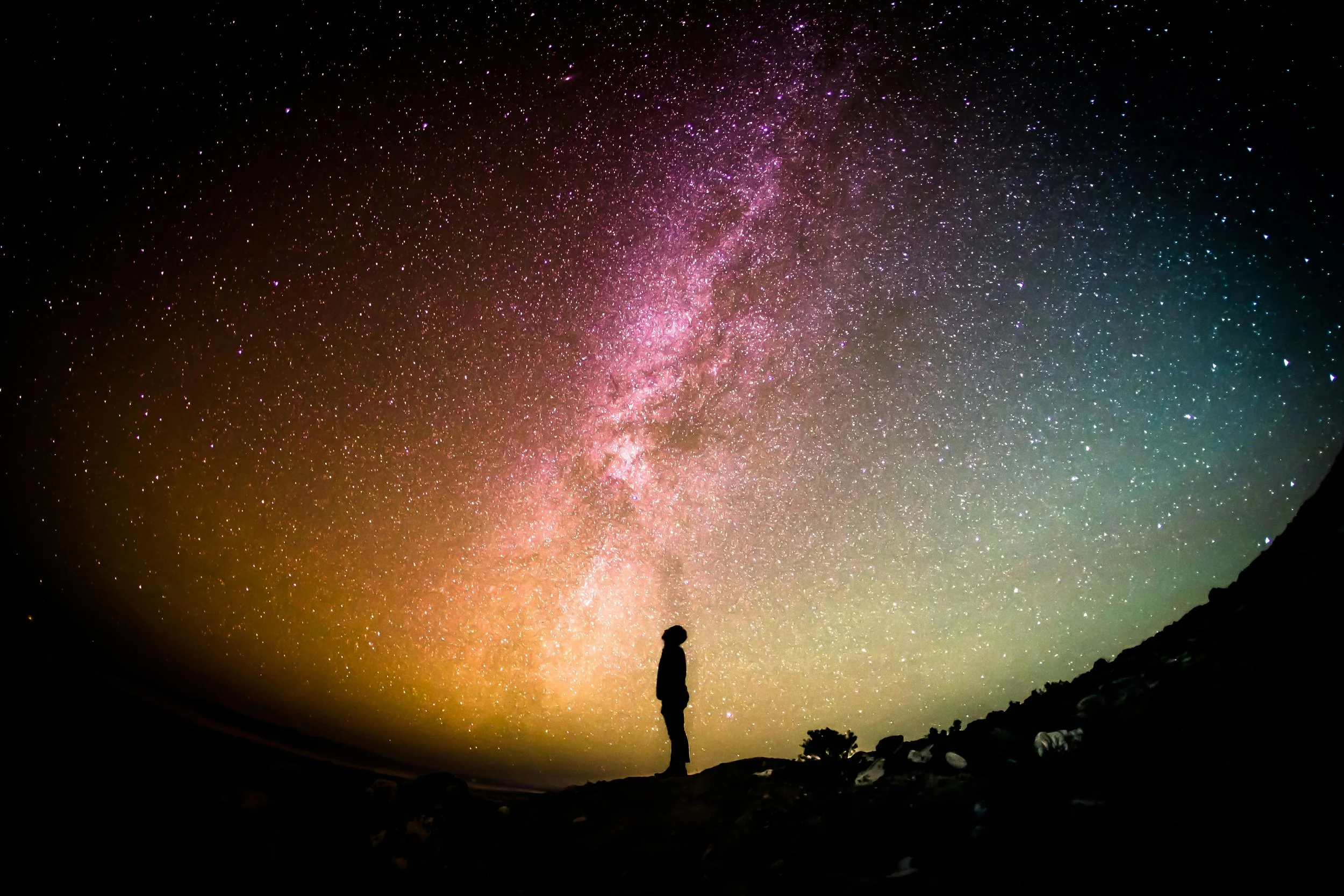
*Cover Image by Greg Rakozy on Unsplash