

•
Kwacha Nafuti
• Kwacha Nafuti
Kwacha Nafuti
A story by ANISHA NAMUTOWE
Someone will die today. And it won’t be their first time.
I grab my phone and neural headset from the security tray and clip the headset back on fast. Three seconds bare and I’m on amber, the bureausnitch. They call it Civic Compliance Monitoring. Ten, and it’s tumbwi, bye-bye freedom!
Bupe, my Director of Photography, steps up to the scanner behind me. In five seconds, it’ll beep. He’ll curse, pat himself down, toss his keys into the tray, and try again.
And, cue.
BEEP.
“Dammit.”
The scanner light blinks red, then a sterile blue, pooling the queue’s shadows across the glossy copper-coated tiles.
The loop always starts here, at the Pamodzi Complex security checkpoint. A giant Icarus of the Kwacha Lelo government, built on promises of a Technocratic Reformation. It ends just before I go on air, forced to deliver the government’s scripted lies.
At first, I thought it was déjà vu.
Kuti?
The second time, I panicked, screamed about an assassination with my entire chest, feet, and arms.
“Kuzafa muntu lelo!” I screamed in the Kwacha Lelo government’s official language, Nyanja. “Nisiyeni, napapata,” I begged and cried as they dragged me away.
But they wouldn’t listen.
Security strip-searched me like a prostitute and interrogated me like a terrorist. They called me a traitor, a madwoman, a puppet of the opposition.
No one believed me. Not even Bupe.
By the fourth, I forced myself to stay calm. Searched for answers. Looked for signs. Searched the neural grid for anyone experiencing something similar. Nothing. Of course, even if someone had reported it, the Kwacha Lelo government would never allow that kind of coverage. Acknowledging time instability would mean blaming the one thing they worship, neural tech. Then came my first break, an announcement buried deep in the state-controlled grid: update V8.3 had been pulled only hours after release, no official reason given, just vague language about “unexpected cognitive irregularities in a limited number of users.”
I had installed it absentmindedly, and not once since has the headset so much as buzzed.
Not the second loop when I screamed about assassination.
Not the third when I tried to escape. Whatever V8.3 broke, it broke both ways. They didn’t just lose access to me, they also gave me back something they’d built the entire system to defeat. Control over my own mind.
That’s when I realised: I’m not crazy. I’m just alone.
The only one who knows everyone’s fate in the next few hours. No matter how much I explain, the day ends the same.
Someone dies.
Then they forced me to speak for them and branded me a co-conspirator. After the press briefing, I was shoved into a police van and driven to a “secret location.”
I never saw it.
The loop always ends there. Maybe that’s where I die too. Maybe that’s where everyone does.
All I know right now is that they didn’t make me read that damned script by accident. When I first got the invitation, I had asked myself why I, of all people, was invited to cover this so-called historic event of the year, a national debate between the two most powerful men in the country: His Excellency, President Cephas Ndhlovu, and Mr Ronald Sinyangwe, the last opposition leader standing. Then it clicked, somewhere around the fourth loop.
I was chosen to legitimise the aftermath.
The lie had to come from someone the public still trusted. Primero Media. The last private outlet still breathing, propped up by public resistance and sheer stubbornness. Labelled an “enemy of the state.”
I’m the insurance policy.
Unless I change the script.
Six times, I tried to stop it. I failed.
*
I glance at my phone.
Nine blurred rings. The tenth flickers like a dying star.
The screen pulses, no sender, no app icon, nothing but the words:
FINAL CYCLE. NO MORE RESETS.
A chill crawls up my spine.
I never asked for any of this. All I did was absent-mindedly accept a state-mandated neural update. Since I know this can’t possibly be the work of the Kwacha Lelo government, I can’t help but entertain another possibility: maybe, just maybe, the ancestors whose spirits we invoked when we promised to cast off the White Man’s religion and his ways yet embraced his technology, sought to bring about some balance. Maybe this is their way of restoring humanity to the land. Maybe this is how they assert their power.
I don’t have the answer. All I know is that ever since that “glitch,” time has wrapped itself around my life like a noose, dragging me through the same cycle over and over until I fix this.
Until I stop the murder.
This is it.
My final loop.
My last shot to change fate and history.
*
I look around. Facial recognition cams blink endlessly, scanning for anomalies and threats. Media drones hover at “strategic” points, poised to broadcast the year’s most anticipated event. It’s 2045. Fifteen years into the Kwacha Lelo government, artificial intelligence lords over all. The truth is whatever the neural grid feeds us. We believed them when they called it progress, until the updates started erasing more than bugs.
Yes, we reclaimed our identity—how we dress, how we speak, how we conduct ourselves. But lately, it feels like we traded one master for another. And we’re all expected to call it liberation anyway. This debate is supposed to shatter that illusion.
Or at least, that’s what Sinyangwe hopes for.
He’s spent eight years pressuring President Ndhlovu to face him live on national television. The president had every excuse to dodge him, until the protests grew too loud, too global, and too messy to ignore. Now even Western media, long exiled from Kwacha Lelo, smell blood.
*
I scan the room.
Green lines flicker across foreheads, three to five bars. Part of the loyalty surveillance system. Your score determines what doors open. Everyone here has at least three.
Except me.
I started off at two when the gadgets were introduced, but when I refused to quit my job, I dropped to one and stayed there.
“How high can this thing go?” I point to the tripod.
Bupe frowns, adjusting the auto-locking legs. “Fully extended? About 1.8 meters. Why?”
“There’s something I need you to do.”
I lead Bupe toward a pillar at the far end of the platform, opposite the moderator’s podium, with a clear view of the stage.
“This is a restricted area,” a guard barks, stepping in front of us. Two more move in, assessing us like threats.
I’ve been here before. I know how this goes.
“We’re setting up over there,” I say, pointing to the speaker near the pillar.
Bupe frowns, confused.
I flash a disarming grin. “This angle gives us a clean, uninterrupted frame of the candidates, while staying out of the way. We’ll have another camera at the prime spot. This one’s just for backup footage.”
The guards exchange glances.
I shrug. “We’re just trying to get creative with the coverage. A fresh perspective, you know?”
After a long pause, the biggest one squints at me. “I’ll be watching you.”
“Perfect. Let him.”
They step back.
Bupe waits until we’re alone before hissing, “What the hell was that? Why here?”
I don’t answer. I just grab the tripod and set it beside the speaker, raising it another meter.
Let me catch you up:
The debate kicks off at 12:15. By 13:15, it’s over. The moderator will step in, all smiles and civility, and call for a handshake. The candidates will rise, descend from their podiums, and meet at center stage. Then, precisely at 13:17, the stage lights will cut out. A half-second later, the automated blinds will slam shut. Then darkness. Technical glitch? No. But that’s what they want you to think. At 13:18, ten people from the audience will surge toward the stage.
To the untrained eye, it’ll look spontaneous—crowd hysteria, adrenaline, fans getting too close. But I’ve seen it nine times. Nothing is as it seems. Security won’t intervene.
.
13:20.
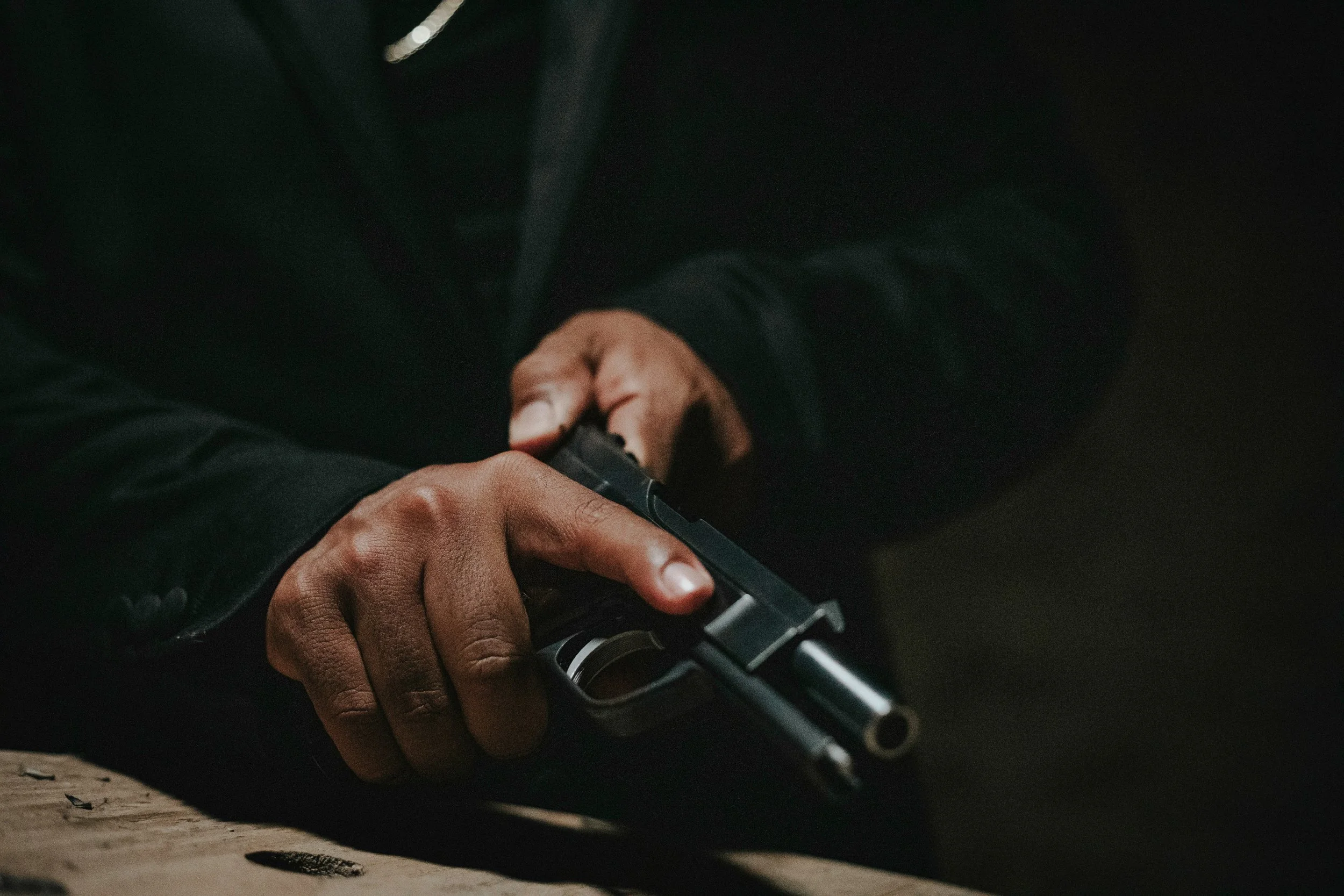
The shot is fired.
One bullet. One body.
The broadcast cuts to static.
Panic. Screams. Confusion.
13:21.
The lights flicker back on, but the blinds stay sealed. Lockdown.
Every journalist in this room, including their camera crews, vanishes without a trace. Me? I get dragged into a back room and handed a script. The official story––one unfortunate death. A lone assassin. Masked. Apprehended on site. A promise that justice will prevail.
Pshhhht.
This is how they tighten their hold on power. How they rewrite the truth in real time.
And the man they’re about to erase from history is the last chance the people have.
He dies at 13:20.
Unless I stop it.
Someone—or something—with more faith in me than my own mother has given me the chance to save the day, and the future of this country.
I have failed nine times.
There’s Plan A and Plan B.
Plan A: Warn Sinyangwe.
Tried that twice. Failed.
The first time, security wouldn’t let me near him. The second time, Sinyangwe questioned my identity, caused a fracas, and had me sent to the back room prematurely. He still died.
Plan B: Capture the assassin in action.
In six loops, I tried to get a clear shot of the killer. Every angle failed until the eighth loop. I saw the shooter, then froze.
I had the proof. The truth. But I was so stunned that I hesitated. And then, bang.
This time, I can’t afford to freeze.
To stop the assassination, I have to use the elevated camera to capture the scene from a high, inconspicuous vantage point. I can’t rely on the drones hovering. I tried, but the guards wouldn’t let me touch them.
At exactly the right moment, I’ll need Bupe to flash the camera light toward the shooter. It’ll be brief. Just enough distraction to pull Sinyangwe away before the shot is fired.
Expose the real shooter before the broadcast is cut off.
Simple? Absofuckinglutely not.
But I have no other options.
I need Bupe to do what I say.
But for that to happen, he has to believe I haven’t lost my mind.
Last time I told him about the loop, he laughed so hard he nearly peed himself.
— I can’t ask for help, and even if I could, who would listen?
*
I grab my journal and pen and scribble fast:
There will be an assassination attempt on you during the handshake. Avoid the handshake at all costs.
No. Not strong enough. Sinyangwe is a proud man. The kind who’d walk straight into a bullet just to prove himself a martyr. If he thinks this is a cheap ploy to rattle him before the debate, he’ll dismiss it. I need to cover all bases. So I add:
If you can’t avoid the handshake, when you see the flashlight, get behind the man in the red Arsenal jersey. Your only chance to survive.
Now—how to get this to the target.
I glance at Sinyangwe. He’s deep in conversation with Thabo Kasakanya, the debate moderator, a respected journalist, and my former mentor. He took me under his wing straight out of university, back when we were all fumbling through a media landscape none of us had been trained for. We’ve been friends ever since.
He’s my in.
Four guards flank them, but I saunter forward, grinning wide. They step in to block me. Expected.
Then I trip.
I launch myself forward, arms flailing. Two guards reach out to catch me.
I dodge. Instead, I crash straight into Thabo’s dominating frame. “Umi?” He steadies me, concern creasing his face. “Are you okay?”
I plaster on a stupid smile. The kind that screams I’m harmless.
One of the guards steps up. “Ma’am—”
“She’s my little sister,” Thabo cuts in smoothly. “She’s cleared.”
Bless this man.
I turn to Sinyangwe, eyes wide, grinning like an overeager fan.
It works. He chuckles, clearly amused. “Are you okay, young lady?” he asks.
I nod a little too quickly. Definitely unhinged. “I’m Umi Mkandawire, a journalist with—”
“Primero,” he finishes, glancing at Thabo. “He was just telling me about you. I’m a big fan of your boss.”
I beam so hard my cheeks ache. “I can’t believe I’m finally meeting you. Would it be alright if I shook your hand?”
I glance between him, the guards, and Thabo, playing the innocent admirer.
Sinyangwe chuckles. “Sure, why not?”
I clasp his hand with both of mine, then press the note into his palm, squeezing tight.
I lock eyes with him. His brows knit together. Confused. He starts to pull back.
I squeeze again. Hard. Please, my eyes say.
The guards shift.
Thabo clears his throat.
I let go.
Sinyangwe lifts his hand slightly, as if to open it.
My insides tighten as I brace for disaster.
But then—he slides the hand into the pocket of his tailored chitenge jacket,
His gaze shifts to me, sharp, assessing. Then, the ghost of a knowing smile.
Phew.
“Everything okay?” Thabo glances from me to the politician, then back again.
There’s something in his eyes, not just curiosity. Something else. But it’s gone before I can place it.
I flash my signature innocent grin, pushing past the twinge in my gut. You know what they say, A guilty mind sees condemnation everywhere.
He smiles, but there’s a tightness to it.
“You can get back to work now, Umi,” he says. There’s a chill in his voice I’ve never heard before.
Does he suspect something? I nod and slip my hands into the pockets of my chitenge skirt, bouncing off with forced ease. My heart pounds.
Plan A seems to be working so far, but I need confirmation. I retreat to my spot, surreptitiously watching Sinyangwe. My hands are shaking, not from fear, no, I’m long past that. It’s exhaustion. Nine loops, nine failures, nine endings I couldn’t change. There’s no reset this time.
I should be relieved, but I’m not. What if I got it all wrong? What if I was never meant to change this? What if this is the timeline where things get worse, and I’m the fool who tipped the first domino?
“What’s up with you today, Umi?” Bupe asks.
“What?”
“You’re fidgeting. And you’ve chewed your nails down to stubs.”
I glance at my fingers. Yup, nothing short of military-grade repair will fix these.
“Are all the cameras set?” I ask, eyes flicking back to Sinyangwe.
He’s now seated in his, well, let’s just call it what it is—plain, almost apologetic chair. A far cry from the throne-like monstrosity reserved for the man across the long, shiny table. Beside him sits his wife, Chisomo Banda, self-proclaimed prophetess, multimillionaire, and political force.
Sinyangwe murmurs something to her. She smiles and hands him his reading glasses.
He reaches into his pocket. His hands disappear behind the table for a few agonizing seconds. When they reappear, he’s holding the note.
He raises it to his face, squinting like men past their prime do, tilting his head back and forth as he reads.
I can’t see his expression. Can’t tell if he’s alarmed.
Then, casually, he squishes it and puts it back in his pocket. He grabs a bottle of water, takes his time opening it, takes a single sip, takes his time closing it. Then he looks at me.
This is it.
He waves a finger at me, like a father scolding a wayward child.
Shit. Does he believe me? Or does he think I’m mad? He probably thinks I’m mad. Even I think I’m mad.
I don’t have time to figure out his diagnosis because the Grand Emperor arrives with his empress and the room reorients around them.
Dr. Mulenga Chanda, the First Lady, walks beside him in a floor-length chitenge gown that deserves an audience of its own. In Kwacha Lelo, chitenge is more than tradition, it’s standard wear. Cut, print, and texture signal your status. The only foreign clothes allowed are sportswear and shoes.
Unlike her husband and his six honorary degrees, the First Lady is an actual doctor. Yet their ambition and greed are at par.
Bupe pans the camera to the audience.
I gesture for him to zoom in on the man in the red Arsenal jersey.
He’s fidgeting, eyes darting all over the place.
When the president and first lady approach, Sinyangwe and his wife stand to greet them.
Oh shit. A handshake. Shit. Shit. Shit.
I should have been specific about the when of the handshake.
Sinyangwe takes it.
His eyes flick to me. There’s a hint of a smile.
*
Plan B.
We have twenty minutes until the debate begins. I tap Bupe. He adjusts the camera one last time and comes over. “I need you to listen to me carefully.” I inch in close and whisper, “An assassination will take place at exactly 13:20.”
He gasps.
I squeeze his wrist, hard.
“Stay calm, Bupe. If you don’t do as I say, every journalist here, and their crew, will die. You. Me. Everyone. Don’t ask how I know.”
He freezes, mouth slightly open.
“Do you trust me?”
He hesitates, but only for a breath. “You remember that field report in Ndola?” he says. “When I said we should stay, and you dragged me out before the riots hit?”
I nod.
“You were right then. If you’re this panicked now, I should probably listen.” He steadies his hands. “Tell me what to do.”
Progress.
I check my watch. 11:42.
“At 13:17, you’re going to step onto the speaker.”
He looks at me like I’ve grown three horns and a tail.
“You’ll raise the tripod as far as it can go. Tilt the camera down by 30 degrees—no more, no less. Hit record and make sure it’s recording.”
His lips part like he wants to protest, but I continue.
“Frame the shot at the intersection of grid points Alpha-2 and Delta-4.”
His eyes flick toward the stage. “Alpha-2? Delta-4? Umi, what the hell—”
“Just do it, Bupe,” I say, firm but low. “The lights will cut at exactly 13:17, so be ready. You’ll see the floor markers; they glow under the lens. Centre your shot where the lines intersect.”
I don’t mention the rest. That the shooter, or whoever hired them, marked that spot on purpose. A lead point, carefully chosen. Probably just outside the drones’ line of sight.
Bupe nods, but his hands are trembling.
“And Bupe,” I squeeze his wrist again. “At exactly 13:19, turn your flashlight on, full brightness. Aim it at the intersection for exactly five seconds and then withdraw it.”
His breath hitches. “What if they see me?” He’s petrified, justifiably so.
“They won’t. They’re only focused on one man. And everyone else will be too caught up in the chaos to notice anything else. That’s why I chose this spot.” I tap the pillar beside the speaker.
Bupe follows my gesture, his gaze shifting between the pillar and the speaker. Realisation flickers in his eyes.
He nods. “And then?”
I lower my voice. “Vilivonse vizachitika, osaleka kukopa. Wanvela? ”
He hesitates, then nods.
We run through the plan one last time, and we’re set.
The debate is live. I scan the flood of comments pouring in. Giant V-shaped emojis surge through, banned months ago, smuggled through backdoor VPNs. Abash the dictator explodes into flakes every time Ndhlovu speaks. Gold stars stack each time Sinyangwe answers.
There was a time this applause belonged to the president, back when he called himself and all of us “comrades.” But like most politicians, the moment he secured the vote, he reverted to factory settings.
13:15. The debate ends.
13:16. The moderator calls for the handshake. The wives join their husbands. A formal, camera-perfect moment of unity.
13:17. The stage lights cut out. Then the automated blinds slam shut. Darkness.
13:18. The human barricade gets into position.
I’ve been in this moment so many times, yet the feelings never change. My throat goes dry. My heart is a storm on steroids. I need air. I need light. I need all this to come to an end.
It’s now or never.
I shove forward. My pulse revolts, pledging allegiance to the chaos. One step. Then another. Elbows and shoulders slam against me. Too many bodies, too little time. The barricade holds. Shoes, lots of shoes, drag across the floor. The rustle of fabric. A single cough. Every sound is too loud. Too sharp. The seconds stretch to infinity. Then— A sharp glint flashes in my periphery. A flashlight.
I continue pushing against the human barricade. And push again. And then—
Bang.
The sound punches through the air like a lone heartbeat let loose. I flinch. The crowd erupts.
A body crumples in front of me. I stumble back and hit the floor. Something warm and slick brushes my hand. I jolt upright. The world tilts. My ears ring. I can’t tell if the scream I hear is mine.
The metallic tang of blood fills my nose, arresting and immediate.
My entire digestive system stages a violent protest.
I lower my gaze, cautiously.
Even in the dark, I recognise the red.
Arsenal Jersey Man is down.
And then lights.
I snap my head up.
Sinyangwe—
He’s unharmed, grinning at me knowingly over his shoulder as security whisks him away.
Bupe scrambles down from the speaker and rushes toward me. I can barely move.
“We did it, Umi!” he pants, holding up his phone. “We’re going viral! Look at this—the comments are insane! We have the scoop of the century! Do you know what this means?”
Promotion. Huge pay raise. Fame. But more importantly, a change in government. Because even without hard evidence, the number one suspect is obvious to everyone. Without my interference, he would’ve walked away clean, wrapped in plausible deniability. Not anymore. Especially not after the damning statements Thabo is making.
I glance toward the security checkpoint, where Thabo now stands. He must’ve tried to slip away, but the journalists cut off his escape.
“Why did you do it?” someone asks.
“Do you know what it’s like to owe everything and have nothing?” Thabo says, voice tight. “When the choice becomes life or death for your family, there’s not much to debate. That’s just how the Kwacha Lelo operates, isn’t it?”
“Mr. Thabo, were you threatened?” a journalist calls out.
Thabo hesitates.
The five glowing loyalty bars on his forehead stutter, flickering once, then again, before dimming in and out like a failing circuit.
A low murmur ripples through the press pool.
Someone gasps. Another points. “Did you see that?”
“His bars—”
“That’s not supposed to happen.”
Thabo lifts his head slowly, deliberately.
“I guess the truth will reveal itself in time, right?” he says.
Is that a smile tugging at the corners of his lips?
Security surges in, shoving cameras aside as they pull him away.
Who knew the very rings the president created to enforce loyalty would be his undoing?
I don’t know what I feel. Pity, anger, heartbreak? Maybe all of it tangled into one. But now isn’t the time to be emotional. Not yet.
“Show me the footage,” I say to Bupe.
He taps his phone and hands it over.
And there it is, the moment I’ve been chasing for ten bloody loops.
The footage starts right where the two candidates edge toward each other,
The crowd moves forward.
Thabo’s hand slips into his pocket. When it emerges, he’s gripping a compact pistol. He draws it close, tucking his arm tight to his side, the barrel angled beneath his armpit—aimed directly at Sinyangwe. At that exact moment, the president and his wife edge away from Sinyangwe. It’s subtle, yet damning enough. They knew what was coming.
A flashlight.
More chaos.
I burst into the frame, shoving Arsenal Jersey Man forward as I stumble through. Sinyangwe reacts fast, as if he’d been waiting for a signal. He ducks, just as the shot fires. Bang. The bullet slams into Arsenal Jersey Man’s chest. Thabo’s expression barely flickers as he slips the gun back into his pocket.
Security descends like a storm. The candidates and their wives are whisked away. The venue is locked down. Pandemonium.
I hand the phone back to Bupe.
“I thought he was one of the good guys,” Bupe murmurs, shaking his head.
Didn’t we all?
In one of the early loops, while still scrambling to make sense of it all, I did a quick background check on everyone I could identify near the scene. They all seemed suspicious, even Sinyangwe’s wife, the self-proclaimed prophetess who charges vulnerable people for prayer.
The only person I didn’t suspect was Thabo.
Yes, I’d heard the rumours about his messy, high-profile divorce, the debt, the media company hanging by a thread. I even called him back then. He didn’t sound broken. If anything, he sounded like a man still in control, steady, assured. Just like he always did when he was mentoring me.
“I’m gonna be alright, kiddo,” he’d said, chuckling that warm, easy laugh. “A little suffering only makes us stronger, right?”
I believed him. How naïve.
That same blind faith misled me today. I couldn’t bring myself to believe that the man who once guided me with such patience and grace could fall this far.
I glance at my phone. The final bright ring fades.
Then, one by one, the rings disappear.
A new message appears:
CYCLE COMPLETE.
I almost don’t believe it.
No reset. No do-over.
It’s done.
I let out a sharp exhale, relief settling under my skin like a colonizer making himself at home.
I did it.
Before I can fully process my triumph, two men in dark suits close in. “Mr. Sinyangwe would like a word with you, ma’am,” one of them says, voice clipped.
I glance at the aftermath—the mayhem, the terror, people fighting to get through security, the body on the floor.
Bupe stares at me, wondering about my hesitation. “Umi, he’s basically the next president. You must go.”
“I just saved his life. He can wait.” Hell, I just saved democracy. I should be president.
*
Bupe and I finally make it through security, though only because we’re “priority witnesses,” according to the heavily armed officers escorting us to their armoured vehicle. Everyone knows that’s code for suspects. I’d bet my last memory byte that the soon-to-be-former president wants to know how we captured the assassination so cleanly, like we saw it coming. I could tell them the neural update glitched reality, or that maybe the ancestors slipped through the bug to save us from ourselves. But they’d just call me crazy. And everything I fought for today would be for nothing. So I’ll lie. I’ll say we were experimenting with creative camera angles and just got lucky. Technically, not untrue. Lacking context, yes, but believable. And that’s all that matters. If they attempt to do anything to either me or Bupe, we have the netizens to protect us. These days, hashtags roar louder than gavels. It’s ironic, really, that the same social fury that crowned him now defies him.
Right now, the commenters are calling me a heroine. A true journalist.
Maybe that’s something worth celebrating about this revolutionary technological era: the ability to raise our voices loud enough to shame dictators, and protect our own.
A man steps in front of us, blocking the way. Sinyangwe’s bodyguard.
“Mr. Sinyangwe would like a word with you, ma’am.” My heart stutters at the déjà vu.
But we’re outside the Pamodzi Complex, so there’s hope. Not a loop.
“Is he okay?” I ask.
He doesn’t answer, just places a firm hand on my shoulder and gestures sideways.
A shuttle door hisses open. Inside, Sinyangwe sits, jacket off, collar loosened. He looks too calm for a man who just danced with death.
He glances up.
“Amai Mkandawire.”
It’s my maiden name, but I don’t correct him.
He studies me for a moment. “How long have you known?”
I meet his gaze. “Long enough to keep you alive.”
He lets out a low chuckle. “Then I owe you more than thanks.”
He nods to the seat across from him.
“Come. Let’s talk about what it will cost to stay alive now.”
October 24, 2026
ABOUT THE AUTHOR
ANISHA NAMUTOWE is a Zambian writer and communications specialist working across fiction, nonfiction, and poetry. Her fiction moves between literary and romance; her nonfiction interrogates politics, feminism, law, economics, Pan-Africanism, and religion. Her work has been recognised with awards and published locally and internationally, alongside contributions to television, radio, and podcast productions. She is a 2025 Literary Leadership Fellow and an award-recognised author with Afritondo and PUBLISH’D AFRIKA.
* Cover Image by McGzay, Pexels