

•
Musonda and Her Mother
• Musonda and Her Mother
Musonda and Her Mother
A story by GRACIOUS KABUNGO
Sometimes I pray for heavy rain like the one we had throughout the night. It kills the sound of the never-ending arguments of my mother and father each time he comes back drunk from the tavern. It’s always about how he does not provide for us, how he takes loans from people who are always harassing my mother, how he comes back home late at night demanding food that he doesn’t buy. It’s either that or my father’s heavy snoring that is drowned out by the sound of the rain; it’s as if nights of peace can only be attained if they are taken up by the noise from the rain that comes to us unfiltered by the absence of a ceiling board, piercing sharply through the metal sheets to produce a tapping or drumming sound that sends us all to sleep eventually.
Countless times I have told my mother she doesn’t deserve someone like him, but someone better, yet she insists that one day he will change, and I always say, “He will be the death of you.”
I wish I could tell my father the same, that he does not deserve my mother, that she is too good for him, that she made a grave mistake by accepting someone like him, but I would be wasting my time. My father can no longer understand the putting together of words, he can no longer be hurt by words that do not matter to him. I would want to have a heated argument about all the things he does not do that he should be doing, but it would not help me release the anger I hold within me; the exchange wouldn’t be as gratifying, nor as fiery and continuous as I’d want it to be because he has begun to stutter, his speech mirroring his stumbling steps.
In a few seconds, I will hear my mother’s voice. Wait for it: one, two, three, four.
“Musonda!”
I love my mother’s voice, but not at 5 in the morning.
“Nawishiba ati ninshita, iwe ndwi, mu bed.”
I bury my head under my pillow, trying to drown out her voice for a few seconds. I let out a muffled groan in irritation, kick my feet from the sheets, and roll my eyes.
For other kids in privileged homes, school holidays are meant for them to actually have a holy-day, to sleep, laissez-faire and have a contagious type of fun, but for me in Kanyama, I wake up every morning, order vegetables with my mum, help set up her stand alongside the road, and sell with her all day.
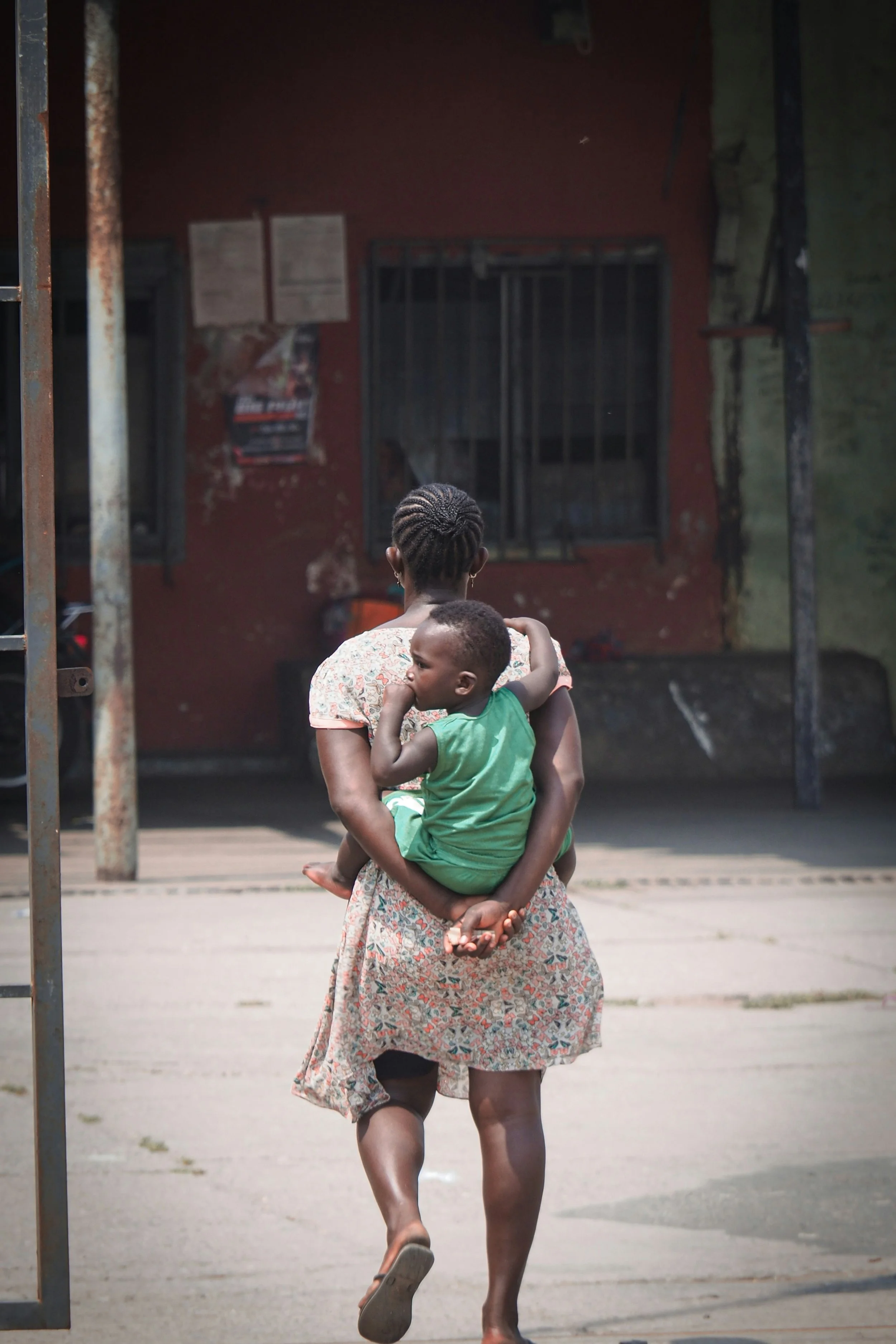
“Naisa!” I never wake up early enough to bathe in the morning, and so I grab my black sweater and pull on my jeans while my mother puts Chansa on her back. He is still in a deep sleep. Sometimes I wish I was a baby, unaware of the real world.
I walk toward my mum, pull up the part of Chansa’s green head sock that is covering his ear, and whisper, “Try not to grow, or at least try to take your time.”
My mother stares at me. I can tell she is having an internal debate on whether to ask what I was doing or ignore me. She ignores me and calls out to my other brother, who is asleep.
“Iwe Brian, upase batate bako breakfast, wanvela!” Again, I do not understand why my mother cares so much as to ensure Dad’s breakfast is given to him. Is it love, acceptance, stupidity, hope, or tradition?
“Okay,” He answers in a sleepy tone. Brian claims he wants to be a lawyer, yet he spends all his time gaming in the market. Despite making it to Grade 8, his Grade 7 results were below average, tantamount to a smart person who barely tried. Now that he is in Junior secondary, I thought the shame he admitted he felt, plus the lecture from mum about how hard she works for us, would be enough to get him to study hard and focus, but his playfulness and unseriousness only got worse.
When my mum opens the door, the whole house is surrounded by water. Thankfully, after experiencing floods that filled up our house during the last rainy season, my mother bought enough bricks and had a builder build a high enough layer at the entrance to prevent the inflow of water. My mother and I wear plastic gumboots, hers are black, and mine are purple and almost ripping. I went for aesthetics, and she went for quality. I will have to find ways to mend the damage because she warned me, but my stubbornness and desire to be cute got the better of me.
My mother wraps Chansa with a thick blanket, and we head out. Our entire neighborhood is flooded, but the community is already up and running; men are throwing blocks in the water to create safe spaces for the women and children. I see little boys and girls who are either just so anxious to play, get to where they’ve been sent, or are working on their surroundings to push water away from their houses or verandas. I see two teenagers with babies on their backs take off their shoes; they hold up their skirts and, unworried, step into rainwater stained black by the area’s dirty surroundings, and I ask myself many questions: are the children on their backs theirs? Are they married? If yes, wouldn’t that be teen marriage? Isn’t it illegal? I try to remember the topic in Civic Education that covers this, to recall precisely what it says about the issue. I don’t remember enough, so I tell myself I would study that chapter, refresh my mind, because I knew my obsessive mind wouldn’t allow me rest without finding the answers to the lingering questions.
I keep asking myself more questions: do they still go to school? If not, why not? Was it a lack of interest? Were they married off so their parents could gain money? Did they get pregnant while in school and therefore stopped because of pregnancy? Was it school fees? Then again, this was a slim possibility, as government schools offer free education in this country; the last questions I ponder upon are: where are they going as early as 5 in the morning? Do they have jobs? Are they forced to work as hard as my mother because their husbands are drunks? Do they have any regrets? Any wishes, any hopes, I watch as they fade from sight with my eyes almost teary. At a house four yards from ours, an old woman is struggling to navigate through the water from her kitchen door to the outside toilet with a walking stick. The community’s toilets and bathrooms are mostly outside, ours too; most times the shit floats upwards when we experience this much rain. I’m not quite sure about the science, but even the water we get from the tap is quite smelly.
We walk a few kilometers more, navigating puddles and all the while walking in mud until we get to the Kanyama market gates.
“Musonda, fast, join iyo line yama tomato, ine nalaya pama cabbage.” My mum bends over and pulls the wrapper holding Chansa closer to her chest. She ensures he is well seated, then tightens the blanket while tucking its corners in the wrapper. When she is done with the adjustments, she runs over to the cabbage queue while I walk to the tomato queue.
The first time my mother brought me here with her, I knew instantly that I was not created to be a marketeer, the ordering process was, and still remains hectic. On my first day, a couple of older women pushed me back to the end of the queue. While that was happening, another lady hit my eye with her elbow as she was trying to carry out her basket of tomatoes. I sustained a black eye and was certain my mum would send me back home, but instead she sent me back in the queue, which was by no means a queue anymore but a crowd of people, it can only ever be called a queue in the first few minutes, but the more the women come through, the more the chaos.
“Awe ba Musonda mule champukako, lyonse kumilolela.” She has a huge sack of cabbages beside her and a ragged-looking man.
“Musonda, Musonda, ulibwanji, wakwanisa ku-uka ka, mwe ukondela kugona namvula iyi”
“Ba James nyamulani chabe cabbage iyo.” James has been our carrier for a long time, quite irritating but super loyal, and cheap. He throws the sack of cabbages over his shoulders like it’s nothing, and I help my mother place the basket of tomatoes on her head. She follows James behind, and I behind her. It’s always the ones with heavy luggage that walk faster. I am so glad I have not graduated to placing the basket on my head; I can only imagine the migraine I’ll develop on graduation day.
“Thank you, thank you, Mother.” James, excited, takes his cash from my mother.
“Musonda, Musonda napyamo ine.”
I wave him goodbye, and he walks away, bouncing heavily while holding onto his jean trousers, which are clearly oversized and have no belt. I lightly laugh to myself and wipe the drizzles off my face.
Our makeshift is along the roadside, created with planks and mats. There’s enough space inside to take a nap and place the excess cabbage and tomatoes once enough is well displayed on the table. I cross over to the other side of the road and walk a few steps more to a grocery store where we keep what is left from the previous day. There’s enough onion, pounded groundnuts, and other types of vegetables to sell today. The shop owner, famously known as Uncle D, has known my mother for over 10 years now and allows us to store anything that we have to. I like him, well, I like his son. If I knew I’d see him across from me every day, I wouldn’t have a problem with waking up at 5 AM, but he rarely ever shows up. He seems not to love the idea of being in the shop, but more the idea of benefiting from the proceeds. Kind of like how I feel about this makeshift.
“Okay, mum, we are good to go, table is set, all we need now is a customer and another one and another one.” When Chansa cries, I know what is next
“Musende uyu, porridge iyo mukachola,” she says while untying the wrapper. I hold him and throw him in the air three times before he actually stops crying and begins to giggle.
“Hey little one, it’s time for porridge.” I make a few funny faces, and he just can’t stop laughing; he’s easy. I only pray he doesn’t turn out like Brian. Brian is not bad, but he could be better, more aware of his situation, more focused, definitely smarter, less stressful, and more helpful to our mother. I look at her as she now sweeps the surroundings of the makeshift, something I forgot to do, of course. I mean, I love her, I love what she does for the family, how she is happy about the struggles she has to endure if it means her family gets to eat and her children get to go to school. I want to be her but with my own definition of happiness. I make his soya porridge by mixing the soya with hot water poured from a bottle my mother carried from home and feed Chansa, who cries through it all, but from his chin I hold his mouth open by placing my fingers between his upper and lower teeth, he swallows or chokes. I’m already allowing him to make decisions.
“That’s a good boy, swallowing is a good decision”
When I finish feeding him, I clean up his little blue plate and throw it in my mother’s bag. She has made a fire as she usually does and has placed a small pot with water in it onto the brazier. When the water boils, she makes two cups of tea for herself and me and grabs four buns from her bag, offering me two despite always telling her I can only eat one and despite always eating one. I watch my mother drink her extremely hot tea with such ease, and I can never get used to it. How does she not burn, or does she love to get burnt? While my mother eats her breakfast, a random memory comes to mind from years back, her telling me she wanted to be a nurse. In this moment, I imagine her in a nurse’s uniform, walking into a hospital building and smiling at the first and last patient she sees. She would have been an amazing and kind nurse. I imagine that if she became a nurse, she would have maybe had a different life, her face would look as young as her age, and her smile would not be reduced by the harshness of her problems. Maybe I would not have been her daughter, and Chansa and Brian would not have been my brothers, because maybe in that different life she would not have met my father. And that’s okay, it makes me happy to imagine a different life for this wonderful woman.
“Musonda, leta Chansa, tampa ukulya, tea kunwa ninshi naikaba.” I let out a smile so big that a light laugh escapes. In this moment, I realise how much my mother loves me and that my duty is to be happy beside her while she struggles for me.
I give Chansa to her while I have my breakfast.
It’s a slow business day; I can literally count how many customers we’ve had between 7 AM and 12 PM. I wish I had a phone. I’ve always admired my friends who have WhatsApp and are on Facebook. I’m always uninformed and left out when they begin talking about what’s trending, but I’m grateful for my best friend, Esther, who always shares such news with me. On the last day of school, she showed me a video of a woman calling out another woman for claiming she was going out with her husband on Facebook. It kind of made me think about my mum, how my father’s wrongdoings are so vivid, yet she continuously tries to protect his dignity. I mean, we hear it all, our house is not that big, and my brother and I literally share a room divided by a curtain. We hear our father tell our mother to leave if she wanted, but she very well knows he wouldn’t make rent money. We hear how the community calls him names, and sometimes, he has to be dropped at our doorstep by his fellow drunkards because he is the most drunk. At one point in my 10th Grade, I almost faked a father because my mother was too busy to attend a Parent Teacher Association meeting at my school, and she suggested I go with him. That was the first time I ever lied to my mother. I told her the meeting was postponed, and whenever she asked when the new date was, I kept telling her the announcement was not made until the date of the next meeting was announced. I lied because the night my mother told me my father would go instead, I had a dream that he burped so loudly during the meeting and everyone could smell the alcohol on his breath, and that he leaped on his feet to give an opinion, and the opinion was that the school should provide alcohol during the meetings as refreshments as opposed to softies, he then walked out while hitting into the seats of various parents.
“Abanobe abo,” my mum is looking at me while she points at the mad man walking at the side of the road.
“Awe, no,” I laugh. This is about the only time in a day that my mom makes me laugh, as she continuously insists that the mad man who always walks past us at about the same time every day is my friend because, at one point, he turned to me and handed me a plastic bag full of popcorn while he roughly scratched off the top of his dirty head. I tried to let him know that I didn’t need them by shaking my head, signing with my hands, and even saying no countless times, but he kept handing them to me and wouldn’t leave till I accepted them. When he left, I wasn’t sure what to do with them. I couldn’t eat them, yet felt bad about throwing them, so I kept them in the makeshift for about 4 days and managed to throw them then.
We begin to see women with handbags heading back home. I love this time; it means we shall be heading back home soon. A woman turns to our stand.
“Nizingati tomato?”
“K2, K5 na K10, tilonge iti?” my mother responds.
“Iyi.” The lady points at the K10 heap and withdraws a K100 kwacha from her pocket
“Ani, Kalombeko change kuli ba Uncle D.” I get up, rest Chansa on my hip, and collect the money from my mom. We cross over and enter the shop. When we get out, with the money changed to smaller notes, the woman is all alone at our stand, now sitting on the stool I was on, I look around to see my mother running to the car parked a few meters from our makeshift with a plastic full of tomatoes and a cabbage in her hand, she hurries to the driver’s side and hands everything over through the window, immediately she collects the money, a car in which the driver seems to have lost control comes flying from the main road and right into the one packed by the road side hitting my mother first, pinning and squeezing her in between. All I hear is a scream that comes and goes almost in the same second. The woman at our makeshift stand gets up with her mouth wide open, immediately throwing her hands behind her head, all while the handbag and plastic of tomatoes that were on her lap slide to the ground. She runs towards the scene, cars begin to park by the roadside, people begin to gather round, I see people pull phones out of their pockets and begin to take videos and images of the scene.
I look at Chansa, and I wish I were him, comfortably sitting in my arms, sucking on a lollipop Uncle D gave him.
October 24, 2026
ABOUT THE AUTHOR
GRACIOUS KABUNGO loves literary, psychological and historical fiction. Her love for these genres is drawn from her interest in the experience of being human and the complexity attached to interacting with the environment around us. She writes and recites poetry too. Her first short story was published in the “Mzimu Wachikondi and Other Short Stories” anthology by Myaambo in 2024. When not writing, Gracious loves to listen to music and discover new artists, she also loves to read and watch movies.
* Cover Image by David-Geneugelijk on Unsplash