

•
The Hills
• The Hills
The Hills
An essay by LOMBE KABINGA
The nurse told me to stand with my hands against the wall, she pulled down the back of my sweatpants and injected my bum. I flinched and asked her what the medication was.
“Valium.”
This was 2024, the third time I had been hospitalised in a mental health facility. It was Chainama Hills Hospital in Lusaka, Zambia. I had been brought there by my cousin after I volunteered to be taken when I experienced what my psychiatrist later confirmed was a psychotic break. Leading up to admission, I had been restless for days.
The first two times I had been admitted were to hospitals in Johannesburg. The initial admission in 2012 was driven by the fact that I was suicidal.
My psychologist sent me to the emergency room of Helen Joseph Hospital with a letter stating that I was exhibiting acute signs of wanting to harm myself. After assessment, it was decided that I needed to be admitted to the psychiatric ward immediately. This stay lasted for a week until I was declared stable enough for release. Recovery happened relatively quickly.
The second time in 2016, my admission was less dramatic. My psychologist suggested that I be hospitalised in a facility as a preventative measure, and I agreed. I went to Tara Psychiatric Hospital, which ran several longer-term holistic programs that she felt would improve my ability to cope with mental strain. I stayed there for six weeks. In the time spent in these places and afterward, I did not see as much negativity around being admitted as I did in Lusaka.
Historically, the term “Chainama” carries negative connotations across Zambia. People associate the hospital with individuals who have “gone mad” and need to be removed from society. In everyday conversation, when people behave strangely or erratically, they are jokingly referred to as a “Chainama case”. This perpetuates the idea that it is a shameful place to be.
*
I was home at my mother’s house, where I lived when the mental agitation that led to Chainama began. There is an empty chicken coop there on our farm––a large grassy plot interspersed with vegetable crops, a few mango trees, citrus, and bananas. I would sit there for hours, scrolling on my phone and listening to music. I would be in there sipping energy drinks: Kung Fu or Mojo, taking in the tangy taste of added citric acid, synthetic caffeine, and sinful amounts of sugar. The irony is that I wasn’t doing anything energy-consuming except running erratic marathons in my mind.
The day before my admission, I had a burst of energy not fueled by the drinks. This was different. I started stomping around my room, putting a bunch of my personal belongings into a suitcase. I took it outside, opened it out on the dusty ground, and summoned the people who live in smaller rental properties on the farm. I started to give away clothes, my watch, bedding, even things like my bath towel. Some were items that I needed on a day-to-day basis. Some were things that held extreme sentimental value. It was like a sale except I kept throwing things into people’s hands for free. The sight must have been bizarre, but people took them anyway. I also packed an additional suitcase of things to be donated to charity.
Later, I would disappear from home at night on foot with a backpack and my little dog, Arya, in my arms, under the cover of the blackness of loadshedding. Destination unknown. I had defiantly told only my concerned mother, who noticed my erratic behavior, that I would be sleeping at a friend’s place on the farm next to ours. That was the intention, but for some reason I changed my mind and kept walking into the night.
Mental health in Zambia is such a layered topic. Only now are we starting to see a rise in awareness through social networks, private organisations and, to a lesser degree, public institutions.
There is Maverick Minds, an NGO that spearheads education and services around mental health. I first encountered the organisation on Twitter (now X) when they used to host virtual space meetings. At present, they host weekly webinars called Hear and Heal that are free for the public to join. Lifeline Zambia also offers free 24/7 access to mental health services via a toll-free line. Societal stigma is still strong, often motivated by religious and cultural factors. There is minimal acknowledgment of the necessity of mental health, let alone what it looks like when illness occurs.
The things that came up in my case included unmanageable feelings of anxiety, isolation, extreme fatigue, and loss of interest in things that used to bring me joy. I also struggled with turbulent sleep and generally had trouble concentrating.
In the realm of religion, primarily Christianity (which is what I have been exposed to), it is seen as something that can be completely prayed away. Other times, it is seen as an indication that one is unserious about their relationship with God, that they need to work harder at fortifying this bond.
I remember a time when my night terrors were at their peak; a friend of mine took me to a pastor to seek help. The result was the reading of a few Bible verses and a rigorous prayer to curb the “demonic” attacks.
This did not help.
Neither was it useful when I reached out to another friend who offered the same diagnosis and the additional instruction to “stop watching horror movies”.
The night terrors, which consisted of nightmares, screaming, and waking up suddenly in fear, did not stop. These, along with heavy episodes of debilitating sleep paralysis, plagued me for a long time. At some point, I was beset with guilt; I was not working hard enough to solidify my relationship with God. I felt that I was failing in my duty as a Christian, that I was weak for allowing this evil to reign over my life. It was disheartening, shameful, and crushing to wake people up in the dead of the night with my episodes. Or having to deal with the awkwardness of “how did you sleep?” the morning after. I never had solid answers for that, other than a disingenuous “well, thanks.” I felt disgraced.
The cultural aspect of how mental health is approached is another complex one. There is this idea that people who experience mental health challenges, especially in their extremities, have been bewitched. That they have been hexed by rogue friends, family, colleagues, or strangers who have it out for them. These people are apparently compelled by greed and envy, so they perform rituals to drive the victim “mad”, making them act in an erratic way. In some cases, the solution is for the casualty to be taken to consult a witch doctor to counter the curse.
That second time I was admitted to a psychiatric ward, I made friends with a man who had been taken there for drug-induced psychosis. He shared with me that in his struggle with hard drugs, his parents had once sought the assistance of a witch doctor to deal with his “madness”. The witch doctor was invited into his room, where he gave my friend a beating first to help cast out the demons. He then splashed imiti, or traditional herbal medicine, around his room. This was to ward off the evil spirits tormenting him. Suffice it to say, the psychosis stayed exactly where it was, popping up even when he was taking breaks from using the narcotics. His parents, as a last resort, forced him to be admitted.
*
It was a privilege for me to be able to recognise that I had started to lose my grip on reality when I went to Chainama. I knew how and where to seek help instead of going through the trauma of being coerced into hospital admission. I had the acute desire to be locked away and allowed to rest without interruption from anyone or anything. All I knew was that I was exhausted both physically and mentally and needed to be put away no matter the circumstances. This was also because I did not know how to explain to my family what was happening in my mind. It was not as easy to explain as the depression and anxiety.
Before seeking help, I had started to become uncertain if my thoughts were my own and if my actions were translating as logical to those around me. This especially hit me as I was brought home in a police van in the middle of the night after being found wandering around Kanyama township in pitch blackness with my dog. I was so out of touch that, looking back, I cannot tell if it was midnight or closer to three o’clock in the morning when I was found. The area is over an hour’s walk from the farm, and I must have been wandering around there longer. I was in a state of mind that made me feel like I was immune to the danger of being a woman in the dark alone. This was a tricky moment in time to be roaming aimlessly as loadshedding in 2024 had become acute. Rolling blackouts became the norm, some lasting over 12hrs a day. In retrospect, it’s comical that I thought my little dog would offer some kind of protection as she sat in my arms.
*
I do not know if it was my seasoned experience with being institutionalised but I was incredibly calm during my stay at Chainama. My breath remained steady, with none of the aches and pains in my body that sometimes arose from anxiety. My cousin was in more of a frenzy than I was before we parted ways at the administration building. My nervous mother was initially the one who offered to take me when I volunteered myself to go there, but I refused. I had still been in a state of rebellion. I insisted that I go alone and started off hoping to catch a cab, but I was intercepted, and my cousin was sent with me. To be honest, I was somewhat resentful during the admission process because no one spoke to me directly about why I was there. It was like being dropped off at pre-school with a guardian, while teachers shared vital information about a child.
There was a talk about how “she’s gone mad”, skipping over the part where I had volunteered to be taken there myself. I was plonked into a wheelchair, even though I could walk. I was then rolled to Ward C — Chainama’s female unit. My phone was taken away, which gave me some brief anxiety, but I reminded myself that it was protocol and muting the traffic of social media would help quiet the chaos in my mind. I was taken to a room that had a grill door, which the nurse locked behind him on his way out. It made me feel like I was in a cell. I realised during my stay that the most volatile, difficult to control patients were individually enclosed in these rooms. It made me wonder about the gravity of what my cousin had said to the staff at the administration building.
It was a sunny day, but the room was cold, and the windows were broken in places, so there was a draught. Goosebumps formed on my arms where they weren’t covered by my T-shirt. The breeze did not do much to mask the smell of stale urine. On the floor there was a mattress covered in black PVC plastic with a thick grey blanket that looked like some kind of polyester blend. The blanket was reminiscent of stiff prison blankets that I’d seen in television shows. I wondered whether the smell came from the floor, the mattress, or both. At some point, I needed to relieve myself and told this to a passing nurse. She told me nonchalantly that I wasn’t allowed out and walked away. I looked around for a container to use, but there wasn’t one.
I did what needed doing.
The concrete ground was level enough that the liquid did not trickle into another section of the room. Brilliant. Now I was a contributor to the stench.
I am not sure if every patient was subjected to this treatment or if I had just encountered a grumpy nurse. It is possible that she was simply following protocol and could not risk the unknown effect of letting me out.
It was shortly after this that the nurse came in to give me that valium injection. It slowed my body down, I started to feel exhausted, my limbs and head feeling like lead. I dragged the mattress against the wall and sat up, leaning against it with my knees raised. Shortly after, I started to doze off. I heard singing outside, a woman’s raspy voice belting out Bob Marley’s “No Woman, No Cry”. The voice stopped at my cell.
I dragged myself up, curious. The woman before me was dishevelled; her hair had vikuti that were turning into free-form dreadlocks. She wore a t-shirt torn at the shoulder and a well-worn chitenge wrapper. She smiled at me brightly, then handed me a blanket through the bars, telling me that I would need it for the night. I forget her name now, but I would later find out that she had lived in Ward C for months, and she was like a piece of furniture - one of the lower maintenance patients.
After my first night, I was moved from the cell into a room that had seven beds and five other patients. I was grateful to have somewhere to lay my head with blankets that were cleaner and a pillow. The air was fresher, and I gladly took in the smell of people’s scented petroleum jelly and roll-on.
In there, during mealtimes, I was exposed to other patients, each suffering from various mental illnesses. My reason for being there seemed minute compared to the state of mind of many of the women in there. Suddenly, my severe depression, anxiety, and brief psychotic episode did not seem as dire.
I still can’t pinpoint what it is that triggered the episode for me, the memory is hazy. I just remember the gradual build-up of irrational racing thoughts and delusions. I am glad that it didn’t last. There were people in there who had to be reminded every so often where they were. Reminded to bathe. Reminded which belongings were theirs. One time a woman stole my Crocs while I was sleeping, and another woman rescued them, stealing them back for me. Another time my bath soap went missing, but it found its way back to me as well.
A lot of the women in Ward C had been dumped there. Like Miss “No Woman, No Cry”, some of them had been left there for months. They had been flagged as not being fit enough yet to join society. Some of them hadn’t received visitors during that period. Their families didn’t know what to do with them, similar to how people don’t know what to do with shoes that have seen better days but are not quite worn out enough to throw away. There was also a lot of shame surrounding being seen arriving at the place. They didn’t want to be associated.
I don’t know how it played out for male patients, but I have noticed that there is a heavy taboo around women’s mental health. Especially because they are expected to function optimally in their domestic settings without breaking down in some way. The experience of these women contrasted with mine in that members of my family visited every day for the week that I was admitted. Each time, my mother brought me Hungry Lion chicken and chips, which I wolfed down. The crunch of the food between my teeth brought momentary savoury joy as I worked my way into the bones. She would bring a change of clothes, and one time my brother sent me his treasured Notorious B.I.G. sweatshirt.
My big sister, who couldn’t visit, sent me a John Grisham novel and one of my sketchbooks, but I was not allowed to have my art supplies because items like pens, pencils, and markers were forbidden, as they could be used to harm oneself and others. Forbidden, even though art has always been therapeutic for me. In both my previous admissions, it was encouraged as a form of processing emotions through expression.
I did not let the lack of banned items stop me, though. I stole a pen from the nurse’s station when it was empty. The nurse on duty was an unempathetic toad anyway.
I hid the pen under my pillow and tried to draw when no one was paying attention. I made abstract doodles, sometimes creating graffiti-like lettering. Eventually I did it in the open, and no one seemed to mind. I had not acted as erratically as some of the other patients, so I suppose it was a concession they could make. One of the many student nurses I formed a bond with even got to take one of my drawings with her as a gift.
My experience with mental health institutions has been sobering, to say the least. The few people I have shared these experiences with have become melancholic as they listen. They express immense compassion and, at times, pity, which I understand. At the same time, I have been grateful. Looking back, I carried myself with optimism on the inside. I took the programs seriously: the individual therapy, the group therapy, following the rules, following the medication regimen strictly. After my admissions, I have tried to keep a level head despite it not being the easiest thing to do. Sometimes I can feel a relapse coming around the corner.
Life can get overwhelming, sometimes, cripplingly so, but at least I know help is there.
I hate calling myself a mental health advocate. That title comes with too much weight, an expectation of knowing it all. I would much rather call myself a “mental health vigilante” who tries to slay my own demons while potentially slaying those of others. Even if that just means holding them at bay for a short period that allows for a brief reprieve.
Having made friends in wards with people on the extreme end of bad mental health has unlocked in me a metaphorical Third Eye where I see people beyond their physical form. I have sat through watching someone speak back to voices that were haunting him in real-time as he felt hands touching him that were not there. I have sat with someone else after a psychotic episode where she broke anything breakable in her home with Hulk-like strength, because she was triggered by something her boyfriend said. I have listened patiently when someone was mistakenly convinced they were the high-powered CEO of a multinational corporation. I have nodded in understanding when a nineteen-year-old boy explained to me why he repeatedly ran away from home and physically harmed himself. For many years now, I have not been afraid of people’s mental illness. The fear planted in me through culture and religion has long melted away.
The apprehension I do feel is about the people who go undiagnosed and untreated. The people who end up being swallowed by the monster of stigma. I am grateful for Chainama at the end of the day, it has given people like me a place to go and seek solace and much needed treatment. The facility does brilliant work for a place that has to function at full capacity 24 hours a day. I will forever be grateful for the people I encountered during my stay, both medical staff and patients, along with the support I continue to receive from my family. It’s my never-ending wish that hearing “Chainama” will evoke the image of a ray of hope for Zambians across the country, as opposed to a shroud of darkness.
October 24, 2026
ABOUT THE AUTHOR
LOMBE KABINGA is a Zambian scriptwriter. This is her first literary magazine publication.
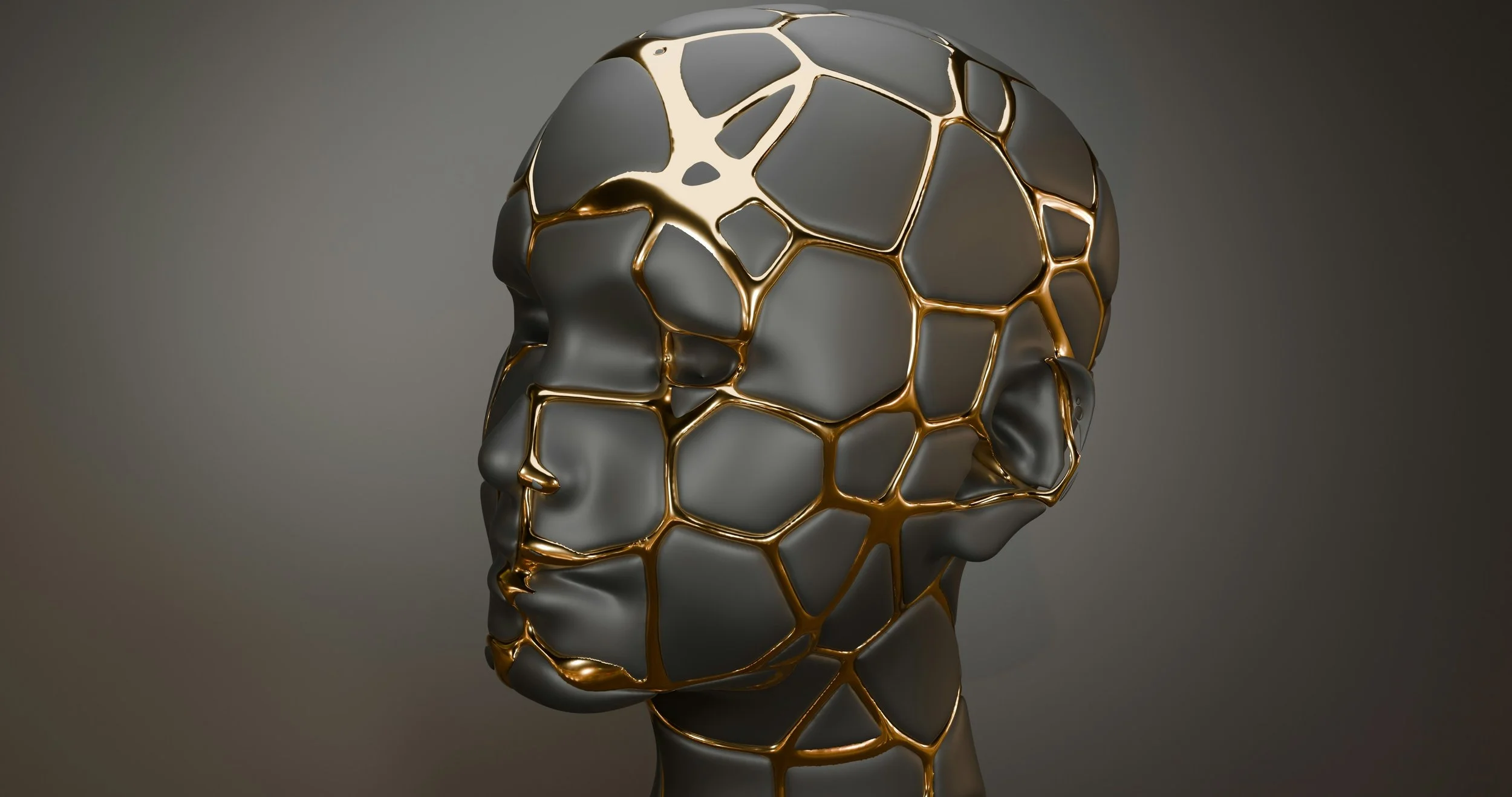
* Cover Image by Mirella Callage on Unsplash.